Your Dormant Client List Is a Goldmine — Stop Ignoring It
Let's be honest: somewhere in your med spa's client database, there are dozens — maybe hundreds — of people who visited once, loved their treatment, and then quietly disappeared into the void. They didn't leave a bad review. They didn't complain. They just... stopped coming back. And in the meantime, you've been spending a small fortune on ads trying to attract new clients when a perfectly warm audience is already sitting in your CRM, gathering digital dust.
The good news? Those dormant clients are not gone forever. They're just waiting for the right nudge — and in 2024, that nudge doesn't have to come from you manually typing out 200 individual emails at midnight. AI has made it genuinely easy to craft personalized, thoughtful reactivation messages at scale. Done well, reactivation campaigns can recover 10–30% of lapsed clients, which means real revenue from people who already trust your brand. Not bad for a few hours of setup work.
This post will walk you through exactly how to use AI to build a reactivation messaging strategy that feels personal, reads professionally, and actually gets responses — without burning out your team or your budget.
Understanding Your Dormant Clients Before You Write a Single Word
Define What "Dormant" Actually Means for Your Med Spa
Before AI can help you write anything useful, you need to define your terms. In the med spa world, "dormant" can mean very different things depending on your service mix. A client who came in for a Botox treatment six months ago might be right on schedule for a follow-up. A client who hasn't visited in 18 months after a hydrafacial series? That's a different story entirely.
A reasonable starting point for most med spas is to flag any client who hasn't booked an appointment in 90 to 180 days as at-risk, and anyone beyond that window as truly lapsed. Segment your list accordingly — because the message you send to a three-month ghost is very different from the one you send to someone who last visited during the Obama administration.
Mine Your Client Data for Personalization Fuel
This is where things get interesting — and where AI becomes your secret weapon. The more data you feed into an AI tool, the more personalized (and effective) your outreach becomes. Pull together whatever you have on each client: their last treatment, how many visits they completed, any products they purchased, their preferred provider if applicable, and any notes from their intake forms or consultations.
You don't need a perfect dataset to get started. Even basic information — name, last service, and time since last visit — gives AI enough to work with. Tools like ChatGPT, Claude, or purpose-built marketing AI platforms can take that raw data and help you craft messages that feel like they were written specifically for that client, not copy-pasted from a generic template your competitor used three years ago.
Segment Your List Like a Pro
Not all dormant clients deserve the same message — or the same offer. Consider breaking your list into at least three groups:
- Recently lapsed (90–180 days): These clients just need a gentle reminder. A "we miss you" message with a soft incentive often does the trick.
- Long-term dormant (6–18 months): These clients may have forgotten about you or moved on. Lead with something compelling — a new treatment, a limited-time offer, or a meaningful update about your services.
- Cold (18+ months): Consider these a long shot, but still worth trying. A bold re-introduction campaign with a strong offer and clear value proposition gives you the best chance of winning them back.
Once your segments are defined, you're ready to actually write — with AI's help, of course.
Letting AI Do the Heavy Lifting (the Right Way)
Prompting AI for Reactivation Messages That Don't Sound Robotic
The single biggest mistake med spa owners make with AI-generated content is using it like a vending machine — feeding it a vague prompt and accepting whatever comes out. The quality of your output is directly tied to the quality of your input. A prompt like "write a reactivation email for a spa client" will get you something forgettable. A prompt like "write a warm, professional reactivation email for a client named Jennifer who last visited our med spa 8 months ago for a laser hair removal session, hasn't booked since, and tends to respond well to educational content about skin health" — that gets you something you can actually use.
Build a prompt template that includes the client segment, the last treatment, the tone you want (warm, professional, playful, urgent — pick one), any offer you're including, and your brand voice. Then let AI generate three to five variations per segment. You'll likely find one or two that are nearly ready to send with minimal editing.
Streamlining Follow-Up With AI-Assisted Sequences
A single reactivation message rarely does the job on its own. Industry benchmarks suggest that email open rates for reactivation campaigns hover around 14–18%, which means most people won't act on the first touch. Plan a short sequence of two to three messages spaced one to two weeks apart, and use AI to draft each step of the sequence with a consistent but escalating tone.
For example: the first message is warm and nostalgic ("We've been thinking about you…"), the second adds a specific offer or urgency ("Your exclusive offer expires Friday"), and the third is a graceful goodbye ("We understand life gets busy — here's one last chance"). AI can draft all three in minutes once you have your template and segment data in hand. Just make sure a human reviews them before anything goes out — AI is excellent, but it still occasionally writes things that would make your front desk team cringe.
Tools, Integrations, and Keeping Your CRM Clean
How Stella Can Help You Manage Client Data and Follow-Through
Stella, the AI robot employee and phone receptionist, can play a surprisingly useful role in your reactivation workflow — not just as a front-of-house greeter, but as a data collection and client management asset. Her built-in CRM with custom fields, tags, and AI-generated client profiles makes it far easier to maintain the clean, organized data that effective AI prompting depends on. When a reactivated client calls to book, Stella answers the phone 24/7, handles the intake process conversationally, and logs everything directly — so your team isn't scrambling to update records manually. She can also collect client information through intake forms on the web or at her in-store kiosk, which means your database stays current without anyone on your staff having to think about it.
Crafting Messages That Actually Convert
The Anatomy of a High-Performing Reactivation Message
Whether you're sending an email, a text, or a direct message on social, a winning reactivation message has a few non-negotiable ingredients. First, it acknowledges the gap without being weird about it — nobody wants to receive a message that makes them feel guilty for not coming back sooner. Second, it leads with value: what's new, what's improved, or what you're offering that they'd genuinely want. Third, it makes it embarrassingly easy to take action — one link, one call, one clear next step.
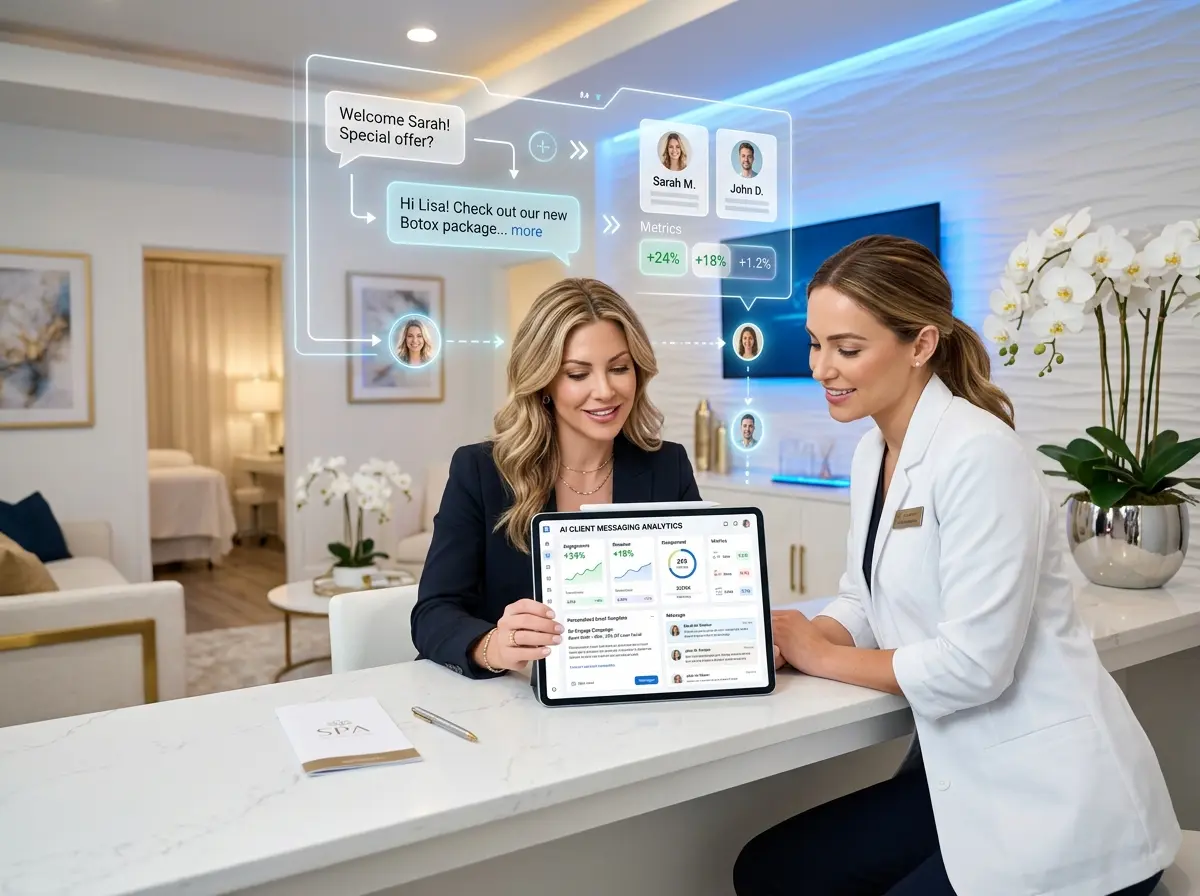
Keep subject lines and opening sentences specific to the client. AI is particularly good at generating multiple subject line variations that you can A/B test, which is a simple way to dramatically improve open rates over time. Something as simple as including the client's first name and their last treatment in the subject line — "Sarah, your skin might be ready for another laser session" — can lift open rates by 20–30% compared to generic alternatives.
Personalization Beyond the First Name
True personalization in 2024 goes well beyond slapping a name at the top of an email. With AI, you can craft messages that reference the specific treatment a client received, suggest a logical next step in their skincare journey, acknowledge a seasonal concern relevant to their skin type, or even reference how long it's been since their visit in a way that feels considerate rather than accusatory.
For example, a client who received a chemical peel last winter might receive a message in the fall that reads: "Fall is the perfect time to pick up where we left off — your skin loved last year's peel series, and the cooler months are ideal for treatments like this." That message took less than 30 seconds to generate with the right AI prompt, and it feels like it came from someone who actually knows the client. That's the magic of combining good data with good prompting.
Respecting Compliance and Consent
One final, non-glamorous but absolutely critical point: make sure your reactivation outreach complies with applicable regulations. If you're sending emails, ensure your list was properly opted in and that every message includes an easy unsubscribe option per CAN-SPAM requirements. If you're sending SMS messages, TCPA compliance is non-negotiable — you need prior express written consent to send marketing texts. AI can help you draft the messages, but it cannot audit your compliance posture. That part is on you, or your legal counsel.
Quick Reminder About Stella
Stella is an AI robot employee and phone receptionist built for businesses like yours — she greets clients at your med spa's front entrance, answers every phone call around the clock, and keeps your CRM organized without any help from your staff. At just $99/month with no upfront hardware costs, she's one of the easiest ways to ensure that every reactivated client who walks back through your door — or calls to book — gets a professional, consistent, and genuinely warm welcome from the moment they reconnect with your business.
Your Dormant List Won't Work Itself — But Now You Have No Excuses
Reactivating dormant clients is one of the highest-ROI activities a med spa can pursue, and AI has removed most of the barriers that made it feel overwhelming in the past. You no longer need a copywriter, a large marketing budget, or hours of manual effort to send personalized, compelling outreach at scale. What you do need is clean data, thoughtful segmentation, a solid AI prompt strategy, and a clear path to booking for every client who responds.
Here's your action plan to get started this week:
- Pull your dormant client list from your CRM and segment it by time since last visit and last treatment received.
- Build your AI prompt template with fields for client name, last service, time lapsed, and the offer or value proposition you want to lead with.
- Generate three to five message variations per segment using your AI tool of choice, then review and edit for brand voice and accuracy.
- Plan a short follow-up sequence of two to three touchpoints per segment, spaced one to two weeks apart.
- Make sure your booking process is airtight — if clients respond and can't easily schedule, you've done all that work for nothing.
Your past clients already chose you once. With the right message at the right time, many of them will choose you again — and AI makes it easier than ever to give them the nudge they need.