Introduction: The No-Show Problem Nobody Talks About Enough
Let's set the scene. Your medical practice has a full schedule, your staff is prepped, your exam rooms are ready — and then 9:00 AM rolls around and... silence. Your first patient didn't show. Neither did your 10:15. By noon, you've lost hundreds of dollars in revenue and your front desk staff has spent the morning playing phone tag with people who aren't picking up. Sound familiar?
No-shows are one of the most frustrating — and costly — challenges facing medical practices today. Studies suggest that no-show rates in healthcare average between 5% and 30%, depending on specialty, patient population, and how well the practice manages appointment reminders. For a busy practice, that can translate to thousands of dollars in lost revenue every single week. And yet, many practices are still relying on manual reminder calls and crossed fingers.
Here's the good news: predictive analytics has entered the chat. By using data you're already collecting to anticipate which patients are likely to skip their appointments, you can take proactive steps to fill those gaps before they happen. This isn't science fiction — it's a practical, increasingly accessible strategy that practices of all sizes are starting to adopt. Let's break down how it works and how you can use it to finally get a handle on your no-show problem.
Understanding Predictive Analytics in a Medical Context
What Predictive Analytics Actually Means (Without the Jargon)
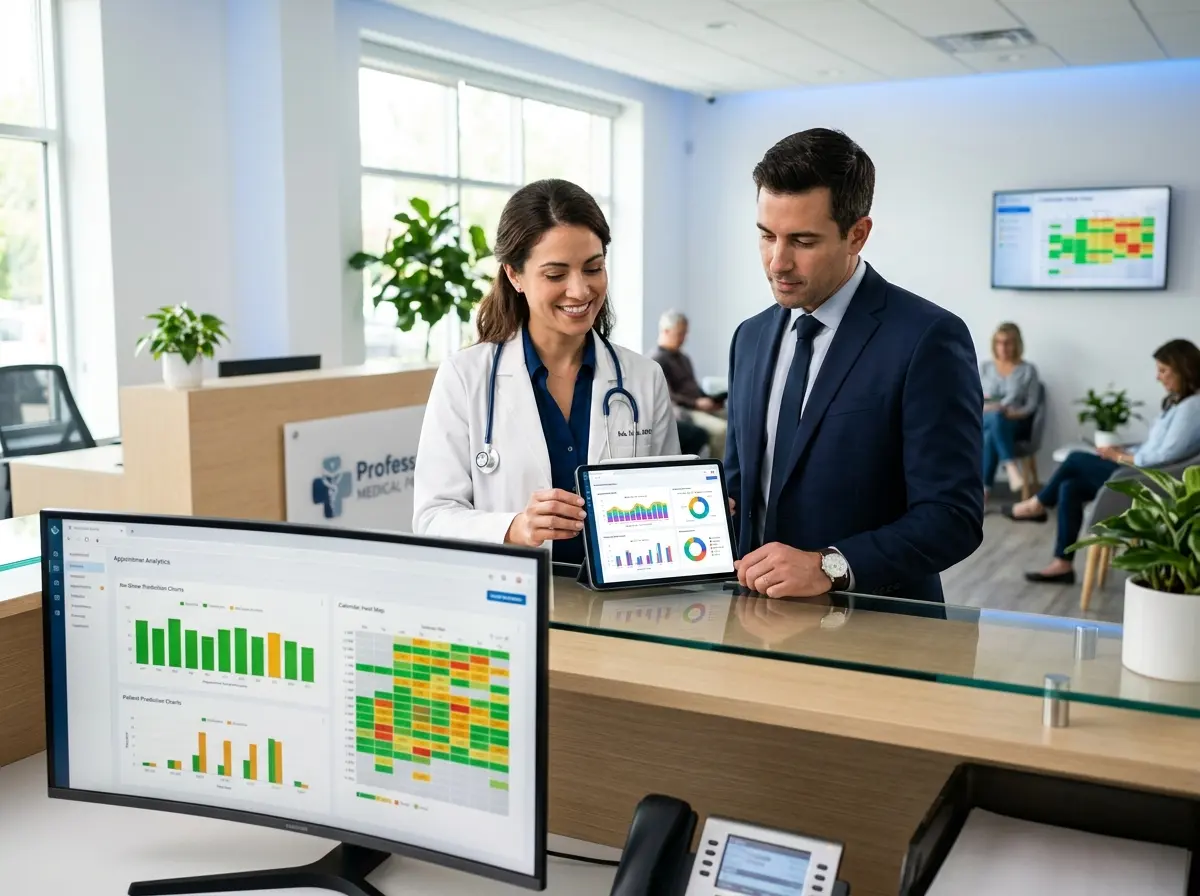
Predictive analytics sounds intimidating, but at its core, it's simply the practice of using historical data to make educated predictions about future behavior. Your practice already collects an enormous amount of relevant data — appointment history, cancellation patterns, demographics, insurance type, day-of-week preferences, weather patterns in your area, and more. Predictive analytics tools take all of that information and identify patterns that human eyes would likely miss.
For example, a predictive model might determine that patients who book appointments more than three weeks in advance and have missed one prior appointment are statistically likely to no-show again — especially on Monday mornings. Armed with that knowledge, you can trigger an extra reminder call or a same-day confirmation text specifically for that patient segment, rather than treating all patients the same way. It's targeted, efficient, and frankly a lot smarter than calling every patient three times and hoping for the best.
Key Risk Factors Predictive Models Look For
Modern predictive analytics tools used in healthcare look at a combination of variables to generate a no-show risk score for each patient. Common factors include:
- Prior no-show history — Arguably the strongest predictor. Past behavior is, unfortunately, a reliable preview of future behavior.
- Lead time before the appointment — The further out an appointment is scheduled, the higher the no-show risk tends to be.
- Appointment type — Wellness visits and routine check-ups tend to see higher no-show rates than urgent or specialist appointments where patients feel more immediate need.
- Time of day and day of week — Early morning Monday slots and Friday afternoon slots are notorious no-show hotspots.
- Patient demographics and distance from the practice — Longer travel times correlate with higher no-show rates.
- Insurance type — Some research indicates that patients with Medicaid or no insurance show higher no-show rates, likely due to transportation and work-schedule challenges.
By weighing these factors together, predictive tools can flag high-risk appointments days or even weeks in advance — giving your team time to act strategically rather than reactively.
Choosing the Right Predictive Analytics Tool for Your Practice
You don't need to build a custom AI model from scratch (please don't). Many modern practice management platforms and EHR systems are starting to offer built-in predictive analytics features, and third-party tools like Solutionreach, Luma Health, and Relatient offer sophisticated no-show prediction and automated outreach capabilities. When evaluating a tool, look for seamless integration with your existing EHR, customizable risk thresholds, automated communication triggers, and clear reporting so you can actually measure improvement over time. The ROI tends to speak for itself quickly — even a modest reduction in no-shows can more than cover the cost of the software within the first month.
How Smarter Front-Desk Technology Supports Your Strategy
Reducing No-Shows Starts at the First Point of Contact
Predictive analytics tells you who is likely to no-show. But your front-desk systems determine whether you can actually do something about it. That's where tools like Stella — the AI robot employee and phone receptionist — become genuinely useful for medical practices. Stella can handle inbound and outbound phone interactions 24/7, meaning patients can call to confirm, reschedule, or ask questions at any hour without your staff having to drop what they're doing. She can also collect patient intake information conversationally, reducing friction in the scheduling process and making sure the right data gets into your CRM from day one.
For practices with a physical location, Stella's in-person kiosk presence means she can engage walk-in patients, answer questions about services, and support a smooth check-in experience — freeing your human staff to focus on the clinical and administrative tasks that actually require their expertise. The combination of better data collection and always-available communication support gives your predictive analytics strategy a much stronger foundation to work from.
Turning Predictions Into Action: What to Actually Do With the Data
Build a Tiered Outreach System Based on Risk Level
Once you've identified high-risk appointments, the worst thing you can do is... nothing different. The whole point of predictive analytics is to enable smarter, more targeted intervention. Consider building a tiered outreach system. Low-risk patients might receive your standard automated reminder sequence — a text a week out and another the day before. Medium-risk patients might get an additional personal phone call from a staff member. High-risk patients might receive all of the above, plus an option to reschedule easily via text if something has come up. Some practices even implement a "soft overbooking" strategy for high-risk time slots, scheduling slightly more appointments than usual with the statistical expectation that a percentage will cancel.
The key is making it easy for patients to communicate. A no-show is often a patient who meant to cancel but didn't because it felt like too much of a hassle. Remove that friction, and you'll see your numbers improve almost immediately.
Use Your Data to Redesign Your Scheduling Practices
Predictive analytics isn't just useful in the moment — it should be informing your long-term scheduling strategy. If your data consistently shows that Monday morning appointments have a 25% no-show rate, it might be time to rethink how you fill those slots. Consider reserving them for your most reliable patient segments, or for same-day urgent care appointments rather than pre-scheduled wellness visits. Similarly, if appointments booked more than six weeks out are consistently problematic, you might implement a policy of re-confirming those bookings at the four-week mark to ensure patients remain committed.
Measure, Iterate, and Don't Get Complacent
Like any data-driven strategy, predictive analytics works best when you're actively reviewing results and adjusting your approach. Set a baseline no-show rate before you start, and track it monthly after implementation. Pay attention to which intervention types are actually working — are SMS reminders outperforming phone calls for certain patient segments? Is overbooking a particular slot creating more problems than it solves? The practices that see the most dramatic improvement aren't the ones that set up a system and walk away. They're the ones that treat their no-show strategy as a living, evolving process. Your data will tell you exactly what to do next — you just have to be willing to listen to it.
Quick Reminder About Stella
Stella is an AI robot employee and phone receptionist designed to help businesses — including medical practices — handle customer and patient interactions more efficiently. She answers calls 24/7, greets patients in person at your front desk kiosk, collects intake information, manages contacts through a built-in CRM, and keeps your team from being buried in repetitive calls — all for just $99/month with no upfront hardware costs. She's essentially the front-desk staff member who never calls in sick and never needs a coffee break.
Conclusion: Stop Leaving Money (and Appointments) on the Table
No-shows will probably never hit zero — life happens, and patients are human. But there's a massive difference between a practice operating at a 20% no-show rate and one that has brought it down to 7% through thoughtful, data-driven strategy. Predictive analytics gives you the ability to stop treating every appointment the same and start allocating your outreach efforts where they'll actually have an impact.
Here's your action plan to get started:
- Audit your current no-show rate by appointment type, time of day, and patient segment to establish your baseline.
- Evaluate predictive analytics tools that integrate with your existing EHR or practice management software.
- Build a tiered communication workflow that responds appropriately to low, medium, and high-risk appointments.
- Review your scheduling policies and identify structural changes that can reduce vulnerability in your highest-risk time slots.
- Track your results monthly and adjust your approach based on what the data tells you.
The tools are available, the data is already in your system, and the ROI is very real. The only thing standing between your practice and a dramatically lower no-show rate is the decision to take it seriously. Make that decision today — your 9:00 AM patients will (probably) thank you for it.