The Invisible Leaky Bucket Draining Your Practice
You've spent real money on Google ads. Your website looks great. You even invested in those little before-and-after photos of stylish frames on patients who couldn't see their hands in front of their faces before they found you. New patient interest is there — people are clicking, searching, and reaching out. And yet, somehow, your new patient numbers aren't growing the way they should be.
Here's the uncomfortable truth: the problem probably isn't your marketing. It's what happens after the marketing works.
There's a gap — sometimes invisible, sometimes glaring — between the moment a potential patient decides to contact your practice and the moment they actually sit down in your exam chair. And for a staggering number of optometry practices, that gap is where new patients quietly disappear. They call and get voicemail. They show up with questions and get a waiting room shrug. They ask about insurance and get "let me check on that" followed by being put on hold for four minutes.
First impressions aren't just about decor and a nice pair of display frames. They start the moment someone picks up the phone — or the moment no one does. Let's talk about where the leaks are, and how to plug them.
Where New Patients Are Slipping Away
The Phone Is Ringing — And Nobody's Winning
According to research from the dental and medical practice management space, nearly 35% of callers who reach voicemail will not call back — they'll simply move on to the next provider on their list. Optometry is no different. A potential new patient searching for an eye doctor has already opened three tabs. The first practice to answer a live call, clearly and helpfully, often wins the appointment.
The problem is that your front desk staff are human beings with a finite number of hands, a finite amount of patience, and — crucially — scheduled working hours. They're checking in existing patients, handling insurance verifications, answering questions from the optician about a frame order, and trying to eat lunch before 2:30 PM. Answering every inbound call with warmth and full attention is a genuinely impossible ask, and yet that's exactly what new patients expect.
If a potential patient calls at 7:00 PM to ask whether you accept their vision plan, and they hit a voicemail box, you've likely lost them before they ever set foot in your office. It's not personal — it's just math.
The New Patient Intake Process Is Doing You No Favors
Let's say a potential patient does get through. Now they have to answer a list of questions so your staff can set up their chart. Name, date of birth, insurance carrier, member ID, referring doctor, reason for visit — it's a reasonable list, but it's a friction-filled experience when handled over a busy phone line, with typos happening in real time and staff interrupted mid-sentence by someone walking up to the front desk.
A clunky intake experience signals — fairly or not — a clunky practice. Patients are making snap judgments about your organization and professionalism from these early interactions. If the process feels chaotic before they've even booked, some will wonder what the actual appointment will be like.
After-Hours Inquiries Are a Silent Killer
Most people research healthcare providers during the same hours they're doing everything else: evenings, weekends, and lunch breaks when they finally have a moment to think about their own health. Your office hours and their free hours simply don't overlap the way you'd like them to.
A patient who decides on a Tuesday night that they're finally going to deal with their blurry vision and dry eyes is motivated right now, in that moment. If they can't get information or book an appointment immediately, that motivation often fades by Wednesday morning when work picks back up. You needed to catch them in the window — and the window was 9:47 PM.
How Smarter Front-of-Practice Technology Can Close the Gap
An AI Receptionist That Actually Knows Your Practice
This is exactly the kind of problem that Stella was built to solve. Stella is an AI robot employee and phone receptionist that answers calls 24/7, handles new patient inquiries with natural conversation, and collects intake information through built-in conversational intake forms — so your staff isn't scrambling to gather details between check-ins. She knows your hours, your services, your accepted insurance plans, and your current promotions, and she communicates all of it clearly and professionally at any hour.
For practices with a physical location, Stella also operates as a friendly in-store kiosk, greeting walk-ins, answering questions about frame brands or lens options, and proactively engaging people who might otherwise just wander out the door. Her built-in CRM automatically profiles new contacts from intake conversations, tagging and organizing patient information so your team has context before the first appointment is even scheduled. That means fewer repeat questions, fewer dropped details, and a noticeably smoother intake experience from the patient's perspective.
At $99/month with no hardware cost upfront, it's a straightforward investment compared to the cost of losing even one or two new patients per month to an unanswered phone.
Fixing the Experience Before They Walk In
Set Expectations Early and Clearly
New patients are anxious about the unknown. Will the exam take an hour? Two hours? Do they need to bring their old glasses? Is there parking? These questions seem trivial to your team, but they loom surprisingly large for someone visiting a new provider for the first time. Practices that proactively communicate answers to these questions — whether through an automated follow-up message, a well-designed website FAQ, or a knowledgeable phone interaction — dramatically reduce no-shows and last-minute cancellations.
Consider building a short, friendly confirmation sequence after booking that tells patients exactly what to expect, what to bring, and how to find you. It costs almost nothing to create, and it signals professionalism before they've ever met your team in person.
Train Your Front Desk Like They're Your First Impression — Because They Are
Your optometrists are skilled clinicians. Your optical staff knows their frame lines. But front desk training often gets less investment than it deserves, and it shows. A warm, knowledgeable, unhurried greeting — whether on the phone or in person — converts curious prospects into committed patients. A distracted, clipped, or uninformed interaction does the opposite.
This doesn't mean you need to hire differently. It means you need to train deliberately. Role-play common call scenarios. Create a simple FAQ document for staff handling phones. Establish a standard for how quickly calls should be answered, and what happens when they can't be. These aren't complicated changes, but they have a compounding impact on patient retention and referrals over time.
Don't Ignore the Physical First Impression Either
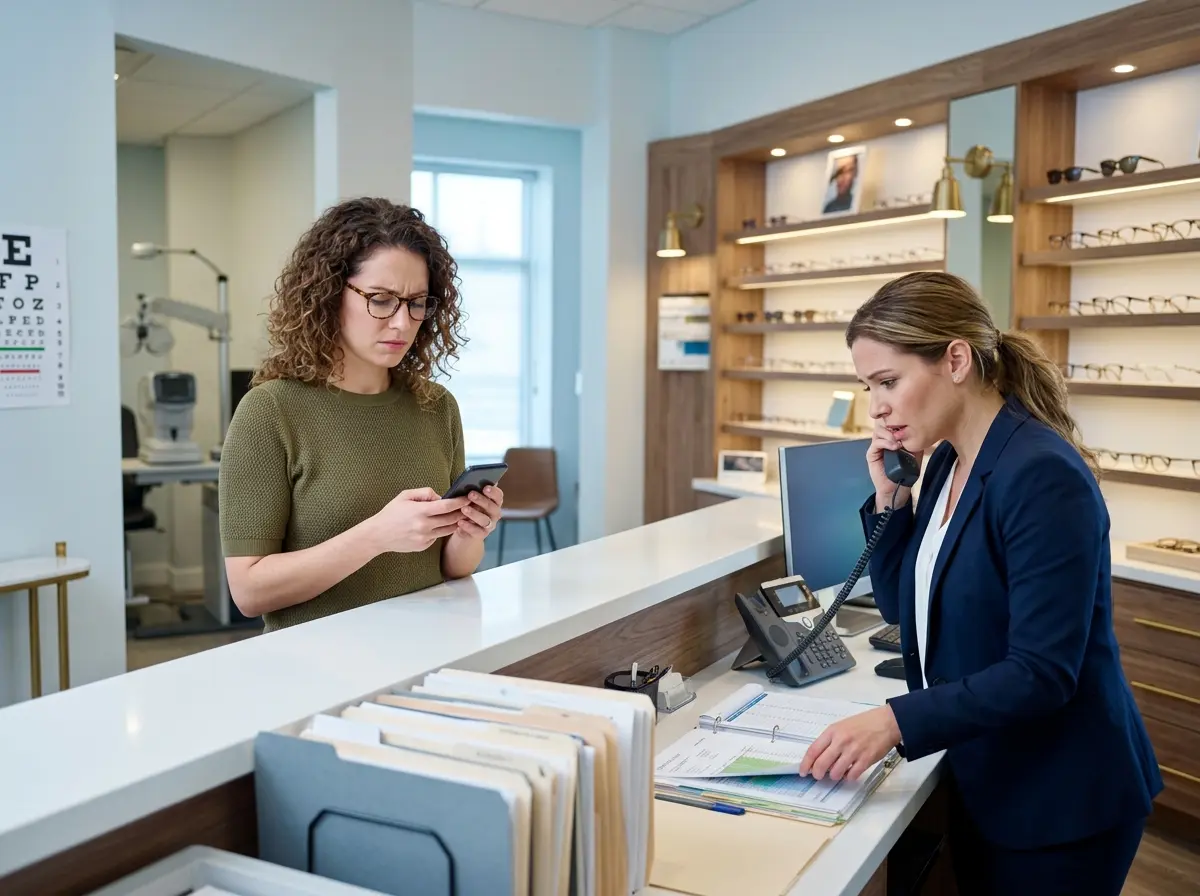
Once a patient does walk through your door, the experience needs to match the quality of care you provide in the exam room. A dated waiting area, a front desk buried under paper, or a staff member who seems too overwhelmed to acknowledge a new arrival can undo a lot of good work. Tidy, organized, and welcoming doesn't require a renovation budget — it requires intention and consistency. Walk through your front door once a month as if you're seeing it for the first time. You'll notice things your daily routine has made invisible.
A Quick Reminder About Stella
Stella is an AI robot employee and phone receptionist designed to handle the exact gaps this article describes — unanswered calls, after-hours inquiries, chaotic intake processes, and uninformed walk-in interactions. She works around the clock, never needs a break, and brings the same consistent, knowledgeable presence whether she's greeting someone at a kiosk in your optical or answering a call at midnight from a patient who just broke their glasses. For optometry practices trying to grow their new patient numbers without growing their overhead, she's worth a serious look.
Start Plugging the Holes Before You Run Another Ad
Before you spend another dollar driving traffic to your practice, it's worth auditing what happens to that traffic once it arrives. Call your own office from an unrecognized number at 5:30 PM and see what happens. Send an inquiry through your website contact form and note how quickly you hear back. Walk in as a mystery shopper and time how long it takes for someone to acknowledge you.
The results might be humbling. But they'll also tell you exactly where to focus. Here's a practical starting checklist:
- Audit your phone coverage — Identify when calls go unanswered and implement a solution for those windows, whether that's AI answering, extended hours, or a dedicated callback protocol.
- Streamline your intake process — Remove unnecessary friction from the new patient information-gathering experience, especially over the phone.
- Build a post-booking communication sequence — Give new patients what they need to feel confident and prepared before their appointment.
- Invest in front desk training — Treat phone and in-person interactions as the high-stakes touchpoints they actually are.
- Evaluate your walk-in experience — Make sure the physical environment and greeting process reflect the quality of care you deliver in the exam room.
New patients aren't just lost to better competitors. They're often lost to better processes. The good news is that processes are fixable, and most of the fixes aren't expensive or complicated — they just require the same attention to detail you bring to your clinical work. Your marketing is doing its job. Now make sure the rest of your practice is ready to do its job too.