Introduction: The Haircut Is Just the Beginning
Let's be honest — most barbershop clients walk in, sit down, get their cut, pay, and leave. Rinse and repeat. Week after week, the average ticket stays exactly where it was three years ago, and you're left wondering why revenue feels flat even when your chairs are full. The answer, more often than not, isn't more clients — it's doing more for the clients you already have.
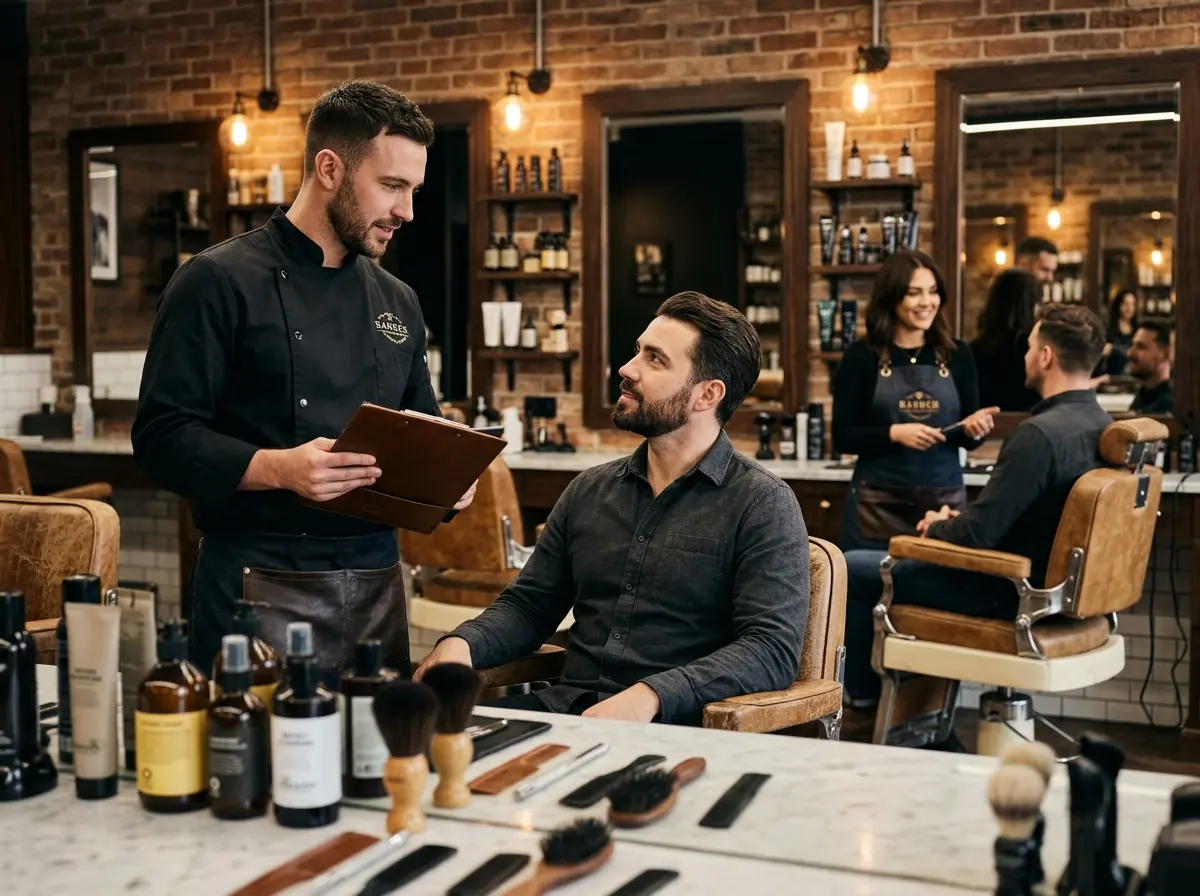
Enter the grooming consultation. Not the casual "so what are we doing today?" mumbled while snapping a cape into place. We're talking about a real, structured, intentional consultation process that uncovers what your client actually needs, builds genuine trust, and — almost as a natural byproduct — increases what they spend with you. Done right, a signature grooming consultation can bump your average ticket by $15, $30, or even more per visit without a single awkward upsell moment.
The good news is that building this system isn't complicated. It just requires a little intention, some consistency, and the willingness to treat every client like they walked into a luxury grooming experience — even if they came in for a $25 fade. Let's build it.
Designing Your Signature Consultation Process
A "signature" consultation isn't just a fancy word for asking questions. It's a repeatable, branded experience that sets your shop apart and gives your barbers a framework to follow consistently. Think of it as the difference between a fast food order and a sit-down restaurant experience — both serve food, but only one creates a reason to come back and spend more.
The Three-Part Consultation Framework
The most effective grooming consultations follow a simple three-part structure: assess, educate, and recommend. First, assess the client's hair type, scalp condition, lifestyle, and style goals. Ask about how much time they spend styling in the morning, whether they're dealing with dryness or buildup, and what they've tried before. Second, educate them on what you're observing — not in a clinical, lecturing way, but conversationally. "I'm noticing your scalp is pretty dry along the temples — that can actually affect how your fade holds" is infinitely more powerful than silence followed by a product pitch at the register. Third, recommend specific services and retail products that genuinely address what you've just discussed. The recommendation feels earned because you've done the groundwork.
Standardizing Without Killing Authenticity
Here's where many shop owners go wrong: they either leave the consultation entirely up to each barber's personality (wildly inconsistent) or they script it so rigidly that it sounds like a call center script (equally terrible). The sweet spot is a consultation card or intake checklist — either physical or digital — that prompts barbers to hit the key points without removing their natural voice. Consider including fields for hair type, current products used, scalp concerns, lifestyle factors (gym-goer? office professional? outdoorsman?), and style preferences. These aren't just conversation starters — they become part of the client's profile, which we'll come back to shortly.
Naming and Branding the Experience
Yes, name your consultation process. Call it the "Precision Assessment," the "Style Blueprint," or whatever fits your shop's brand and personality. This small detail does something powerful: it signals to the client that what's about to happen is intentional and professional. It's the difference between "let me check out your hair real quick" and "we always start with our Style Blueprint so we can make sure we're building the right look for you." One of these commands a premium. The other doesn't.
Using Technology to Streamline and Scale Your Process
Running a great consultation process manually is entirely doable — but it gets harder to maintain as your shop gets busier. This is where smart tools can carry some of the operational weight, so your barbers can stay focused on the client in the chair rather than on administrative details.
How Stella Can Help Your Shop
Stella, the AI robot employee and phone receptionist, is surprisingly well-suited to the grooming world. Standing inside your shop, she can greet clients as they walk in, gather intake information conversationally before they even sit down, and promote your premium services and consultation add-ons — so your barbers don't have to do the cold-open pitch themselves. On the phone side, Stella handles incoming calls 24/7, collecting client preferences and service interests through conversational intake forms that feed directly into her built-in CRM. This means by the time a client walks in for their appointment, their profile is already started — hair concerns, product preferences, and service history all in one place. It's the kind of behind-the-scenes efficiency that makes your consultation process feel seamless rather than like homework.
Turning the Consultation Into Revenue
Collecting great information during a consultation is only half the battle. The other half is converting those insights into actual revenue — through service upgrades, retail sales, and repeat bookings — without making clients feel like they're being sold to.
Linking Services to Real Client Problems
The most effective upsell is one that doesn't feel like an upsell at all. When a barber says "based on what you told me about your scalp dryness, I'd recommend adding our hot towel treatment today — it's going to make a noticeable difference," that's not sales pressure. That's expertise. Research consistently shows that clients are significantly more likely to purchase an add-on service when it's presented as a solution to something they've already acknowledged as a problem. This is exactly why the assessment phase of your consultation matters so much — it creates the context for every recommendation that follows.
Common high-margin add-ons that pair naturally with a consultation include scalp treatments, beard conditioning, skin fade enhancements, and specialty shampoo services. Each of these can be presented as a logical next step rather than an optional extra, which changes the psychological dynamic entirely.
Retail Recommendations That Actually Land
Retail is one of the most underutilized revenue streams in barbershops, largely because product recommendations feel forced when they're not grounded in a real conversation. Your consultation process fixes this. When a barber has already discussed a client's styling routine and scalp concerns, recommending a specific product at the end of the appointment is a natural conclusion — not an afterthought. Consider keeping a small "today's recommendation" note or card at the station that the barber fills out during the consultation and hands to the client at checkout. It reinforces the professionalism of the experience and gives the client something tangible to take home, even if they don't buy that day.
Following Up to Build Long-Term Value
A single great consultation session is valuable. A documented client history that grows over time is transformational. When a barber can reference what products a client bought six weeks ago, or flag that their last visit included a scalp treatment they responded well to, every subsequent appointment feels more personal — and more valuable. This is why capturing consultation notes into a real client profile system matters. Clients notice when you remember their preferences, and that attention to detail is one of the few things in the grooming world that big-box competitors genuinely cannot replicate.
Quick Reminder About Stella
Stella is an AI robot employee and phone receptionist available for just $99/month with no upfront hardware costs. She greets clients in your shop, answers phones around the clock, collects intake information, manages a built-in CRM, and promotes your services and retail offerings — all without breaks, bad days, or turnover. For a barbershop looking to professionalize its client experience and lighten the load on staff, she's worth a serious look.
Conclusion: Stop Leaving Money on the Cape
The barbershop industry is more competitive than it's ever been, and competing on price alone is a race to the bottom that nobody wins. A signature grooming consultation is one of the smartest, most low-cost ways to differentiate your shop, deepen client loyalty, and meaningfully increase revenue per visit — all at the same time.
Here's where to start this week:
- Draft your consultation framework. Write down the five to seven questions you want every barber to ask during every initial appointment. Keep it simple and conversational.
- Create a client profile system. Whether it's a paper card, a notes app, or a full CRM, start capturing client information consistently after every consultation.
- Name your experience. Brand the consultation so it feels like a deliberate part of your shop's identity, not an improvised afterthought.
- Train your team. Run through a few role-play scenarios so barbers feel comfortable with the flow before rolling it out to clients.
- Track your average ticket. Measure it now, implement the consultation process, and measure it again in 60 days. The numbers will tell the story.
Your clients are already sitting in your chair. They already trust you with their appearance. The consultation is simply the tool that helps you serve them better — and get paid appropriately for doing so. That's not a hard sell. That's just good business.