So You're Thinking About an AI Receptionist — Let's Have an Honest Talk
Let's paint a picture. It's a Tuesday afternoon. Your phone is ringing. A customer just walked in the door. Your best employee is elbow-deep in whatever needs doing, and you're somewhere in the back trying to remember where you put the invoice from three weeks ago. Sound familiar? If you're a small business owner, this is less of a hypothetical and more of a Tuesday.
The promise of AI receptionists has been floating around for a few years now, and the hype is real — but so is the confusion. Business owners are asking perfectly reasonable questions: What can these things actually do? Will customers hate it? Is it going to replace my staff? What's the catch? These are good questions, and you deserve straight answers instead of a marketing brochure dressed up as a blog post.
So here it is: the honest, practical, slightly caffeinated guide to understanding what AI receptionists can and can't do for your small business. No fluff, no overpromising — just the information you need to make a smart decision.
What AI Receptionists Are Actually Good At
Let's start with the good news, because there's quite a bit of it. AI receptionists have matured significantly over the past few years, and the things they do well, they do really well. Understanding their strengths helps you deploy them where they'll have the most impact — instead of setting yourself up for disappointment by asking them to do things they weren't built for.
Being Available When You're Not
Here's a statistic worth sitting with: roughly 62% of calls to small businesses go unanswered. That's not a staffing critique — it's just the reality of running a lean operation. You can't be everywhere. Your team can't be everywhere. But a missed call is often a missed customer, and a missed customer is a missed sale.
AI receptionists shine brightest in the availability department. They answer calls at 2 a.m. on a Sunday with the same energy they bring at 10 a.m. on a Monday. They don't call in sick, they don't go on vacation, and they don't get flustered when three calls come in at once. For businesses that operate outside traditional hours — or simply can't staff a phone full-time — this is genuinely transformative.
Answering Repetitive Questions Consistently and Accurately
If your staff has answered the question "What are your hours?" more than twice this week, you already understand the value here. AI receptionists are exceptionally well-suited to handling high-volume, routine inquiries: business hours, pricing, service offerings, location, parking, policies, current promotions — the information that customers need and staff are quietly exhausted from repeating.
The key advantage isn't just the labor savings. It's the consistency. A human employee might give slightly different answers on a stressful Friday versus a calm Wednesday morning. An AI receptionist gives the same accurate, on-brand response every single time — no matter the day, the volume, or the mood in the room.
Moving Customers Through the Front Door (Digitally and Physically)
Modern AI receptionists don't just answer questions — they guide customers. That means proactively promoting deals, recommending related services, collecting intake information, and warming up leads before a human ever gets involved. Think of it less as a receptionist and more as a very friendly, very tireless first touchpoint that never misses an upsell opportunity because it got busy with something else.
Where AI Receptionists Have Their Limits
Now for the part most vendors gloss over. AI receptionists are impressive tools, but they are tools — and every tool has its appropriate use case. Deploying an AI receptionist without understanding its limitations is like buying a very sophisticated espresso machine and then being upset it won't make you a sandwich.
Complex, Emotional, or High-Stakes Conversations
A customer calling to dispute a charge, explain a difficult medical situation, or work through a nuanced complaint needs a human being — full stop. AI receptionists can recognize when a conversation has escalated or requires expertise and route the call accordingly, but they are not equipped to provide the empathy, judgment, and situational nuance that emotionally charged interactions demand. The best implementations treat AI receptionists as a first line of contact with a clear handoff strategy, not a replacement for human judgment when it matters most.
Similarly, if your business involves complex consultative sales — think legal services, custom manufacturing, or bespoke design work — the AI can qualify the lead and gather initial information beautifully, but closing that conversation requires a human who can read between the lines and build genuine rapport.
Improvising Outside the Playbook
AI receptionists work from the knowledge and instructions they're given. They're excellent at executing within defined parameters, but they won't improvise a creative solution to a novel problem the way an experienced employee might. If a situation arises that falls outside their configured knowledge base, the right move is escalation — not guessing. A well-configured AI receptionist knows this and handles the handoff gracefully. A poorly configured one tries to wing it, and that's where things go sideways. The takeaway: garbage in, garbage out. Invest time in the setup, and the results will follow.
How Tools Like Stella Fit Into This Picture
This is where things get practically interesting. Stella is an AI robot employee and phone receptionist built specifically for small and mid-sized businesses — and the setup addresses a lot of the pain points described above in a fairly elegant way.
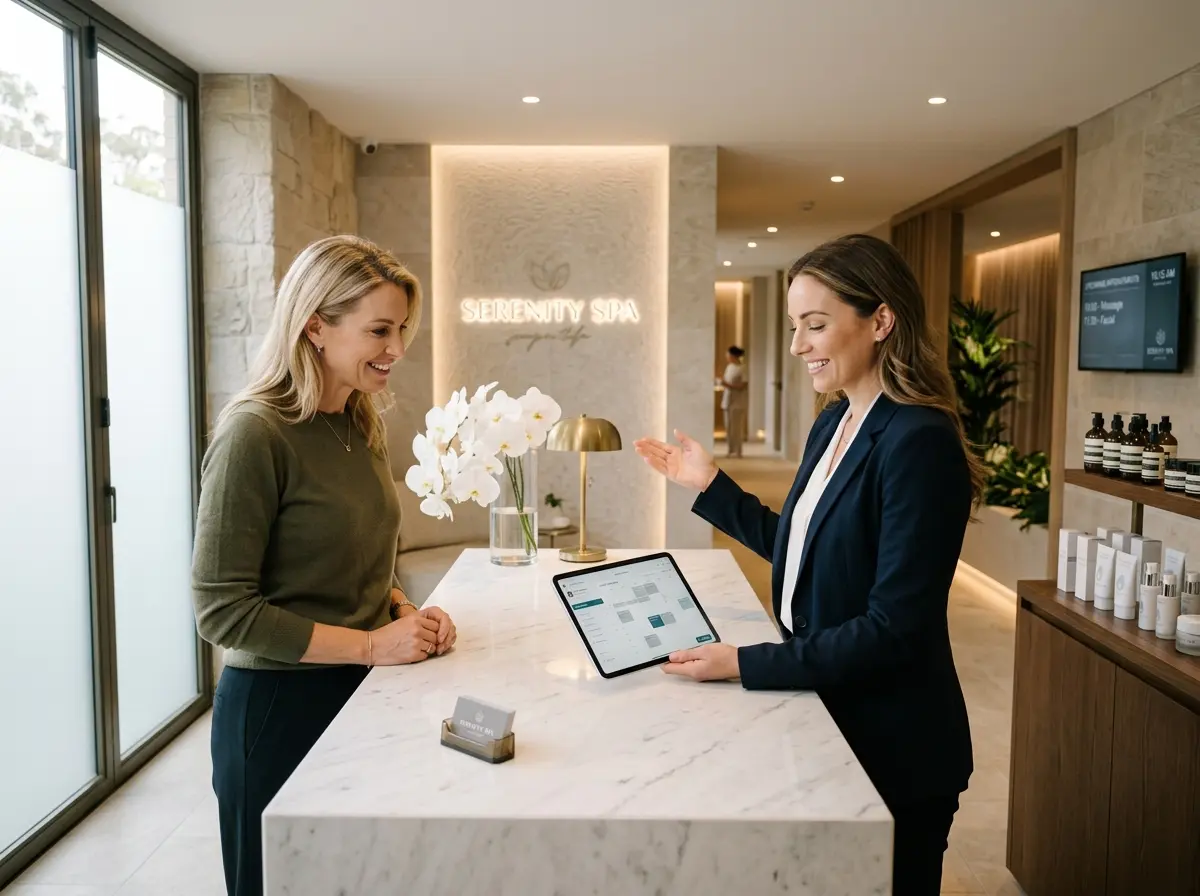
For businesses with a physical location, Stella operates as a human-sized kiosk inside the store — greeting customers, promoting specials, answering product questions, and engaging walk-ins proactively so your staff doesn't have to drop everything every time someone wanders in with a question. For any business, including online-only operations and solopreneurs, she handles phone calls around the clock, with configurable call forwarding for situations that require a human touch.
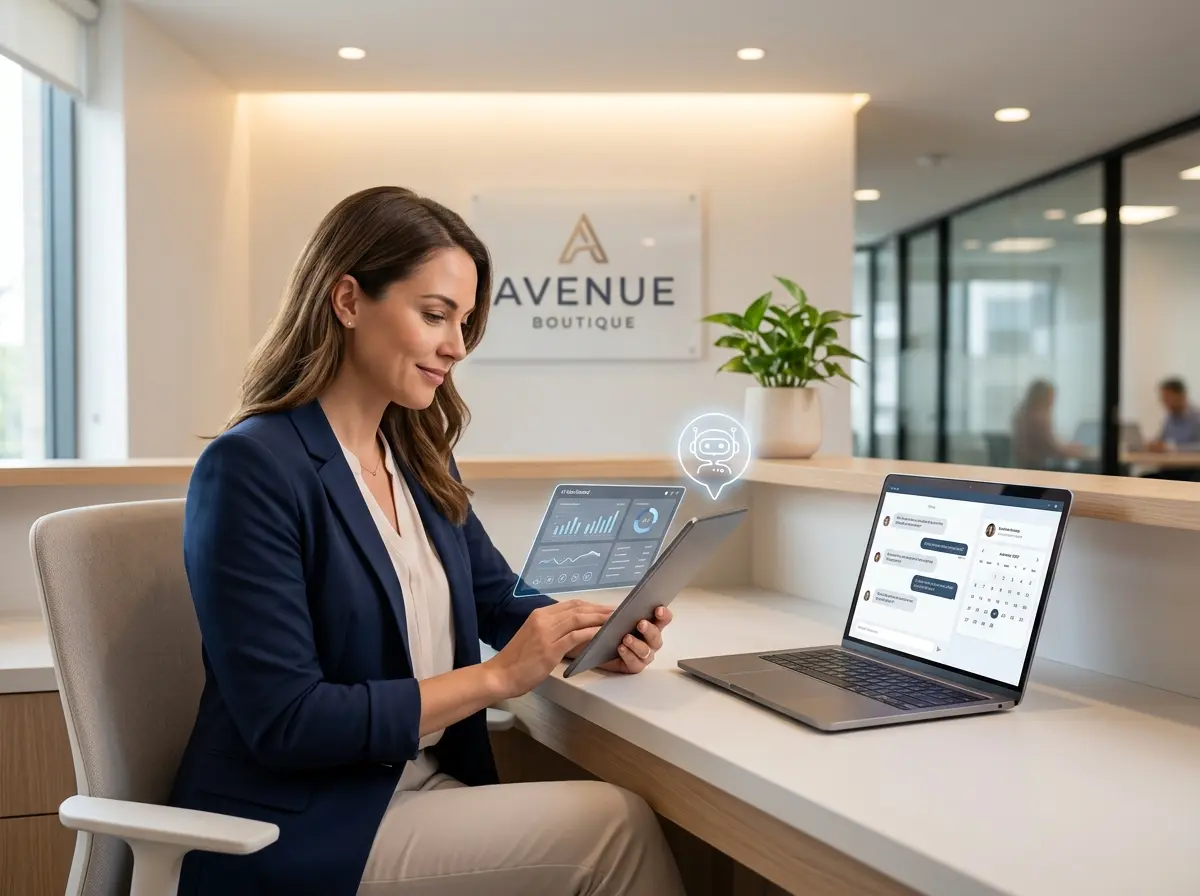
What makes the combination particularly useful for customer management is the built-in CRM and conversational intake forms. Stella collects customer information naturally — during phone calls, on the web, or at the kiosk — and stores it with AI-generated profiles, custom fields, tags, and notes. That means customer interactions are captured and organized automatically, without anyone on your team having to manually input data after a busy shift. At $99 per month with no upfront hardware costs, the barrier to entry is low enough that most businesses can try it without a significant financial commitment.
Making the Most of Your AI Receptionist: Practical Setup Tips
The difference between an AI receptionist that transforms your customer experience and one that frustrates everyone involved usually comes down to implementation. Here's how to get it right from the start.
Treat the Knowledge Base Like Onboarding a New Hire
When you hire a new employee, you don't throw them at customers on day one and hope for the best. You train them. The same principle applies to your AI receptionist. Document your services, your pricing, your common customer questions, your policies, your promotions, and your tone. The more thorough your initial knowledge setup, the more capable and accurate the AI will be in the field. Think of it as a one-time investment that pays dividends every day after.
Design Your Escalation Logic Intentionally
One of the most important decisions you'll make is defining when the AI hands off to a human and to whom. Map out the scenarios where human intervention adds the most value — complex complaints, high-value sales conversations, medical or legal sensitivities — and configure your forwarding rules accordingly. A well-designed escalation path means customers never feel abandoned, and your staff only gets involved when they're genuinely needed.
Review the Insights and Iterate
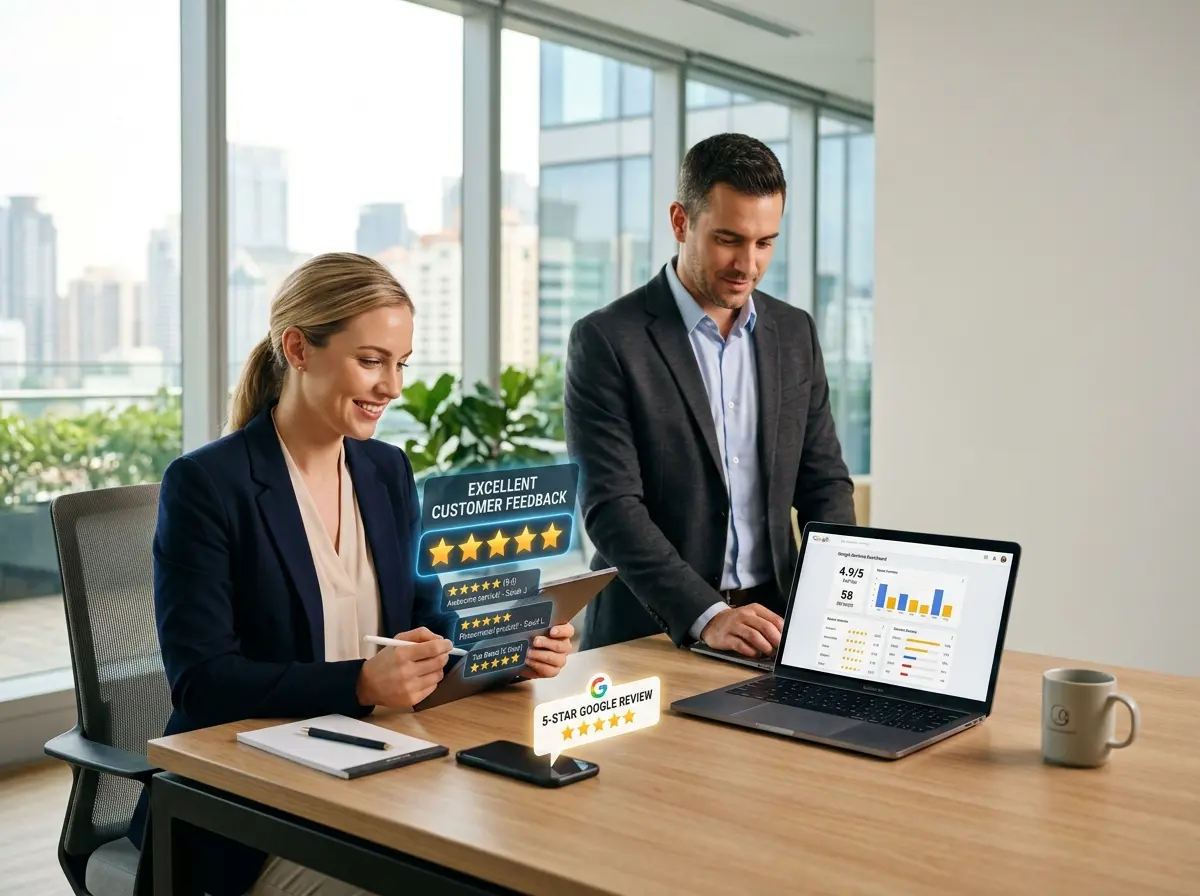
AI receptionists generate data that most small businesses have never had access to before: what questions customers ask most frequently, which promotions generate the most interest, what times of day call volume peaks, how long interactions run. This isn't just interesting — it's actionable. Review interaction summaries and analytics regularly, and use what you learn to refine your offerings, adjust your staffing, and improve your knowledge base over time. The businesses that get the best results from AI tools are the ones that treat them as evolving systems, not set-it-and-forget-it solutions.
A Quick Reminder About Stella
Stella is an AI robot employee and phone receptionist designed for businesses of all sizes — from solo operators to multi-location retailers. She works inside your store as a physical kiosk presence and answers your phones 24/7, all for a flat $99/month with no hardware investment required. Whether you're trying to stop missing calls, reduce staff interruptions, or simply show up more professionally for every customer, she's built to handle the front lines so you don't have to.
The Bottom Line: Right Tool, Right Job
AI receptionists aren't magic, but they're genuinely useful — and for small business owners managing limited staff and unlimited demands on their time, "genuinely useful" is worth quite a lot. The key is understanding what you're working with: a powerful, tireless, highly consistent front-of-house tool that excels at availability, information delivery, lead capture, and routine interactions — and that needs human backup for the moments that require real judgment and real empathy.
Here's how to move forward with confidence:
- Audit your current gaps. Where are calls being missed? Where is your staff most interrupted by routine questions? Where do customers fall through the cracks after hours? Start there.
- Define success before you start. Know what you're optimizing for — whether that's call answer rate, staff time reclaimed, lead capture, or customer satisfaction — so you can actually measure whether it's working.
- Invest in the setup. Document your knowledge base thoroughly, configure your escalation rules intentionally, and plan for a brief review period after launch.
- Iterate based on data. Use the insights your AI receptionist generates to keep improving — your knowledge base, your promotions, your staffing decisions, all of it.
You didn't get into business to answer the same five questions on repeat or miss calls because you were busy doing literally everything else. AI receptionists — when deployed thoughtfully — give you back time, reduce the chaos, and make sure your customers always get a professional, informed response the moment they reach out. That's not hype. That's just a better Tuesday.