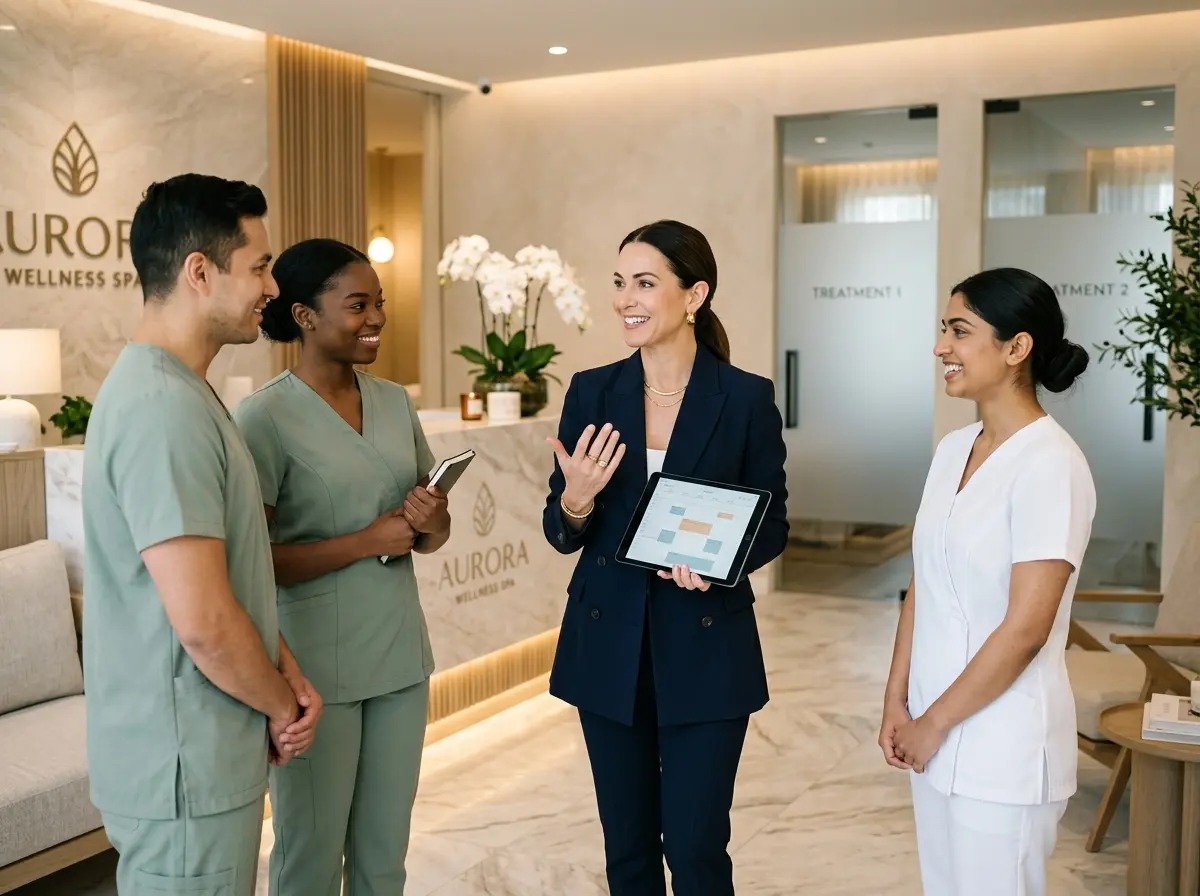
Introduction: The Art of Leading Without Hovering
Running a spa sounds like a dream — serene music, the scent of eucalyptus in the air, and a team of talented professionals creating relaxation for your clients. And it is wonderful, right up until you realize you're somehow simultaneously managing five massage therapists, three estheticians, a nail tech who goes rogue with scheduling, and a front desk that never seems fully staffed. Suddenly you're not the spa director — you're the frantic conductor of a wellness orchestra where half the musicians are in the middle of a 90-minute deep tissue session and can't hear you.
Managing multiple service providers is one of the most nuanced challenges in the spa and wellness industry. Each provider has their own clientele, their own rhythm, their own preferences, and — let's be honest — their own opinions about how things should be done. The temptation to micromanage is real, understandable, and, unfortunately, counterproductive. Studies consistently show that micromanagement leads to higher employee turnover, lower morale, and reduced productivity. In an industry where skilled providers are in high demand and client relationships are deeply personal, losing a talented therapist or esthetician can meaningfully hurt your bottom line.
The good news? There's a smarter way to stay in control without becoming the person who hovers outside every treatment room. This guide covers the systems, boundaries, and tools that let you lead with confidence — and maybe even enjoy the eucalyptus again.
Building the Foundation: Systems That Do the Managing for You
Standardize the Experience, Not the Personality
The biggest mistake spa directors make when trying to maintain quality across multiple providers is attempting to make everyone operate identically. Your clients aren't coming for a robotic, cookie-cutter experience — they're coming because they love your spa's standards and their provider's personal touch. The goal is to standardize the outcome, not the method.
Create clear service protocols that define what a completed service looks and feels like — proper draping, consultation before each session, product recommendations at the close — without dictating every movement in between. A good esthetician knows how to read a client's skin; they don't need you standing at the door reminding them. What they do need is a shared understanding of what "excellent" means at your spa. Document it, train it, and trust it.
Use Scheduling Tools That Create Natural Accountability
A disorganized schedule is a micromanager's breeding ground. When bookings are unclear, overlapping, or constantly shifting, directors feel compelled to intervene constantly — and honestly, who can blame them? The solution isn't more oversight; it's better infrastructure.
Invest in a scheduling platform that gives each provider visibility into their own calendar, sends automated reminders to clients, and flags conflicts before they become disasters. When providers can see their day clearly, manage their own flow, and handle basic client communication through the system, your role shifts from firefighter to facilitator. Set the rules of the platform, train the team on expectations, and let the software handle the reminders you used to deliver yourself three times a day.
Hold Structured Check-Ins Instead of Constant Check-Ins
Here's a radical thought: not every concern requires an immediate conversation. Replacing ad-hoc interruptions with structured weekly or biweekly team check-ins creates a predictable rhythm that providers actually appreciate. It signals that you trust them to handle day-to-day decisions without a play-by-play from management.
Use these meetings to review performance trends, address recurring issues, celebrate wins, and align on upcoming promotions. Keep them focused and time-boxed — nobody wants a 90-minute meeting right before a full book of appointments. When providers know there's a proper channel for concerns and feedback, they stop feeling the need to pull you aside every hour, and you stop feeling like you need to check in on everyone constantly.
Letting Technology Handle the Front Lines
Free Your Staff to Focus on Clients, Not Questions
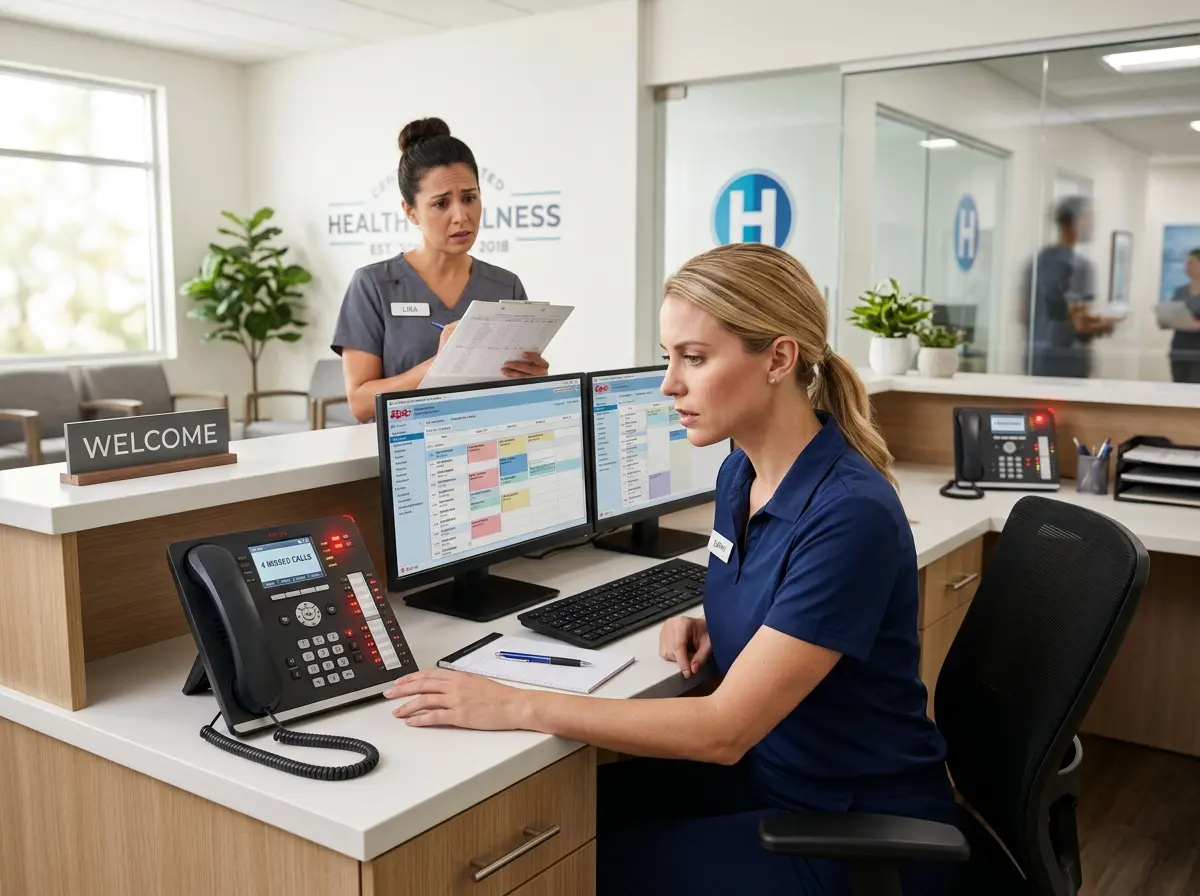
One of the quieter sources of chaos in a busy spa is the front desk bottleneck. Clients walk in with questions about services, pricing, and availability. The phone rings during peak hours. Staff members get pulled away from their actual jobs to answer the same five questions repeatedly. Before long, your providers are distracted, your guests feel neglected, and your front desk is drowning.
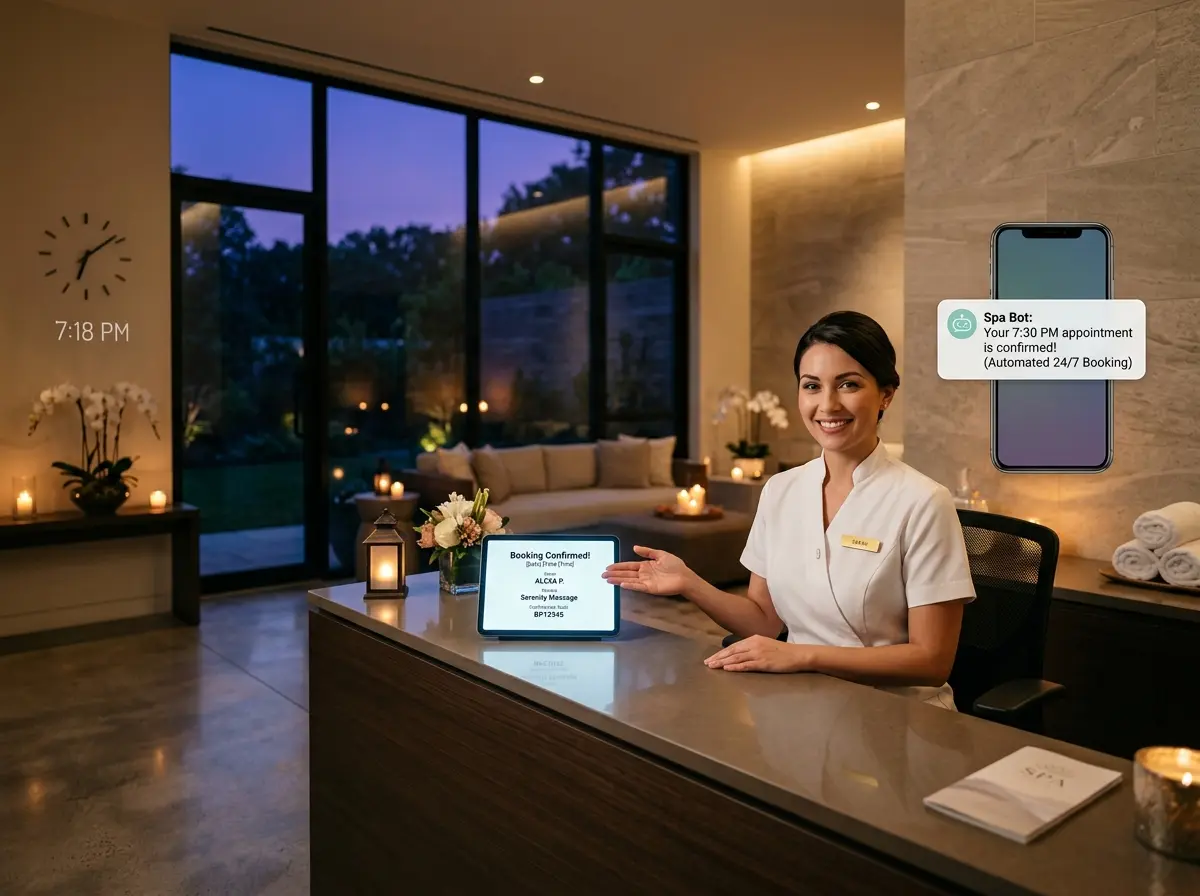
This is exactly the kind of problem that Stella — an AI robot employee and phone receptionist — was built to solve. Stella can greet clients as they walk in, answer questions about services, pricing, promotions, and policies, and proactively highlight current specials without any human involvement. For after-hours calls or overflow during busy periods, she handles phone inquiries with the same knowledge and consistency she delivers in person. That means your service providers stay focused on their clients, your front desk handles what actually requires a human, and nobody's chasing down a manager to answer a question about whether you offer hot stone upgrades. (You do. Stella will tell them.)
Empowering Providers Without Losing Oversight
Define the Boundaries of Autonomy Clearly
Empowerment without boundaries isn't empowerment — it's chaos with good intentions. If you want your providers to make decisions independently, they need to know exactly where their authority begins and ends. Can they offer a complimentary add-on to smooth over a scheduling hiccup? Can they adjust a service mid-session based on client preference? Can they reschedule a client without checking with the front desk first?
Map out the decisions providers can make on their own, the ones that require a brief heads-up, and the ones that always need manager approval. Write it down. Make it accessible. When providers have a clear decision-making framework, they stop second-guessing themselves and stop coming to you for permission on things that shouldn't require it. This alone will cut your daily interruptions dramatically.
Tie Performance to Outcomes, Not Activities
Micromanagement often stems from a fixation on activity — who's at their station, who's moving quickly enough, who's following the exact sequence you'd follow. But in a service-based environment, what actually matters is the outcome: Is the client happy? Did they rebook? Did they purchase a product? Did they leave a positive review?
Build a simple performance framework around measurable outcomes. Track rebook rates per provider, retail attachment rates, client satisfaction scores, and review volume. Share these metrics with your team transparently and regularly. When providers can see their own data, they self-manage more effectively — and you get to have meaningful performance conversations based on facts rather than feelings. A provider who consistently has a high rebook rate and glowing reviews doesn't need you timing their room transitions. A provider whose numbers are slipping gives you something concrete to address, kindly and professionally.
Create a Culture Where Feedback Flows Both Ways
Providers who feel heard are providers who stay. And providers who stay are the ones who know your clients, elevate your reputation, and make your job significantly easier. Build feedback loops that go in both directions — not just performance reviews from you to them, but genuine channels for them to surface ideas, flag frustrations, and contribute to how the spa operates.
This doesn't require elaborate systems. A simple anonymous suggestion form, a standing agenda item in team meetings for provider input, or even an open-door policy communicated clearly and actually honored can shift the culture. When your team sees their feedback implemented — even occasionally — trust builds. And a team that trusts you doesn't need to be micromanaged, because they're already invested in the outcome.
Quick Reminder About Stella
Stella is an AI robot employee and phone receptionist that greets clients in your spa, answers calls 24/7, promotes your services and specials, and handles routine questions so your team doesn't have to. At just $99/month with no upfront hardware costs, she's an affordable way to add a reliable, always-on presence to your business — no sick days, no turnover, no learning curve after onboarding.
Conclusion: Lead Like You Trust Your Team — Because You Should
Managing multiple service providers well isn't about doing less — it's about doing the right things. Build systems that create natural accountability. Set clear boundaries around autonomy so providers can make confident decisions without constant check-ins. Measure outcomes instead of policing activities. Create a feedback culture that makes people want to stay and grow with you. And use smart tools to handle the operational noise that drains everyone's energy.
Here are your actionable next steps to start implementing today:
- Document your service standards — Define what "excellent" looks like at your spa and share it with every provider.
- Audit your scheduling setup — Identify where the friction and confusion live, and upgrade your tools if needed.
- Create a decision-making map — Write out clearly what providers can handle independently versus what needs escalation.
- Pull your performance data — Set up tracking for rebook rates, retail sales, and client satisfaction per provider.
- Schedule your next team check-in — And put a feedback agenda item on it, then actually use it.
Your providers are skilled professionals who chose a career built on helping people. Give them the structure, trust, and tools to do that well — and you'll find that your role as spa director becomes a lot more strategic and a lot less stressful. The eucalyptus is waiting.