So You Want to Sell More Truffle Oil
Let's be honest — you didn't open a specialty food store just to ring up one jar of hot sauce and send customers on their way. You're curating an experience. You're introducing people to flavors they didn't know they needed. And somewhere between the artisan pickles and the single-origin chocolate bars, there's a goldmine of cross-selling opportunity that most specialty food store owners are leaving right there on the shelf.
Cross-selling — the art of suggesting complementary products to customers who are already buying — is one of the most effective and underutilized revenue strategies in specialty retail. Studies consistently show that cross-selling can increase revenue by 10–30%, and in a store where margins on specialty goods can be tight, that number matters a lot. The good news? You already have the raw materials. You have a beautifully curated inventory, passionate customers, and products that naturally belong together. You just need a strategy to connect the dots.
Building a Cross-Selling Foundation That Actually Works
Know Your Pairings Before Your Customers Do
The foundation of great cross-selling is product knowledge — and in a specialty food store, that's your superpower. You know that the aged manchego practically demands a drizzle of that wildflower honey on the third shelf. You know the fresh pasta pairs beautifully with the small-batch marinara three feet away. The question is: are you communicating those pairings, or just hoping customers figure it out?
Merchandise with Intent
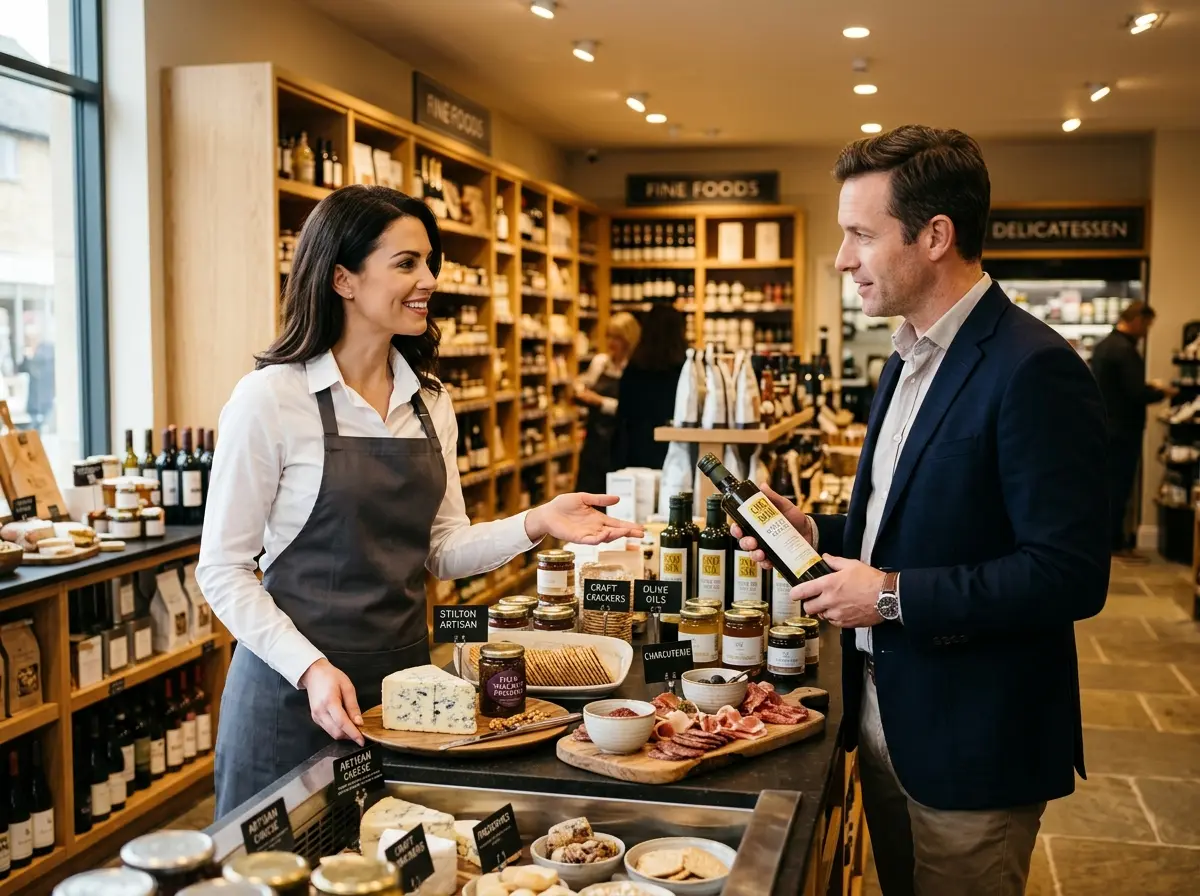
Retail merchandising is essentially cross-selling in physical form. When customers walk your aisles, their eyes — and buying decisions — are heavily influenced by what they see placed together. A bottle of high-end olive oil sitting next to a rustic bread mix and a jar of herb-infused sea salt isn't just visually appealing; it's a silent sales pitch.
Use Signage and Shelf Talkers Strategically
Not every customer will ask for a recommendation, and not every staff member will catch every opportunity. That's where well-placed signage earns its keep. Small shelf talkers — those little cards or tags that sit next to a product — can do wonders when they say something like "Pairs beautifully with our Fig & Balsamic Glaze (Aisle 2)" or "Customers who love this also grab our Calabrian Chili Paste." It's passive cross-selling that works around the clock, requires no payroll, and never forgets its talking points.
Leveraging Technology to Cross-Sell Smarter
Let Your In-Store Experience Do More Heavy Lifting
Even with the best merchandising and the most enthusiastic staff, there are moments when customers have questions and your team is occupied with another customer, a phone call, or the eternal mystery of a jammed receipt printer. This is exactly where Stella, the AI robot employee and phone receptionist, steps in beautifully for specialty food stores.
Stella stands inside your store as a friendly, human-sized kiosk that proactively engages customers — greeting them, answering product questions, and yes, recommending complementary items based on what they're interested in. She knows your specials, your pairings, and your promotions, and she delivers that information consistently without ever getting distracted or having an off day. On the phone side, she answers calls 24/7, which means a customer calling to ask what wine pairs with your aged gouda gets a helpful answer instead of a voicemail — and maybe leaves knowing they need to pick up that truffle salt while they're at it.
At $99/month with no upfront hardware costs, Stella is a practical addition for specialty retailers who want to maximize every customer interaction without stretching their staff thin.
Training Your Team to Cross-Sell Without Being Annoying
Make It Conversational, Not Scripted
Empower Staff with Deep Product Knowledge
Reward the Behavior You Want to See
Turning Online and Phone Interactions into Cross-Selling Opportunities
Cross-Sell Through Email and Digital Channels
Make Your Online Store Work as Hard as Your Physical One
If you sell online, your product pages are your silent sales staff — and most small specialty food retailers underestimate how much work those pages can do. Add "Frequently Bought Together" sections, build curated gift bundles, and write product descriptions that actively reference companions: "This tahini is spectacular on its own, but it's absolutely transcendent drizzled over our Aleppo-spiced roasted chickpeas." Every product page is a cross-selling opportunity. Treat it like one.
A Quick Reminder About Stella
Before we wrap up, it's worth mentioning again that Stella isn't just a novelty — she's a practical, always-on team member who greets customers in-store, answers phones 24/7, promotes your current deals, and helps cross-sell your products without taking a lunch break or calling in sick. For specialty food store owners who wear a dozen hats on any given Tuesday, having a reliable, knowledgeable presence handling customer interactions is genuinely valuable. She runs on a simple $99/month subscription, and she's ready to go from day one.