The Most Important Person in Your Salon Isn't Who You Think
You've spent thousands on your styling chairs. You've curated the perfect playlist. Your color game is flawless, your retail wall is immaculate, and your stylists could cut hair in their sleep. And yet — somehow — your salon is losing clients before they ever sit down. The culprit? That chaotic, undertrained, perpetually-distracted first point of contact standing between your business and its revenue.
We're talking about the receptionist.
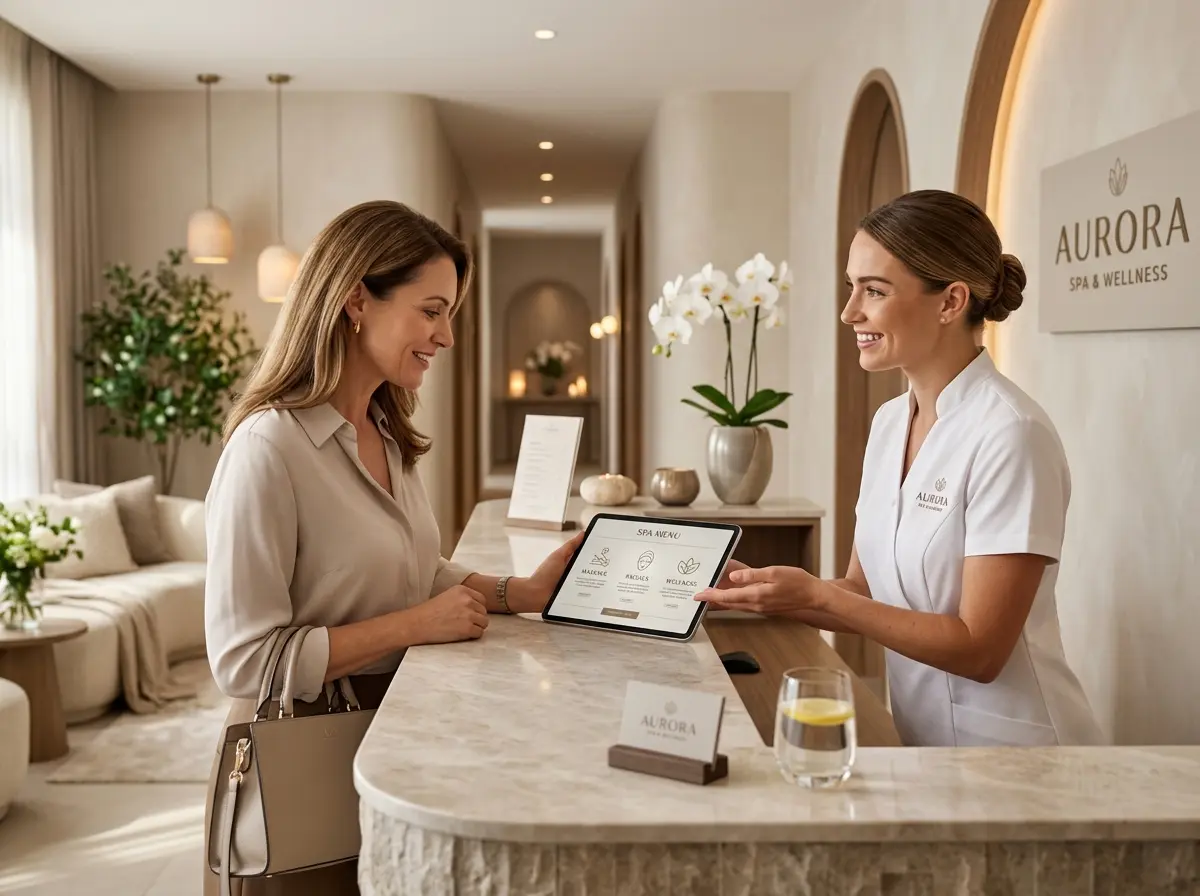
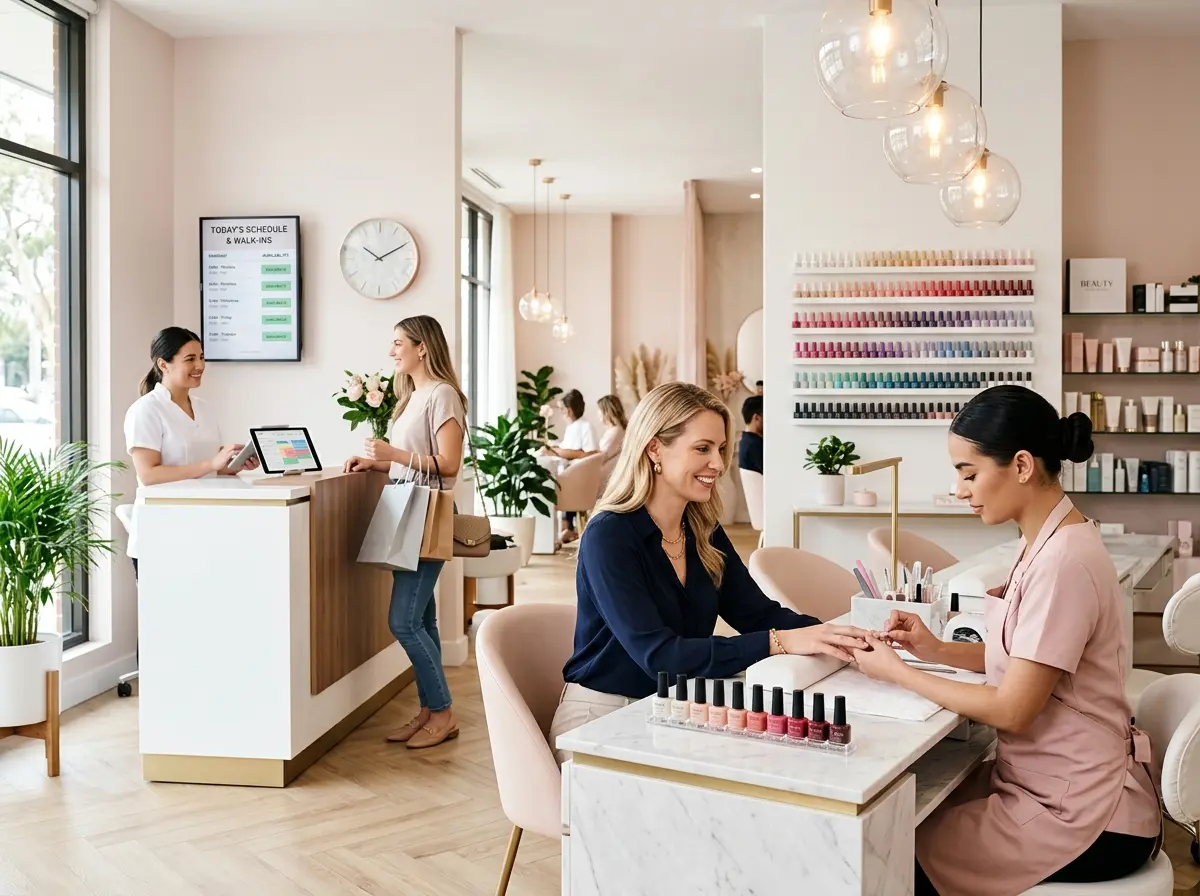
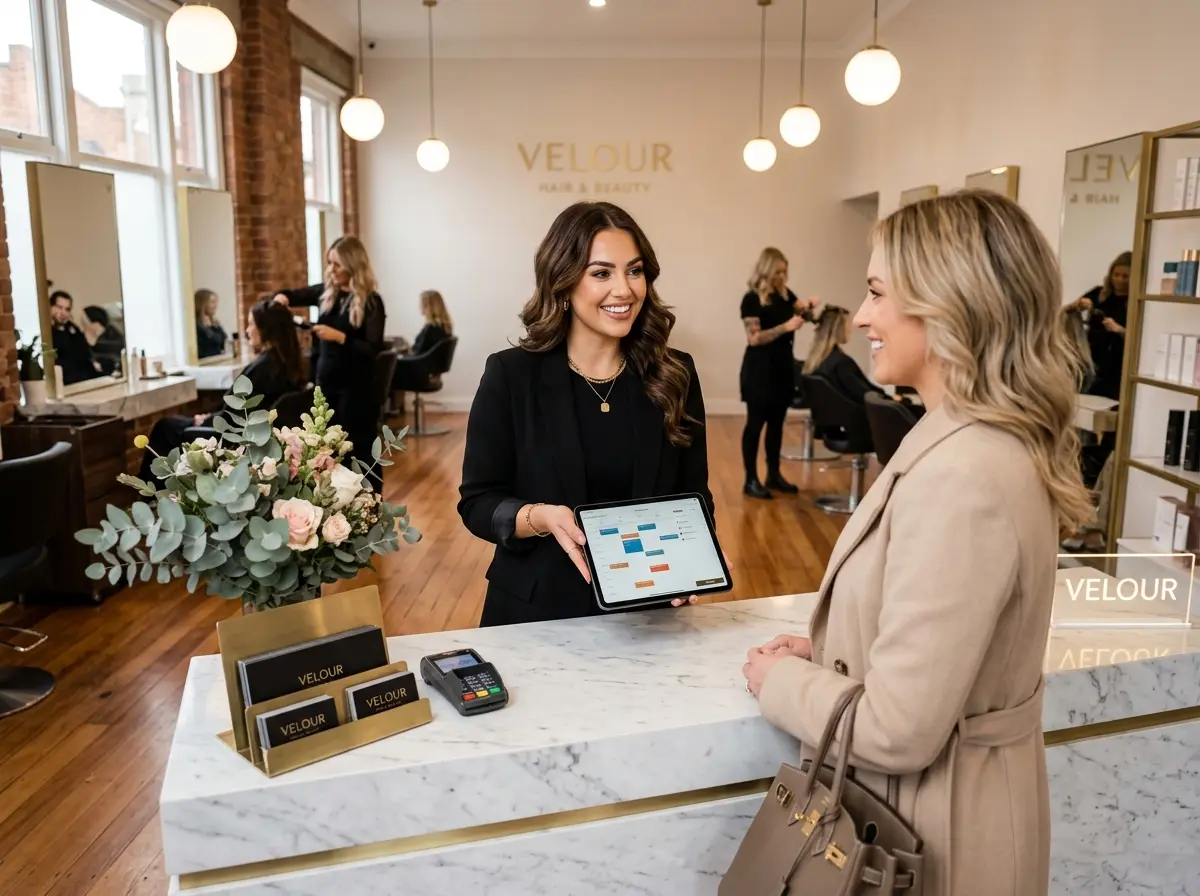
Here's a truth that most salon owners don't fully appreciate until they do the math: your front desk isn't just a place where people check in. It's the engine of your entire client experience. It's where first impressions are made, appointments are booked, upsells happen (or don't), and where your brand promise either gets delivered — or quietly dies. And yet it's often the position that gets the least training, the lowest pay, and the most turnover. Funny how that works.
So let's talk about why your receptionist is actually your highest-leverage hire, what that role should really look like, and how to stop leaving money on the table every single day your front desk is running below its potential.
What Your Front Desk Is Actually Worth
The Numbers Don't Lie
Let's put some real numbers on this. The average salon client is worth anywhere from $500 to $2,000+ per year in lifetime value when you factor in regular appointments, retail purchases, referrals, and add-on services. A single missed call — one prospective client who hung up because nobody answered — could represent years of recurring revenue walking straight out the door. Studies consistently show that over 60% of callers who reach voicemail will hang up without leaving a message and simply call the next salon on their list. That's not a receptionist problem. That's a revenue problem wearing a receptionist costume.
And it's not just missed calls. An undertrained front desk person who fails to mention your current keratin treatment promotion, who doesn't offer a blowout add-on at checkout, or who books a 45-minute slot for a service that should have been 90 minutes — every one of those moments costs you money. Multiply that by dozens of interactions per day and you start to see why this role deserves a lot more strategic attention than it usually gets.
First Impressions Are Made at the Front, Not the Chair
Your stylists can deliver the most technically perfect haircut in the county, but if the person who greeted the client was distracted, rude, or just vibing on their phone — that client's overall experience has already been tainted. Research from Harvard Business Review and various customer experience studies confirms what we all know intuitively: first impressions are disproportionately sticky. People form lasting opinions within seconds, and they're remarkably resistant to changing them even in the face of contradictory evidence.
This means your receptionist sets the emotional tone for every client interaction before a single scissor snips. A warm, knowledgeable, enthusiastic greeting primes clients to enjoy their experience, trust your recommendations, and spend more. A distracted or cold one does the opposite. The chair never gets a fair shot.
The Upsell Opportunity Most Salons Completely Miss
Here's an underappreciated truth: the front desk is one of the best upselling positions in your entire business. Not because it's a high-pressure sales environment — quite the opposite. It's because it's a natural conversation environment. When a receptionist genuinely knows your menu, your current promotions, and which services pair well together, they can organically mention that the client's regular cut would look amazing with a scalp treatment, or that you're running a buy-one-get-one on your most popular conditioning mask this month. These aren't pushy sales tactics. They're helpful suggestions from a knowledgeable friend — and they convert at surprisingly high rates when delivered naturally.
Most salons leave this entirely to chance, hoping their stylists remember to mention something during the appointment. That's a missed opportunity. A proactive front desk that's been trained to promote and cross-sell is worth its weight in gold foil.
Where Technology Can Quietly Do the Heavy Lifting
Plugging the Gaps Your Human Staff Can't Cover
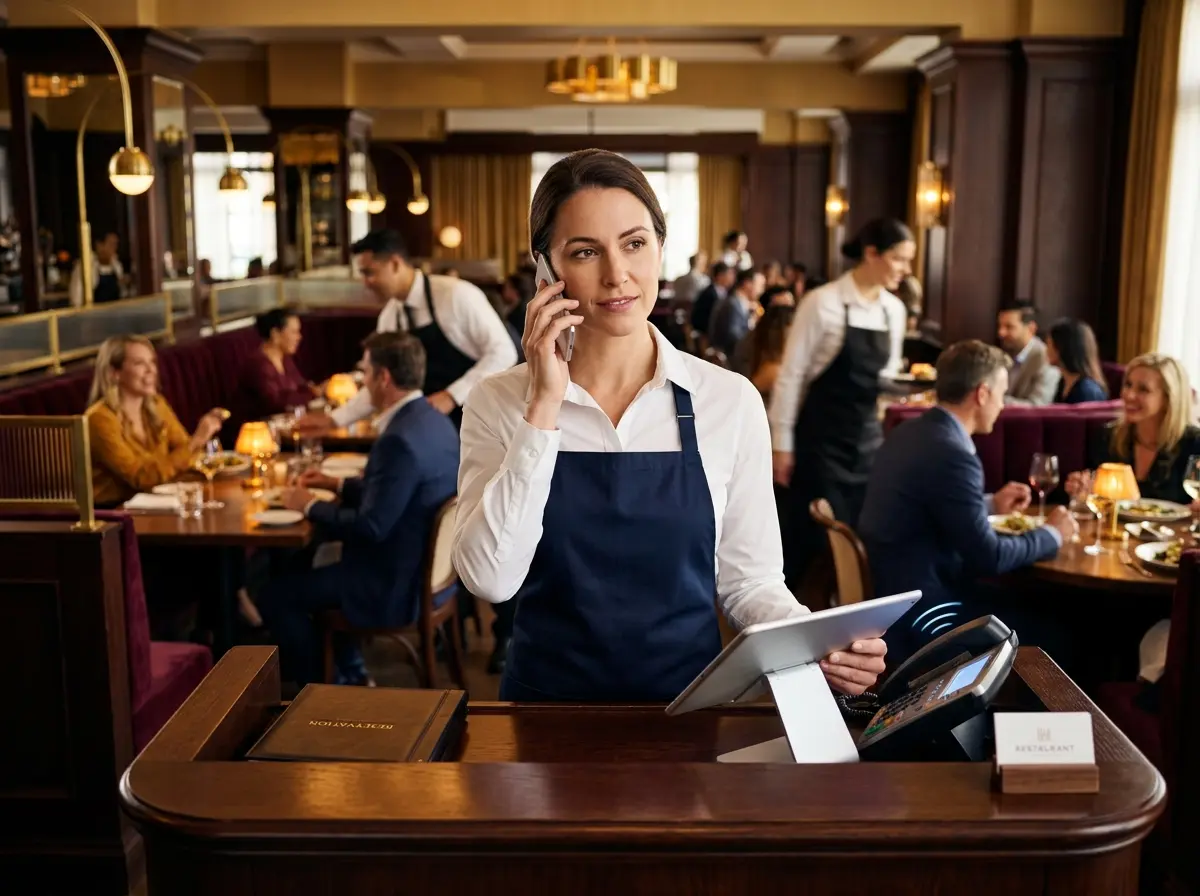
Even a great receptionist has limits. They go on lunch. They call in sick. They can't answer the phone while they're checking someone out at the desk. And unless you're paying someone to sit there at 9 PM on a Tuesday, any calls that come in after hours are just... gone. For a lot of salons, that's a significant and totally unnecessary leak in the bucket.
This is where Stella — an AI robot employee and phone receptionist — can step in and genuinely move the needle. Stella handles phone calls 24/7, greets walk-in clients from her in-store kiosk, answers questions about services, hours, and promotions, and even upsells your current offers conversationally — without ever taking a break or calling in with a mystery illness. She can collect client intake information, forward calls to your staff when needed, and send AI-generated voicemail summaries directly to your managers. For $99/month with no upfront hardware costs, she's not replacing your star receptionist — she's making sure nothing falls through the cracks when your star receptionist is busy being human.
Building a Front Desk That Actually Performs
Train Like the Role Matters — Because It Does
The first step to a high-performing front desk is treating it like the high-performing role it actually is. That means real onboarding, not a two-hour shadow session and a laminated menu. Your receptionist should know every service you offer, the approximate duration and price range of each, which services are frequently booked together, and what promotions are currently running. They should be able to answer "what do you recommend for color-treated hair?" without turning around to ask a stylist.
Consider building a simple knowledge base — even a Google Doc — that covers your top FAQs, your service menu in plain English, your upsell pairings, and your rebooking scripts. Review it with your team monthly as your menu and promotions evolve. This sounds basic because it is, and yet the vast majority of salons have never done it.
Create Scripts for High-Value Moments
Scripting doesn't mean robotic. It means prepared. There are a handful of moments in every client interaction that disproportionately affect revenue and retention: the initial greeting, the phone inquiry, the service upgrade offer, and the checkout and rebooking conversation. Having a thoughtful, practiced approach to each of these moments — rather than leaving it entirely to whoever is working that day — is the difference between a front desk that performs and one that just shows up.
For example, a simple rebooking script at checkout can dramatically improve your client retention rate. Instead of "okay, you're all set," try training your team to say something like: "Your next touch-up will look best in about six weeks — want me to grab you a spot now while the calendar is open?" That one sentence, repeated consistently, can meaningfully change your booking patterns over time.
Measure What Matters at the Front Desk
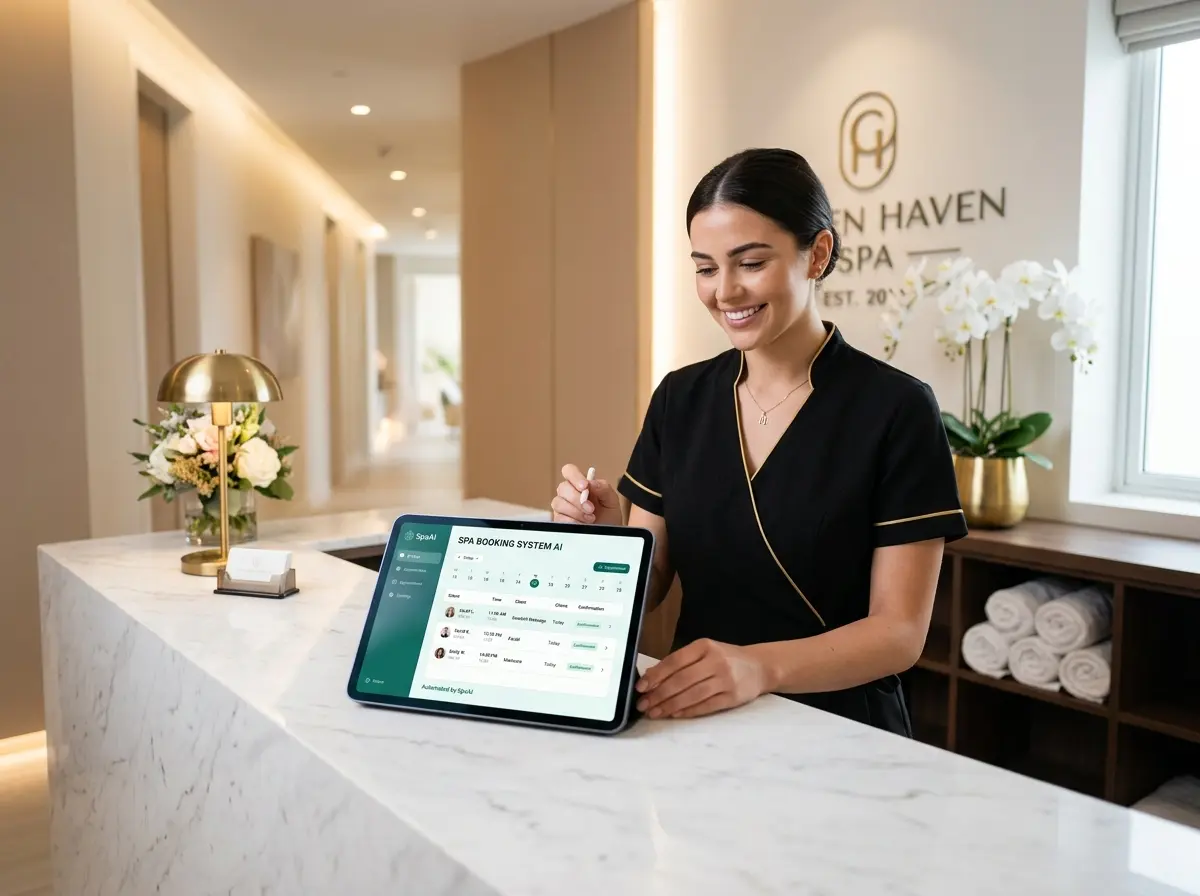
If you're not tracking front desk performance, you're flying blind. At minimum, consider monitoring your call answer rate, your booking conversion rate from new inquiries, your average transaction value at checkout, and your rebooking rate. These numbers will tell you a great deal about where your front desk is excelling and where it needs attention. Many salon software platforms provide some of this data natively — if yours does, use it. If it doesn't, it might be time to reconsider your tools.
The goal isn't to micromanage your receptionist. It's to give them — and yourself — a clear picture of what "good" looks like, so you can celebrate wins and address gaps before they become expensive habits.
A Quick Reminder About Stella
Stella is an AI robot employee and phone receptionist built for businesses exactly like yours. She greets clients at your in-store kiosk, answers calls around the clock, promotes your services and specials, and makes sure no opportunity slips through the cracks — all for $99/month with no upfront hardware costs and no turnover. She's not a replacement for great human staff. She's the safety net that makes them even better.
Your Front Desk Is Either Making You Money or Costing You Money
There's no neutral ground here. Every interaction at your front desk either reinforces your brand, builds client loyalty, and generates revenue — or it subtly undermines all of the above. The good news is that unlike some of the more complex challenges in running a salon, this one is eminently fixable. You don't need a massive budget or a complete overhaul of your team. You need intentionality.
Here's where to start:
- Audit your front desk experience this week. Call your own salon as a mystery shopper. Walk in during a busy period and observe. What do you notice?
- Build or update your front desk knowledge base. Make sure your team can confidently answer your top 20 customer questions without help.
- Write or refine scripts for your highest-value moments: the phone greeting, the service upgrade, and the checkout/rebooking conversation.
- Set two or three metrics to track front desk performance and review them monthly.
- Consider how technology can fill the gaps. If after-hours calls, walk-in greetings, or consistent promotion of your offers are slipping, it may be worth exploring tools designed for exactly that.
Your stylists are talented. Your space is beautiful. Now make sure the first thing your clients experience actually does justice to everything else you've built. Because a great salon with a weak front desk is like a great movie with a terrible opening scene — you spend the whole time trying to recover something that didn't need to be lost in the first place.