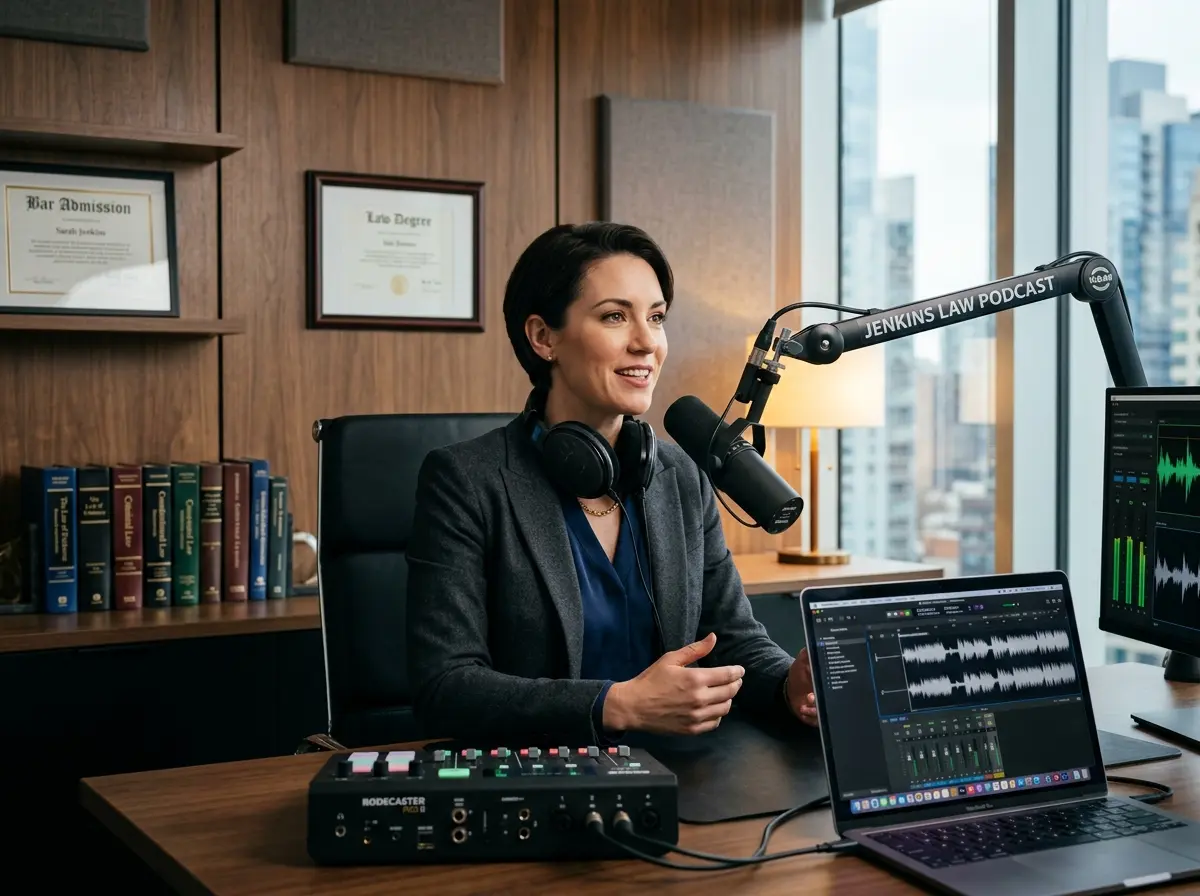
Why Your Law Firm Needs a Podcast (And No, This Isn't Just Another Marketing Gimmick)
Let's be honest — the legal industry is not exactly known for its thrilling marketing strategies. Most law firm websites look like they were designed in 2009 and haven't been touched since. Your competitors are probably still running the same yellow pages ad they bought a decade ago. So here's the good news: the bar is remarkably low, and a well-executed podcast could be exactly what separates your firm from every other attorney in your market who is still hoping word-of-mouth does all the heavy lifting.
Podcasting has exploded into a genuinely powerful business tool. According to Edison Research, over 135 million Americans listen to podcasts monthly — and many of them are exactly the kind of educated, decision-making adults who hire lawyers. A podcast doesn't just generate leads; it builds trust at scale. When a potential client has listened to you thoughtfully explain estate planning for 45 minutes on their morning commute, they don't call you as a stranger. They call you as someone they already respect. That is an almost unfair competitive advantage — and you should absolutely use it.
This guide will walk you through how to launch a podcast that positions your law firm as the dominant local authority in your practice area, from concept to content strategy to making sure you actually keep doing it after the first three episodes.
Building the Foundation: Strategy Before You Hit Record
Define Your Niche and Local Angle
The biggest mistake attorneys make when launching a podcast is trying to appeal to everyone. "General legal advice for everyone" is not a show — it's a liability disclaimer waiting to happen. Instead, get specific. Are you a personal injury firm in Nashville? A family law practice in Phoenix? An estate planning attorney in a mid-sized Midwestern city? Your podcast should reflect that identity proudly and loudly.
Your local angle is your superpower. National legal podcasts have massive audiences but zero connection to the specific judges, local regulations, court cultures, and community issues your listeners actually care about. You can speak to those things with authority. Episodes like "What to Expect When Filing a Personal Injury Claim in [Your City]" or "How [Your State]'s New Estate Laws Affect Families Like Yours" will consistently outperform generic legal content for a local audience.
Choose a Format That You Can Actually Sustain
Consistency is everything in podcasting. A show that publishes 30 episodes and disappears is worse for your brand than no show at all — it signals to potential clients that your firm starts things and doesn't finish them. Choose a format that fits your real schedule, not your optimistic schedule.
Solo commentary episodes (10–20 minutes) are the easiest to produce and position you as the expert voice. Interview-style episodes with guests — accountants, financial planners, local business owners, or even past clients with their permission — add variety and extend your reach through cross-promotion. A hybrid approach works beautifully: solo episodes for pure authority-building, interviews for relationship-building and audience growth. Commit to one episode per week, or even bi-weekly. Just commit to something and protect it like a client deadline.
Set Up Your Equipment Without Bankrupting Yourself
You do not need a professional recording studio. You need a decent USB microphone (the Rode NT-USB or Audio-Technica ATR2100x run under $100), a quiet room with soft furnishings to reduce echo, and free recording software like Audacity or GarageBand. A podcast hosting platform like Buzzsprout, Podbean, or Spotify for Podcasters will distribute your show to Apple Podcasts, Spotify, and everywhere else for a modest monthly fee. Total startup cost? Potentially under $200. The ROI on a single new client from your podcast pays for years of production costs.
Keeping Your Firm Running While You're Busy Being a Media Mogul
Don't Let Podcast Production Distract From Client Experience
Here's the irony of marketing success: the better your podcast performs, the more people call your firm — often at inconvenient times, often with basic questions, and often while you're in the middle of recording your next episode. This is where Stella, the AI robot employee and phone receptionist, earns her keep. Stella answers your phones 24/7 with the same professionalism and business knowledge every single time, so a prospective client who heard your podcast episode at 11pm on a Thursday and decided to call immediately doesn't get voicemail — they get a warm, intelligent response. She can collect intake information, answer questions about your practice areas and consultation process, and flag urgent calls for human follow-up. If you have a physical office, she also greets walk-ins proactively, so your front desk isn't overwhelmed when a podcast-driven marketing campaign brings in a surge of new interest. Your podcast builds the audience; Stella makes sure no opportunity slips through the cracks when that audience converts.
Content Strategy: What to Actually Talk About
Answer the Questions Your Clients Are Already Asking
Your best episode ideas are hiding in plain sight — in your intake forms, in your receptionist's call logs, in the questions your paralegal answers fifteen times a week. If you've heard it once in your office, a thousand people in your city have Googled it. Build an episode around it. Topics like "Do I really need a will if I'm under 40?", "What happens at my first consultation with a divorce attorney?", or "How long does a workers' compensation claim actually take?" are genuinely useful, naturally searchable, and position you as the approachable expert rather than the intimidating one.
Avoid the temptation to make every episode a veiled advertisement for your firm. Listeners are sophisticated. They know you're a lawyer with a podcast because you want clients — that's fine and they accept it — but the moment the content starts feeling like a sales pitch, they stop listening. Deliver real value, and the trust (and the calls) will follow organically.
Build Local Authority Through Community Involvement Episodes
One of the most underutilized podcast strategies for local businesses is the community-focused episode. Interview a local judge (carefully and appropriately), a financial advisor who serves your same client demographic, a nonprofit director working in an area adjacent to your practice, or a local business leader. These episodes accomplish several things simultaneously: they provide genuine value to your audience, they expand your network, and they signal that your firm is embedded in the fabric of the local community — not just another anonymous service provider.
When you cross-promote these episodes with your guests, you reach their audiences too. A respected local accountant sharing your estate planning episode with their email list is worth more than most paid advertising you could buy. These relationships also frequently generate direct referrals, which is, as any attorney knows, the most valuable lead source of all.
Repurpose Everything Relentlessly
A single podcast episode should not live and die on Spotify. Transcribe it and turn it into a blog post for your website — excellent for SEO, especially for local search terms. Pull two or three compelling quotes and turn them into social media graphics. Clip a strong 60-second segment for a YouTube Short, Instagram Reel, or TikTok. Send the episode summary in your email newsletter. Submit it as a resource to local community groups, neighborhood Facebook pages, or business associations.
The attorneys who dominate their local markets with podcasting are not necessarily the ones who produce the most content — they're the ones who squeeze the most value out of every piece they create. One well-researched, well-delivered episode, repurposed intelligently across six channels, creates a consistent drumbeat of visibility that builds authority month after month.
A Quick Reminder About Stella
Stella is an AI robot employee and phone receptionist built for businesses exactly like yours — available as a friendly in-office kiosk presence and as a 24/7 intelligent phone answering solution. At just $99/month with no upfront hardware costs, she ensures your firm always has a professional, knowledgeable voice ready to greet clients whether your team is in a deposition, recording a podcast episode, or simply closed for the evening. She's the reliable front-of-house presence that never calls in sick, never gets flustered, and never puts a potential client on hold indefinitely.
Your Next Steps: From Idea to First Episode
Launching a podcast is genuinely not as complicated as it sounds once you stop overthinking it and start treating it like a client matter — with a deadline, a deliverable, and a plan. Here's how to move from "I've been meaning to do this" to actually publishing:
- Decide your niche and local angle this week. Write it down in one sentence.
- Choose your format — solo, interview, or hybrid — and commit to a realistic publishing schedule.
- Order your equipment and set up your recording space. Keep it simple.
- Plan your first five episodes before you record any of them. This prevents the dreaded "what do I talk about now?" paralysis after episode two.
- Record episodes one and two before you launch. This gives you a buffer and makes you look like you know what you're doing from day one.
- Publish, promote, and repeat. Tell your existing clients. Post on social. Ask guests to share. Then do it again next week.
The law firms winning the local authority game in the next decade will be the ones that invest in genuine, consistent, valuable content today. Your podcast won't make you famous overnight — but twelve months from now, when potential clients in your city are choosing between you and the attorney down the street who doesn't have one, you'll understand exactly why you started. Now go record something.