Introduction: Because "Oops, We Messed Up Your Order" Is Not a Communication Strategy
Let's be honest — in the restaurant business, order errors aren't a matter of if, they're a matter of when. A missed modification here, a wrong entrée there, and suddenly your carefully crafted dining experience is unraveling faster than a soggy paper straw. The difference between a one-star review and a loyal returning customer often comes down to one thing: how your team communicates when something goes wrong.
Most restaurants handle order errors reactively — a manager gets flagged down, someone shrugs, an apology is mumbled, and maybe a free dessert appears. Charming? Sometimes. Scalable and professional? Absolutely not. Without a formal communication protocol, every order mishap becomes its own little improvised drama, and your staff and customers are both left guessing about what happens next.
A structured, documented protocol for handling order errors isn't bureaucratic overkill — it's one of the smartest investments you can make in customer retention and staff confidence. This post will walk you through how to build one, why it matters more than you think, and how to make sure your entire team (human and otherwise) is on the same page when the kitchen sends out the wrong dish.
The Real Cost of Getting Order Errors Wrong
It's Not Just About the Food
A wrong order costs you more than the price of a remade dish. According to research by Harvard Business School, increasing customer retention rates by just 5% can increase profits by 25% to 95%. Meanwhile, a single bad experience — particularly one that's handled poorly — is enough to send a customer straight to a competitor. In the age of Google Reviews and Yelp, that dissatisfied customer isn't just walking out your door; they're potentially telling hundreds of people about it before they even get home.
The real cost of a fumbled error response includes the replacement meal, the comped item or discount you'll likely offer, the time your manager spent putting out the fire, and the very real possibility that the customer never comes back. And if your staff handled it awkwardly because they didn't know what they were supposed to do? That's also a staff morale issue — nobody likes feeling unprepared in a tense moment.
Inconsistency Is the Enemy of Trust
Here's a scenario: Table 4 gets the wrong order, and your most experienced server swoops in, apologizes sincerely, offers a complimentary appetizer, and has the correct dish out in eight minutes flat. Table 7 gets the wrong order, and the new hire freezes, disappears to find a manager for six minutes, and comes back to say "we're working on it." Same restaurant. Two completely different experiences.
Inconsistency like this erodes customer trust in your brand, even if individual team members are well-meaning. A formal protocol ensures that every guest, regardless of which server they have or what time of day they're dining, receives a consistent, professional response when something goes sideways. That consistency is your brand.
Staff Confidence and Accountability
When your team knows exactly what to do in the event of an order error — who to notify, what to say to the customer, what remedies they're authorized to offer — they feel empowered rather than panicked. This reduces the awkward scramble, shortens resolution time, and creates a culture of accountability where errors are handled swiftly and professionally rather than swept under the rug or escalated unnecessarily.
How the Right Tools Help You Stay Ahead of Communication Gaps
Technology That Works While You're Putting Out Fires
While you and your team are focused on resolving an order error at table 12, your front-of-house still needs to function. Phones still ring. New customers still walk in. Questions still need to be answered. This is where Stella, the AI robot employee and phone receptionist, quietly becomes one of the most useful members of your team. Her in-store kiosk presence means she can greet incoming guests, answer questions about your menu, specials, or hours, and keep the front-of-house experience running smoothly — even when your human staff is momentarily occupied with a situation in the back.
On the phones, Stella answers every call 24/7, handles common questions, and forwards calls to the right person based on conditions you configure. If a customer calls to report an issue with a delivery order or wants to follow up on a complaint, Stella ensures the call is handled professionally and that your team gets notified immediately — no missed calls, no voicemails sitting unread until Tuesday. That kind of reliable backup isn't just convenient; it's part of your communication infrastructure.
Building Your Formal Order Error Communication Protocol
Step 1 — Define the Tiers of Errors and Authorized Responses
Not all order errors are created equal. A missing side salad is not the same as delivering a dish to a guest with a documented food allergy. Your protocol should clearly define tiers of error severity, and for each tier, specify exactly what your staff is authorized to do — and what requires manager involvement.
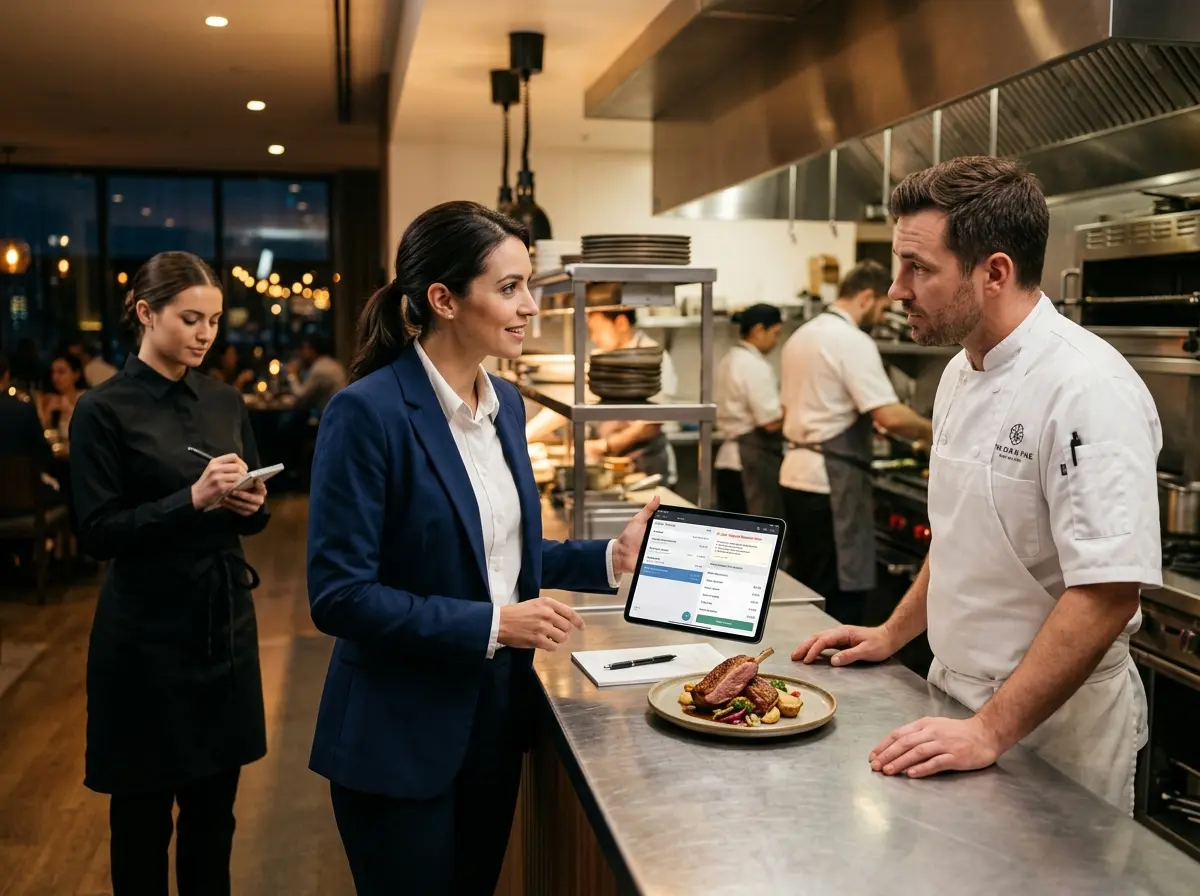
For example, a Tier 1 error (minor issue, like a missing condiment or a slightly overcooked side) might authorize any server to offer an immediate replacement or a small comp at their discretion. A Tier 2 error (wrong entrée, significant delay) might require a server to notify the floor manager and offer a complimentary item from an approved list. A Tier 3 error (allergen violation, serious service failure) should trigger an immediate manager response, possible full comp, and a documented incident report. Write this down, train every staff member on it, and post it where your team can reference it during onboarding.
Step 2 — Script the Customer Communication
Your team shouldn't have to improvise what they say to a frustrated customer. Provide them with clear, empathetic language for each scenario. This doesn't mean robotic scripting — it means giving them a framework so they can speak confidently and consistently. A simple structure works well: acknowledge, apologize, act.
Acknowledge the error without making excuses. Apologize genuinely and briefly — customers don't want an essay, they want a solution. Then act immediately by communicating what you're doing to fix it and what you're offering as a gesture of goodwill. Practice this with your team during pre-shift meetings so it feels natural, not rehearsed.
Step 3 — Close the Loop Internally and Externally
A great protocol doesn't end when the correct dish hits the table. Internally, errors should be logged — even briefly — so you can identify patterns. Are certain menu items being modified too often? Is one station consistently sending out wrong orders during the dinner rush? That data is gold for operational improvement.
Externally, a follow-up matters more than most restaurateurs realize. If a guest had a negative experience, a brief check-in from the manager before they leave — or even a follow-up message if you have their contact information — can transform a frustrated customer into an impressed one. People remember how you handled the problem far longer than they remember the problem itself.
Quick Reminder About Stella
Stella is an AI robot employee and phone receptionist designed to give businesses a reliable, professional presence without the overhead. She greets customers in-store, answers phone calls around the clock, promotes your specials, and handles common questions so your human team can stay focused on delivering great experiences. At just $99/month with no upfront hardware costs, she's an easy addition to any restaurant's communication toolkit.
Conclusion: Stop Winging It — Your Customers Deserve Better
Order errors will happen. That's the restaurant business. But how you respond to them is entirely within your control, and a formal communication protocol is the tool that turns a potentially damaging moment into a demonstration of your professionalism and care. The restaurants that retain loyal customers through mistakes aren't necessarily the ones with the fewest errors — they're the ones with the clearest, most consistent systems for making things right.
Here are your actionable next steps to get started:
- Audit your current process. Talk to your staff and honestly assess how order errors are being handled today. Is there consistency? Is there confidence? Or is there a lot of hoping for the best?
- Draft your tiered error response framework. Define the severity levels, the authorized responses, and who needs to be involved at each stage.
- Write the scripts. Give your team the language they need for each scenario — acknowledge, apologize, act.
- Create a simple logging system. Even a shared spreadsheet or a note in your POS system is enough to start identifying patterns.
- Train, then revisit. Roll out the protocol in a team meeting, role-play a few scenarios, and schedule a quarterly review to refine it as your team and menu evolve.
A restaurant that handles problems gracefully is a restaurant that people trust. And trust, in this industry, is everything. Now put down the complimentary dessert you've been handing out as a Band-Aid and build something that actually works.