Introduction: Because "Almost Fresh" Isn't a Selling Point
There's a reason people line up outside artisan bakeries at 7 a.m. — the promise of something warm, golden, and made with actual care. But behind every perfect croissant is a bakery owner quietly doing the math on how many didn't sell yesterday, what's turning stale in the display case right now, and whether today's sourdough batch was maybe, just maybe, a touch too optimistic.
Food waste in the bakery industry is a serious and expensive problem. According to the USDA, food waste accounts for roughly 30–40% of the U.S. food supply, and bakeries — with their daily production cycles and short shelf lives — are particularly vulnerable. For a small artisan shop, that unsold inventory doesn't just represent wasted ingredients. It represents wasted labor, wasted energy, and wasted profit margins that were already thinner than a well-laminated croissant dough.
The good news? Smart inventory management isn't rocket science. It's closer to bread science — which is actually harder, but you've already figured that part out. This guide walks you through practical strategies to reduce waste, protect your margins, and keep your shelves looking intentionally curated rather than desperately depleted.
Know What You're Making (and Why)
Track Sales Data Like Your Business Depends on It — Because It Does
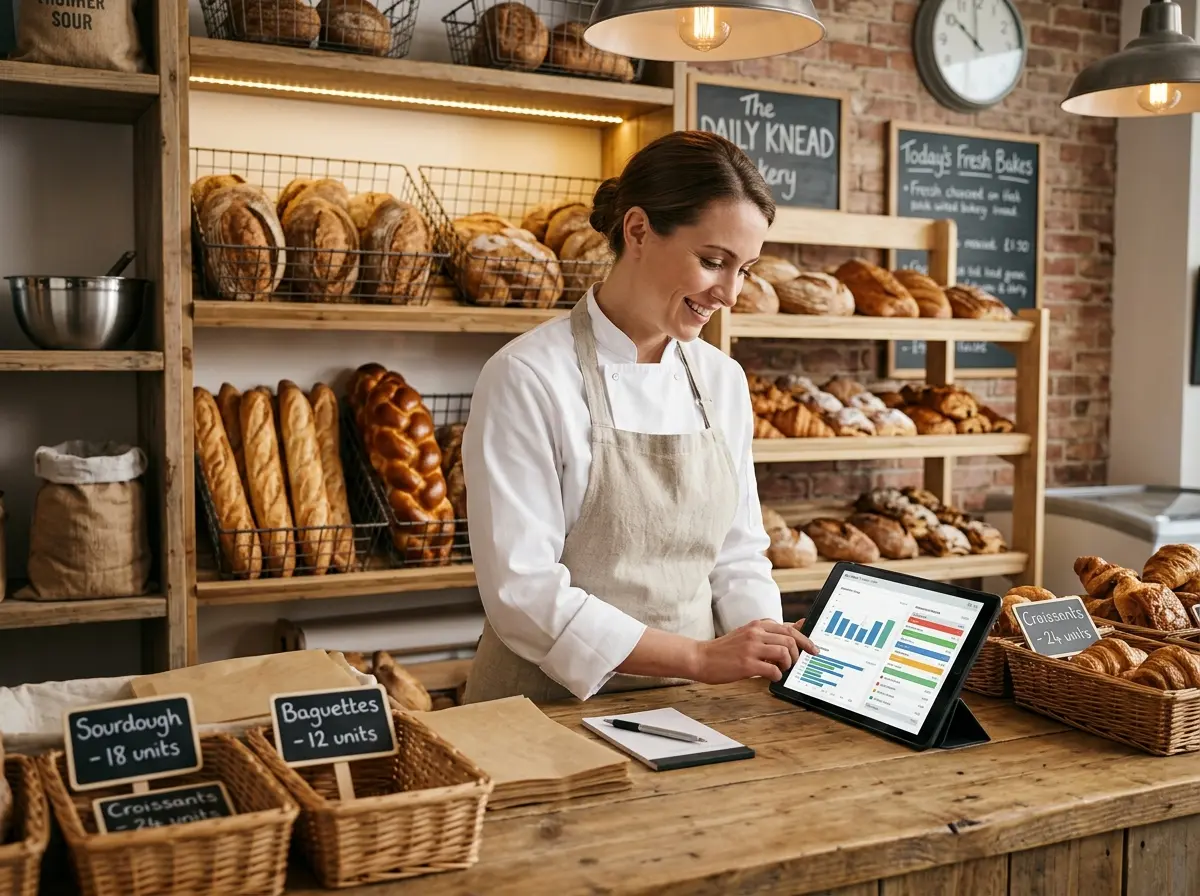
The foundation of smart inventory management is knowing what actually sells, when it sells, and in what quantities. Many bakery owners still rely on gut instinct and tribal knowledge — "we always sell out of the apple turnovers on Saturday" — but feelings are not a forecasting system. Your point-of-sale data is. If you're not already reviewing daily and weekly sales reports by item, start now. Look for patterns: which products consistently sell through, which ones linger, and which days of the week produce the biggest swings in volume.
Once you have a few months of reliable data, you can start building production schedules around actual demand rather than optimistic assumptions. This alone can dramatically reduce end-of-day surpluses. Many modern POS systems allow you to set par levels and low-stock alerts, which take the guesswork out of reordering ingredients and help you plan production quantities with a lot more confidence.
Seasonal and Local Demand Are Your Secret Weapons
Artisan bakeries have an inherent advantage over chain operations: flexibility. You're not locked into a corporate menu cycle. Use that. Pay attention to local events, school calendars, weather patterns, and community rhythms. A rainy Tuesday in October is not the same as a sunny Saturday in May, and your production plan shouldn't treat them identically.
Build a simple demand calendar — even a basic spreadsheet works — that notes high-traffic days, local festivals, holidays, and anything else that historically moves product. Cross-reference it with your sales data, and you'll start to see a clearer picture of when to scale up and when to pull back. The goal isn't perfection; it's a smarter starting point each day.
From Oven to Operations: A Quick Word on Running a Smarter Shop
Let Technology Handle What You Shouldn't Have to
Here's a gentle truth: every minute your staff spends answering the phone about your hours, your gluten-free options, or whether you do custom cake orders is a minute they're not packaging pastries, helping in-store customers, or doing literally anything that requires their actual physical presence in the bakery. That's where Stella comes in.
Stella is an AI robot employee and phone receptionist that can greet customers at your kiosk, answer questions about your menu and daily specials, promote featured items, and handle incoming calls 24/7 — all without taking a coffee break or calling in sick during your Saturday morning rush. She can upsell and cross-sell by recommending complementary products, highlight limited-quantity items before they're gone, and collect customer information through conversational intake forms. For a bakery trying to reduce waste while maximizing each customer interaction, having a tireless, knowledgeable presence on the floor and on the phone is a genuinely practical advantage — not just a novelty.
Turning Surplus Into Strategy
Build a End-of-Day Markdown and Donation System
Even the best-run bakery will have surplus some days. The key is having a plan for it before it becomes a problem. A tiered markdown system is one of the most effective tools available. Designate a specific time — say, two hours before closing — when items that haven't sold get discounted by a set percentage. This isn't a sign of desperation; it's smart retailing. Customers who know about your end-of-day deals will come specifically for them, turning potential waste into a loyal (and deal-hungry) customer segment.
For items that won't move even at a discount, establish a standing relationship with a local food bank, shelter, or community organization. Many have pickup arrangements that require minimal effort on your end, and the goodwill — not to mention the potential tax deduction — is worth it. Document your donations carefully so you have accurate records for both accounting and any applicable tax purposes.
Repurpose Before You Discard
Day-old bread isn't garbage — it's an ingredient. Croissants that didn't sell become the base for a killer bread pudding or a batch of croutons you can sell as an add-on. Overripe fruit filling gets folded into a new pastry or featured as a daily special. The best artisan bakers have always operated with a nose-to-tail mentality borrowed from chefs: nothing leaves the kitchen without having been fully considered.
Create a small internal system for flagging items that are approaching the end of their primary shelf life and routing them to a secondary use category. This requires a little discipline and a bit of creativity, but it's one of the highest-return habits you can build into your operation. You're not wasting product; you're maximizing it.
Ingredient-Level Waste Tracking Changes the Math
Most bakery owners think about waste at the product level — the unsold loaves, the unclaimed custom order — but ingredient-level tracking can be even more revealing. If you're consistently over-ordering flour, butter, or specialty fillings, that excess cost compounds quietly in your food cost percentage without ever showing up on a customer receipt. Implement a simple weekly inventory count for your top ingredients and compare it against your production records. Over time, you'll identify where your purchasing habits are running ahead of your actual needs, and you can tighten those orders accordingly.
Quick Reminder About Stella
Stella is an AI robot employee and phone receptionist available for just $99/month with no upfront hardware costs. She works inside your bakery as a friendly kiosk presence and answers your phones around the clock — promoting specials, answering customer questions, and freeing your team to focus on what they do best. Easy to set up, always ready, and never in a bad mood before her first coffee.
Conclusion: Fresh Product, Leaner Operations, Happier Margins
Running an artisan bakery is one of the most demanding and rewarding things a person can do in the food business. The craft is real, the hours are brutal, and the margins require you to be genuinely smart about every element of the operation — including what you make, how much of it you make, and what happens to the portion that doesn't sell by closing time.
Here are your actionable next steps to get started:
- Pull your POS data for the last 90 days and identify your top five over-produced items.
- Build a simple demand calendar that accounts for local events, seasonal trends, and day-of-week patterns.
- Establish a markdown policy with a set trigger time and discount percentage, and communicate it to your regular customers.
- Identify one or two secondary-use recipes for your most commonly over-produced products.
- Start a weekly ingredient count for your top five ingredients and compare against actual usage.
None of these steps require a significant investment of money. They require attention, consistency, and a willingness to let data lead where intuition used to guess. Your bakery is built on the promise of freshness — and with the right systems in place, that promise doesn't have to come at the cost of your bottom line.