When Moving Trucks Become Money Trucks
Here's a fun fact nobody tells you when you open a dental practice: acquiring a new patient costs somewhere between $200 and $500, and that's before they've even sat in your chair. So when Dr. Maya Chen, a pediatric dentist running a busy two-operatory practice in suburban Ohio, was looking for a smarter way to grow without torching her marketing budget, she did something refreshingly old-school in a world obsessed with TikTok ads and SEO rabbit holes.
She sent postcards to people who had just moved into the neighborhood.
That's it. Postcards. With stamps. Like it was 1987.
The result? A 30% practice growth in under twelve months. New patient appointments filled her schedule weeks out. Her front desk staff stopped looking quite so defeated. And Dr. Chen went from quietly anxious about her growth trajectory to confidently planning a third operatory expansion.
If you're a dentist — or really any local business owner — wondering whether new mover mailer campaigns are worth your time and money, pull up a chair. We're about to break down exactly how this works, why it works so well for pediatric dentistry specifically, and how to set up a system that keeps running without you babysitting it.
Why New Movers Are the Golden Ticket for Local Businesses
The Psychology of the New Mover
When a family moves into a new home, they don't just need boxes unpacked — they need an entirely new roster of local service providers. A new dentist. A new pediatrician. A new dry cleaner, gym, restaurant, and mechanic. They are, quite literally, actively searching for businesses like yours right now.
Research consistently shows that new movers spend significantly more in their first six months at a new address than established residents do. According to data from the USPS and various direct mail studies, new movers are 5x more likely to become loyal, long-term customers when they're reached within the first 30 days of their move. The window is short, but the opportunity is enormous.
For a pediatric dentist, the math is even more compelling. A family with two kids who becomes a loyal patient family is worth potentially $1,500–$3,000 per year in recurring appointments, treatments, and referrals. Catch them before they've established a relationship with a competitor down the street, and you've potentially secured years of recurring revenue from a single well-timed postcard.
Why Traditional Advertising Misses This Window
The problem with most dental marketing — Google Ads, social media, billboard, radio — is that it casts a wide net hoping to catch the occasional person who happens to be in-market right now. You're paying to reach thousands of people who already have a dentist they like just fine, in hopes of connecting with the small percentage who are actually looking.
New mover campaigns flip this logic entirely. Every single person on your list is a qualified prospect. They've just moved. They need what you offer. You're not interrupting someone's lunch break with an ad they don't care about — you're arriving in their mailbox at the exact moment they're making exactly the decision you want them to make. The targeting practically does itself.
The Data Behind New Mover Mailer ROI
Direct mail gets a bad reputation from people who have never looked at its actual performance data. For targeted new mover campaigns specifically, response rates typically range from 5% to 15% — dramatically higher than the 0.5–1% average for untargeted direct mail, and lightyears ahead of most digital ad click-through rates.
Dr. Chen's campaign mailed to approximately 200 new-mover households per month within a five-mile radius of her practice, at a total cost of roughly $350–$400 per month including design and postage. With a 7% response rate and her average new patient value, the return on that investment was, to put it professionally, obscene.
How to Set Up a New Mover Campaign That Actually Converts
The Mailer Itself: Don't Be Boring
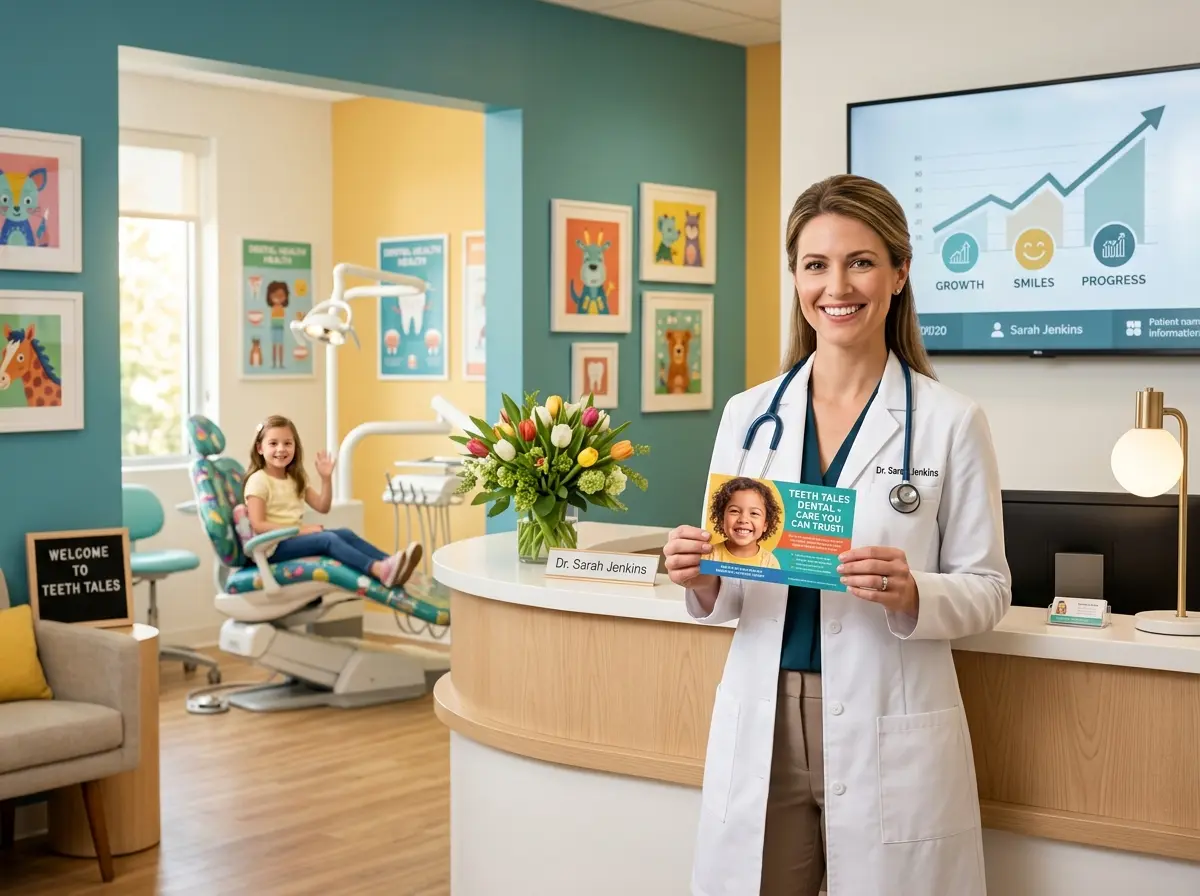
Your postcard has approximately three seconds to earn the next ten seconds of attention. This is not the place for a photo of a cartoon tooth or a wall of text about your credentials. Dr. Chen's winning design led with a warm, family-friendly headline — "Welcome to the Neighborhood! Your Kids' Smiles Are Already Our Favorite" — paired with a bright, approachable image and a single compelling offer: a free first exam for new pediatric patients.
Keep the offer simple and specific. "Free new patient exam" or "$99 first visit special including X-rays" performs far better than vague promises about "quality care." Tell them what they'll get, make it feel like a gift from a friendly neighbor, and give them one clear call to action: call this number or visit this URL to book.
The Follow-Up System: Where Most Campaigns Die
Here's where Dr. Chen's campaign went from good to exceptional. A single mailer is better than nothing, but a three-touch sequence over 60–90 days is where the real conversion magic happens. Many families receive the first card at a hectic time — boxes everywhere, kids starting new schools — and simply don't act on it immediately. The second and third mailers catch them when the dust has settled and they're finally getting around to their "find a new dentist" to-do list.
Her sequence looked like this: an introductory welcome postcard at 2 weeks post-move, a reminder postcard at 6 weeks highlighting a specific offer, and a final "last chance" postcard at 10 weeks with a slight urgency element. Conversion rates on the second and third touches combined nearly matched the first, effectively doubling her return without doubling her effort.
The Phone Call Problem Nobody Talks About
Your Mailer Works. Now What?
There's a quietly devastating irony that derails many new mover campaigns: the marketing works beautifully, a motivated new family picks up the phone to book an appointment, and then... no one answers. Or they're put on hold. Or the call goes to a generic voicemail that sounds like it was recorded in a broom closet in 2009.
All that postcard spend, all that carefully engineered targeting — gone, because the conversion moment wasn't handled well. For a pediatric dental office, where parents are often calling during their own lunch breaks or after work hours, missed calls aren't a minor inconvenience. They're lost patients walking directly to the next practice that picks up.
This is where Stella becomes genuinely useful for practices running new mover campaigns. As an AI phone receptionist, Stella answers every call — nights, weekends, and the inexplicable Tuesday afternoon when everyone on your staff is simultaneously busy — with the same warmth and knowledge as your best front desk employee. She can answer questions about the new patient offer from the mailer, collect intake information through a conversational intake form, and even book appointments, all without a human in the loop. Her built-in CRM automatically logs new contacts with AI-generated profiles, so your team walks in the next morning with a clean list of new leads and everything they need to follow up. For a practice investing in paid acquisition campaigns, having Stella handle inbound calls means you're not leaving conversion to chance.
Scaling the System and Avoiding Common Pitfalls
Sourcing New Mover Data That's Actually Current
The quality of your new mover list is everything. Stale or inaccurate data turns a smart campaign into an expensive pile of returned mail. Dr. Chen used a reputable direct mail service that refreshes new mover data weekly from USPS change-of-address filings — look for services like Every Door Direct Mail (EDDM) through the USPS, or commercial providers like New Mover Programs through companies such as Valpak, Opportunity Knocks, or Welcome Wagon.
For a pediatric dental practice specifically, you want to filter your list for households with children where possible. Many data providers allow demographic overlays that let you prioritize families, which meaningfully improves your response rates and reduces wasted spend on households without kids.
Tracking ROI Without Going Insane
Use a dedicated phone number on your mailer — either a unique tracking number or simply a direct line that your staff knows to associate with new mover inquiries. This single step transforms your campaign from a hopeful experiment into a measurable system. Ask every new patient how they heard about the practice and actually record the answer. Dr. Chen tracked her mailer source for every new patient acquired during the campaign year, which is precisely how she was able to confirm the 30% growth attribution.
When to Expand Your Radius (and When Not To)
Once your campaign is converting consistently, the temptation is to immediately double your radius and double your spend. Resist this until you've run at least three to four months of data. Geography matters enormously — families moving five miles away are plausible patients; families moving twelve miles away rarely become long-term regulars when there are two other dental practices closer to their home. Optimize depth before breadth: refine your messaging and offer based on what's working before expanding your reach.
Quick Reminder About Stella
Stella is an AI robot employee and phone receptionist built for businesses exactly like yours — whether you have a physical office or operate primarily over the phone. She greets walk-in patients at your kiosk, answers calls around the clock, captures new patient information through conversational intake forms, and manages contacts through a built-in CRM, all for $99/month with no hardware costs upfront. For a practice investing in marketing campaigns designed to drive inbound inquiries, she's the reliable front-line presence that makes sure no new lead slips through the cracks.
Your Action Plan Starts This Week
Dr. Chen's 30% growth story isn't magic, and it isn't a fluke. It's the logical result of showing up — consistently, professionally, and with a compelling offer — at the exact moment a family needed what she offered. The new mover channel works because the targeting is inherently precise, the timing is inherently relevant, and families who find a great pediatric dentist early in their new chapter tend to stay for a very long time.
Here's your practical starting point:
- Choose a new mover data provider and request a count of new movers within your target radius over the past 90 days to understand your available audience size.
- Design a clear, warm, family-focused postcard with a single compelling offer and one call to action. Hire a designer if needed — this is not the place to use Canva at midnight.
- Set up a three-touch mail sequence at 2, 6, and 10 weeks post-move, and budget accordingly for all three touches before evaluating results.
- Establish a tracking number and a system for recording new patient sources so you can measure what's working.
- Make sure your phones are answered — every call, every time. If that's a challenge during busy hours or after closing, solve that problem before you launch.
The families moving into your community this week are actively building their new local life. They need a pediatric dentist. The only question is whether it'll be you they find first, or the practice two blocks over that had the same idea and actually followed through. Go send some postcards.