When You're the Lawyer, the Receptionist, and the Entire Office
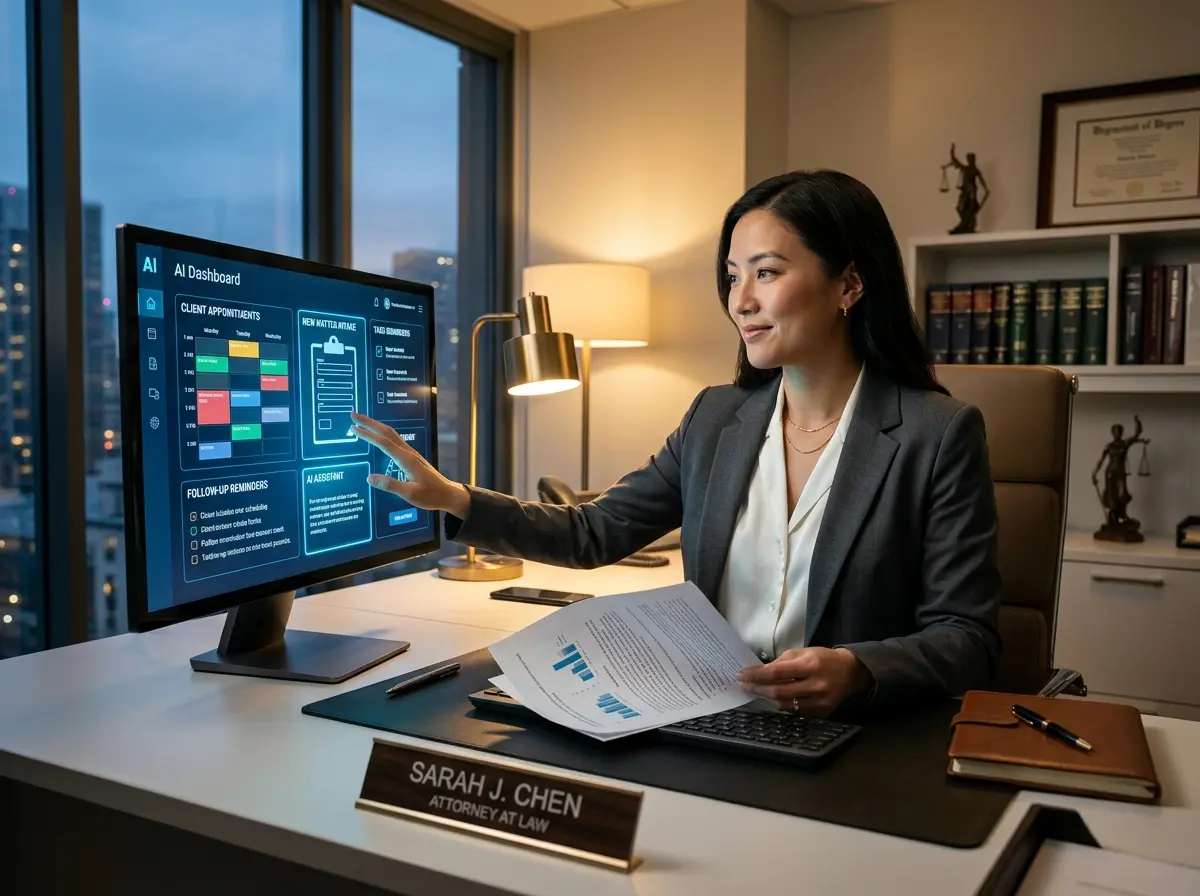
Running a solo law practice is a masterclass in multitasking. You're drafting briefs, meeting with clients, managing billing, and somewhere in between all of that, you're also supposed to answer the phone, collect intake information, schedule consultations, and follow up with leads who called at 9pm on a Tuesday. It's a lot. And unlike BigLaw firms with armies of paralegals and dedicated receptionists, solo attorneys don't have the luxury of delegating these tasks to a support team that actually exists.
The result? Missed calls, dropped leads, inconsistent intake processes, and the nagging feeling that somewhere out there, a potential client just hired your competitor because you were in court and couldn't pick up. According to research from Clio's Legal Trends Report, law firms miss over 40% of incoming calls — and most callers who don't reach someone won't bother leaving a voicemail. They just move on.
But here's the good news: a growing number of solo attorneys are solving this problem not by hiring staff they can't afford, but by leveraging AI to handle the operational side of their practice. Let's walk through how that actually works in the real world.
The Operational Nightmare of Running a Solo Practice
The Intake Problem Nobody Talks About
Client intake is one of the most critical — and most underestimated — parts of running a law firm. Done well, it filters out bad-fit clients, captures the information you need before the first consultation, and sets a professional tone from the very first interaction. Done poorly (or not at all), it wastes your time, frustrates potential clients, and creates a chaotic paper trail that follows you through the entire case.
For solo attorneys, intake often looks like this: a prospective client calls, you scramble to grab a notepad, you jot down half their information, promise to email them a form, forget to send the form, and three days later you have a consultation with someone whose last name you've already lost. Sound familiar? The problem isn't that you're disorganized — it's that intake requires a dedicated process, and dedicated processes require dedicated time you simply don't have.
Scheduling Is Its Own Full-Time Job
Scheduling consultations for a solo practice sounds simple in theory. In practice, it involves a surprisingly exhausting back-and-forth: checking your calendar, confirming availability, sending reminders, rescheduling when clients cancel, and somehow doing all of this while also being a lawyer. Many solo attorneys lose 2 to 4 hours per week just on scheduling logistics — time that would be far better spent on billable work.
The frustration compounds when you factor in time zones, last-minute cancellations, and the universal truth that clients will always call to confirm their appointment five minutes before you walk into a deposition.
Follow-Ups Fall Through the Cracks
Even when intake goes smoothly and the consultation gets scheduled, the follow-up process is where solo practices tend to hemorrhage the most potential business. A lead calls, says they'll "think about it," and you mean to follow up in a week — but then a filing deadline hits, and suddenly it's been three weeks and that lead has long since moved on. Without a systematic follow-up process, you're essentially leaving money on the table and doing it very politely.
How AI Tools Are Stepping In to Fill the Gap
Automated Intake That Actually Works
Modern AI tools — including AI-powered phone receptionists — can handle the entire intake conversation without human involvement. When a prospective client calls, the AI greets them professionally, asks the right questions (practice area, case type, timeline, contact information), and logs everything into a structured format before you ever pick up the phone. No more scrambling for a notepad. No more missing fields. No more following up just to ask for their email address again.
Stella, an AI robot employee and phone receptionist, does exactly this for attorneys and other service-based businesses. She handles inbound calls around the clock, conducts conversational intake forms during those calls, and stores everything in a built-in CRM with custom fields, tags, notes, and AI-generated contact profiles. If a prospective client calls at 11pm after seeing your ad, Stella captures their information, summarizes the interaction, and sends a push notification to you — so by the time you check your phone in the morning, you already have a qualified lead waiting with complete intake details. Her built-in CRM means all of that information lives in one place, ready for your review, with no manual data entry required on your end.
Scheduling Automation That Removes the Back-and-Forth
Pairing an AI receptionist with a scheduling tool like Calendly or Acuity completely eliminates the scheduling back-and-forth. The AI receptionist captures the lead's intent and availability, directs them to a booking link or handles scheduling natively, and sends automatic confirmation and reminder messages. No more phone tag. No more "does Tuesday at 2pm work for you?" emails. The consultation gets booked, the client gets a reminder, and you find out about all of it through a clean summary notification.
Building a Follow-Up System That Doesn't Depend on Your Memory
The Drip Is Your Friend
For solo attorneys, the most effective follow-up systems are the ones that run automatically. Email drip sequences — set up once and triggered by actions like a completed intake form or a scheduled consultation — can nurture leads over days or weeks without any manual effort. A simple three-email sequence (confirmation, value-add resource, gentle check-in) can dramatically improve your consultation-to-client conversion rate. Tools like Mailchimp, ActiveCampaign, or even HubSpot's free tier make this accessible without a marketing team.
The key is to set these up during a quiet week and then let them run. Future you will be grateful. Current you will also be grateful, because it takes about two hours to set up and saves you from an embarrassing number of forgotten callbacks.
Use Your CRM Like It Actually Matters (Because It Does)
Many solo attorneys have a CRM and use it approximately never. This is understandable — when you're doing everything yourself, logging contact notes feels like optional busywork. But a CRM with consistent data is the backbone of any meaningful follow-up strategy. When every prospect has a record that includes their inquiry type, the date they called, and the last touchpoint you had with them, following up becomes a five-minute task instead of an archaeological dig through your inbox.
If your intake process is automated (see above), a significant portion of that CRM data populates itself. At that point, your only job is to review the summaries, make your calls, and log outcomes — which is genuinely manageable even on the busiest days.
Don't Underestimate the Power of a Timely Text
Studies consistently show that responding to a lead within five minutes makes you dramatically more likely to convert them — in some cases, up to 100 times more likely than responding after 30 minutes. For solo attorneys who can't always respond immediately, automated text responses serve as a bridge. A quick automated message saying "Thanks for reaching out — I received your information and will be in touch within one business day" buys goodwill, sets expectations, and keeps the lead warm while you finish what you're doing. Simple, effective, and criminally underused.
A Quick Reminder About Stella
Stella is an AI robot employee and phone receptionist built for businesses that need a professional, always-available front line — without the cost and complexity of hiring staff. She answers calls 24/7, conducts intake conversations, manages contacts through a built-in CRM, and keeps business owners informed with AI-generated summaries and real-time notifications. For solo attorneys and other service providers, she's the operational backbone that makes running lean actually sustainable. At $99/month with no upfront hardware costs, she's also considerably cheaper than the alternative.
Your Next Steps Toward a Practice That Runs Like a Business
If you're a solo attorney still doing everything manually, the goal isn't to overhaul your entire operation overnight. It's to identify the two or three places where time is leaking and plug those holes systematically. Start with intake — it has the highest leverage and the most immediate impact on your bottom line. Get an AI phone receptionist or automated intake form in place, connect it to your CRM, and let that system run for 30 days. You'll know within the first week whether it's working.
From there, layer in scheduling automation and a basic follow-up sequence. None of these tools require a technical background or a significant time investment to set up. They require about an afternoon of focused work and a willingness to stop doing everything yourself just because you technically can.
The solo attorneys who are thriving right now aren't working harder than everyone else. They're working with smarter systems. They're using AI to handle the repetitive, time-consuming operational tasks so they can spend their actual working hours doing what they went to law school for. And importantly, they're never missing a call at 9pm from a prospective client who just really needed to talk to someone that night.
That's not the future of solo practice. That's already happening. The question is just whether you're in or still scrambling for a notepad.