Introduction: Because "Buy 10 Prescriptions, Get 1 Free" Probably Isn't the Vibe You're Going For
Let's be honest — loyalty programs in the pharmacy world can feel a little awkward. You're not exactly selling lattes or gym memberships. You're serving customers who, ideally, you'd love to see less frequently (in the best possible way). So how do you build a loyalty program that actually brings people back, builds real relationships, and promotes genuine wellness — without accidentally rewarding poor health outcomes?
The good news: it's entirely possible, and pharmacies that get this right are seeing serious results. According to a study by Bond Brand Loyalty, 77% of consumers say loyalty programs make them more likely to continue doing business with a brand. For pharmacies, that's not just a revenue opportunity — it's a chance to become a trusted wellness partner in your community. That's a pretty powerful position to occupy.
In this post, we'll walk through how to design a pharmacy loyalty program that feels thoughtful, promotes healthier behaviors, keeps customers engaged, and doesn't require a PhD in marketing to implement. Let's get into it.
Designing a Program That Actually Rewards Wellness
The foundation of a great pharmacy loyalty program isn't discounts — it's alignment. Your program's structure should reflect what you actually want your customers to do more of: taking care of themselves. Here's how to build that foundation the right way.
Go Beyond the Prescription Counter
One of the biggest mistakes pharmacy owners make is limiting their loyalty program to prescription pickups alone. Yes, your prescription business is your bread and butter, but a wellness-focused program needs to cast a wider net. Think about all the touchpoints where a customer might interact with your store: picking up vitamins, getting a flu shot, consulting with a pharmacist, purchasing blood pressure monitors, or even attending a health seminar you host.
Award points — or whatever currency your program uses — across all of these interactions. For example, you might offer points for completing a medication adherence check-in, purchasing OTC wellness products, or scheduling a private pharmacist consultation. This approach does two things: it increases the number of reasons customers have to engage with your business, and it subtly encourages healthier habits by making wellness activities feel rewarding rather than obligatory.
Structure Your Tiers Around Healthy Milestones
Tiered programs are powerful because they give customers something to work toward. But in a pharmacy context, you have a unique opportunity to tie those tiers to wellness milestones rather than just spending thresholds. Consider naming your tiers something meaningful — "Wellness Starter," "Health Champion," "Vitality Elite" — and defining progression by a combination of engagement behaviors.
For instance, moving from one tier to the next might require a customer to complete an annual medication review, maintain a 90-day refill streak, or accumulate a set number of wellness-related purchases. Not only does this drive engagement, but it positions your pharmacy as a partner in your customers' long-term health — not just a place they visit out of necessity. That's a relationship worth building.
Make Rewards Meaningful (Not Just Cheap)
Rewards that feel meaningful are rewards that change behavior. Generic dollar-off coupons are fine, but they don't exactly inspire loyalty. Instead, consider offering rewards that reinforce the wellness theme of your program:
- Free pharmacist consultations or medication reviews
- Discounts on health screenings or immunizations
- Complimentary wellness products like vitamins, first aid kits, or blood pressure cuffs
- Priority access to limited appointments or new services
- Charitable donations to a local health cause in the customer's name
The last one is particularly underrated. Many customers — especially those in wellness-conscious demographics — respond extremely well to cause-linked rewards. It makes them feel like their loyalty is doing more than just saving them a few dollars.
Using Technology to Keep Customers Engaged (Without Becoming Annoying)
A loyalty program that lives on a paper punch card isn't going to cut it in 2024. The right tech stack can mean the difference between a program that people forget about and one that genuinely changes how customers interact with your pharmacy.
Automate Your Outreach Without Losing the Human Touch
Automated reminders for refill pickups, loyalty point balances, and personalized wellness tips can keep your program top of mind without requiring your staff to manually follow up with every single customer. SMS and email outreach with a personal tone — referencing the customer's name, their tier status, or their last interaction — can go a long way in making automation feel warm rather than robotic. Just don't overdo it. Nobody wants a pharmacy blowing up their inbox like an overzealous coupon app.
Let Stella Handle the Day-to-Day Engagement
This is where Stella, the AI robot employee and phone receptionist, can genuinely make your loyalty program run more smoothly. As a friendly, human-sized kiosk inside your pharmacy, Stella can proactively greet customers, inform them of their current points balance, and let them know about any active promotions or wellness rewards they're close to earning — all without pulling your pharmacists or staff away from what they actually need to be doing.
On the phone side, Stella answers calls 24/7, which means a customer calling at 9 PM to ask whether their refill qualifies for loyalty points gets an actual, informed answer — not voicemail. Stella's built-in CRM and intake form capabilities also make it easy to capture customer information during calls or at the kiosk, so you can keep your loyalty program data clean, current, and actionable. That's a lot of heavy lifting for $99 a month.
Marketing Your Program to Maximize Enrollment and Retention
You could design the most elegant loyalty program in the history of retail pharmacy, and it will still fail if nobody signs up. Marketing your program isn't optional — it's the engine that makes everything else work.
Start With Your Existing Customers
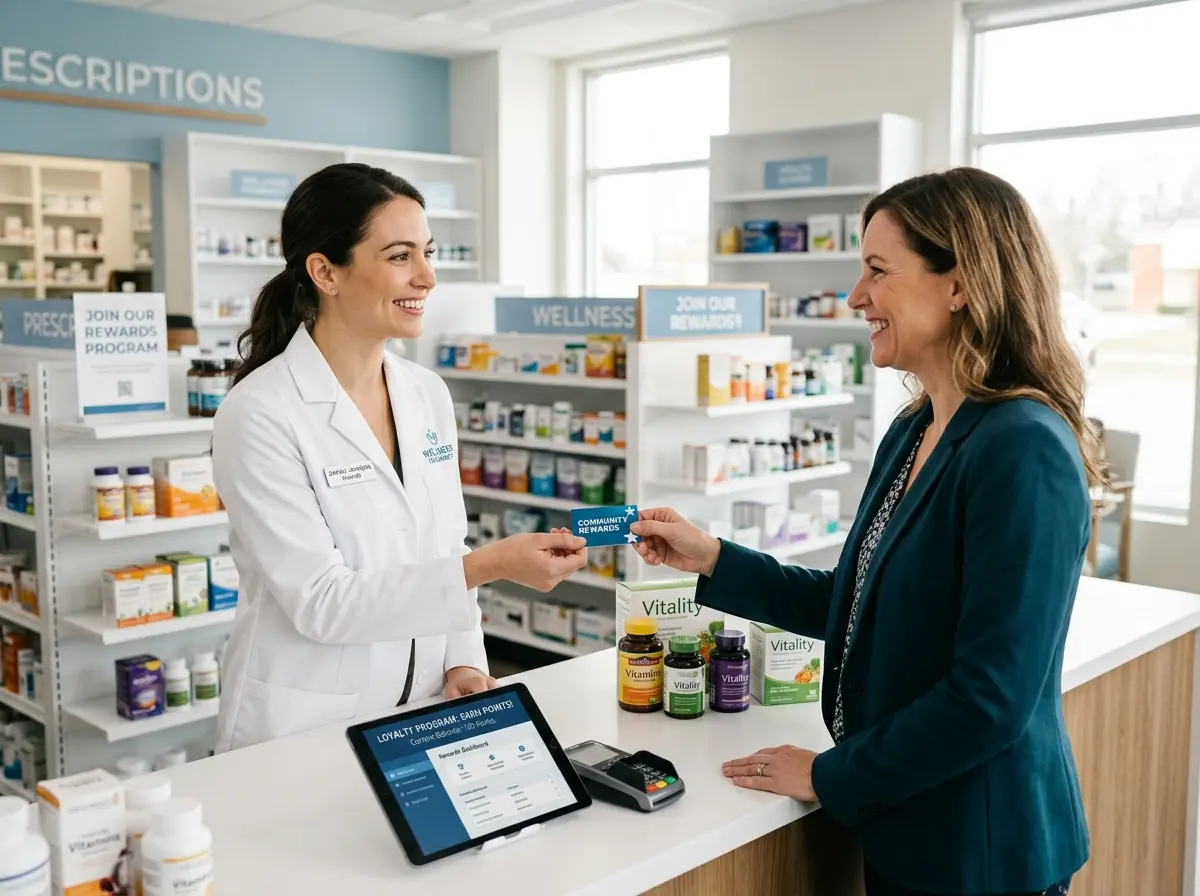
Your existing customers are your lowest-hanging fruit, and they're also the most likely to stay loyal if they feel appreciated. Launch your program with a direct outreach campaign — email, text, or even a personal phone call for your highest-value customers. Give them a "founding member" status or bonus points just for enrolling early. People love exclusivity, even when it's mildly manufactured, and being made to feel like an insider creates immediate goodwill.
Train your staff to mention the program at every point-of-sale interaction. A simple "Are you enrolled in our wellness rewards program?" is enough to plant the seed. According to Harvard Business Review, acquiring a new customer is anywhere from 5 to 25 times more expensive than retaining an existing one — so investing in enrollment with your current base is always money well spent.
Leverage Community Partnerships to Drive New Enrollment
Pharmacies occupy a unique and trusted place in their communities, and smart pharmacy owners use that trust strategically. Partner with local gyms, yoga studios, primary care clinics, or wellness coaches to cross-promote your loyalty program. Offer referral bonuses — "Refer a friend, both of you earn 200 bonus points" — and make it easy for community partners to hand out enrollment materials or QR codes on your behalf.
Hosting health events like free blood pressure screenings, flu shot clinics, or medication disposal days is another excellent enrollment opportunity. These events attract exactly the kind of health-conscious, community-connected customers who will thrive in a wellness loyalty program. Bonus: they generate tremendous goodwill and local press if you position them well.
Track, Tweak, and Repeat
No loyalty program survives first contact with real customers completely intact, and that's fine. The pharmacies that succeed long-term are the ones that treat their loyalty program as a living thing — regularly reviewing enrollment rates, redemption data, and customer feedback to understand what's working and what isn't. Set a quarterly review cadence, identify your most and least popular rewards, and don't be afraid to retire elements that aren't driving the behavior you want. Iteration isn't failure. It's just good business.
Quick Reminder About Stella
Stella is an AI robot employee and phone receptionist designed to help businesses like yours run more efficiently without adding to your payroll headaches. She stands inside your pharmacy as a friendly, knowledgeable kiosk presence, and answers your phone calls around the clock — promoting your services, collecting customer information, and keeping things running smoothly even when your team is swamped. At $99/month with no upfront hardware costs, she's the kind of team member who never calls in sick and never asks for a raise.
Conclusion: Your Pharmacy Loyalty Program Starts With a Decision
Building a loyalty program that genuinely promotes wellness isn't complicated — but it does require intention. The pharmacies that do this well aren't just handing out points; they're building relationships, reinforcing healthy behaviors, and positioning themselves as indispensable partners in their customers' lives. That's a competitive advantage that no big-box chain can easily replicate, no matter how many coupons they mail out.
Here's your action plan to get started:
- Define your wellness-aligned point structure — map out every customer interaction worth rewarding, not just prescriptions.
- Design meaningful tiers and rewards that reflect your pharmacy's values and encourage healthier behavior.
- Set up your technology stack — a CRM, automated outreach, and an in-store or phone engagement tool like Stella to keep customers informed and enrolled.
- Launch to your existing customers first with a founding member offer, then expand through community partnerships and referral programs.
- Review performance quarterly and iterate based on real data, not assumptions.
Your customers are already choosing between you and your competitors every time they need a refill. A well-designed wellness loyalty program gives them a reason to stop choosing — and start staying. That's worth every bit of effort it takes to build it right.