The Art of the Add-On: Why Most Retailers Leave Money on the Table
Let's be honest — you didn't open a retail business to watch customers walk out the door with only the bare minimum in their bags. Yet somehow, that's exactly what happens dozens of times a day when upselling opportunities get fumbled, ignored, or handled with all the grace of a nervous intern on their first day.
Upselling isn't a dirty word. Done right, it's a genuine service — helping customers get more value, complete their purchase properly, or discover something they didn't know they needed. Done wrong, it's the reason people avoid eye contact with salespeople. The difference almost always comes down to what you say and how you say it.
According to a study by Invesp, upselling is 20 times more effective than cross-selling to new customers, and increasing customer retention by just 5% can boost profits anywhere from 25% to 95%. Translation: the customers already in your store are your most valuable upselling opportunity — and most retailers are blowing it at the register.
So let's fix that. Here are five phrases that actually work, why they work, and how to build a culture where upselling feels natural rather than pushy.
The Psychology Behind a Good Upsell
It's Not About Selling — It's About Completing the Picture
The most effective upsells don't feel like upsells. They feel like helpful suggestions from someone who actually knows the product. Think about the last time a friend said, "Oh, if you're getting that, you absolutely need this with it" — you probably listened. That's the energy you want your team channeling at the register.
The key psychological principle at play is completeness. Customers feel subtle discomfort when they sense they're missing something that would make their purchase work better. A well-timed upsell resolves that discomfort. "Did you grab a case for that?" isn't pushy — it's practical. You're not creating a need; you're surfacing one that already exists.
Timing Is Everything
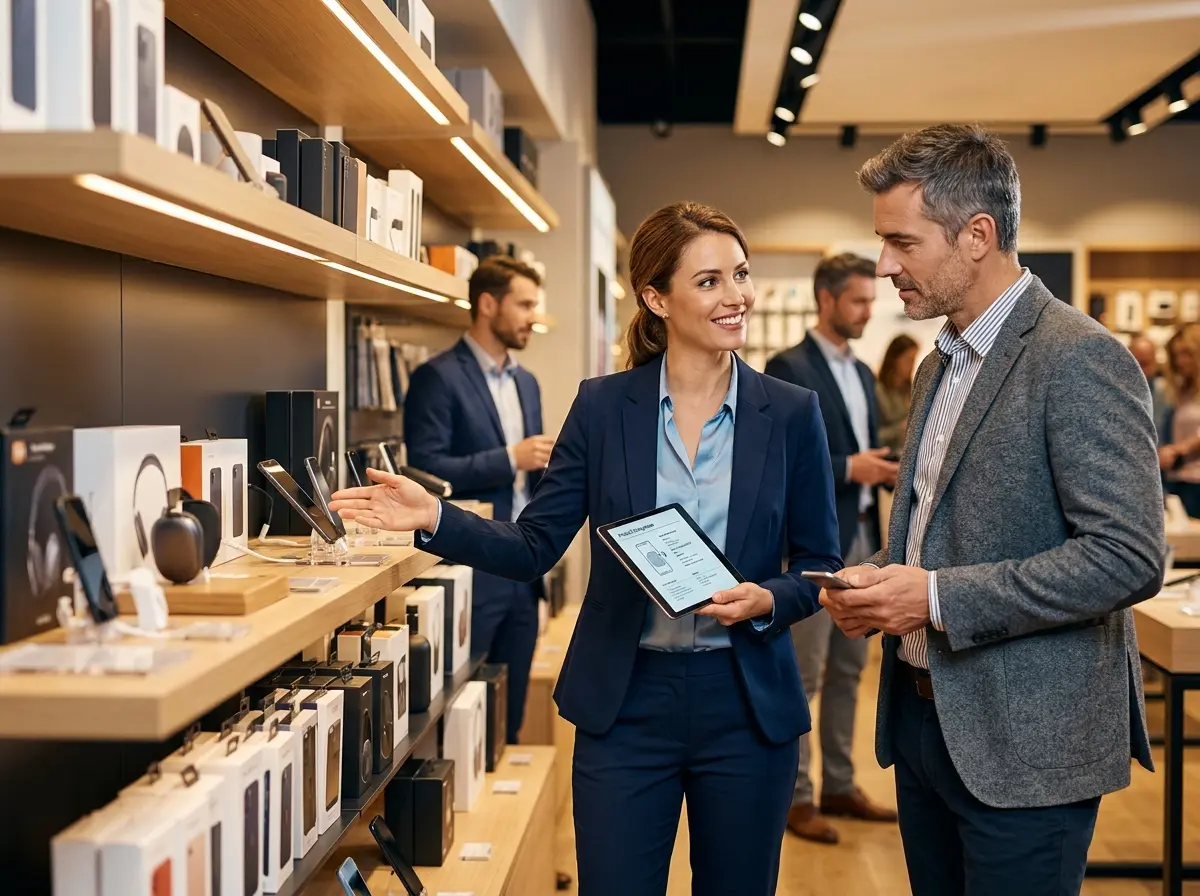
Upselling at the wrong moment kills the sale and the mood. The register is actually one of the best moments to upsell — the customer has already committed to spending money, their wallet is (metaphorically) already open, and they're in a transactional mindset. But upselling also works well during the browsing phase, when staff can organically guide customers toward bundles or upgraded options before they've locked in.
What doesn't work? Upselling the moment someone walks through the door, or piling on multiple add-ons after a customer has already said no once. Read the room. One clear, confident suggestion at the right moment beats three desperate attempts scattered throughout the visit.
5 Phrases That Work Every Time at the Register
The Proven Lines (And Why They Land)
Here they are — no fluff, no filler. These phrases are effective because they're low-pressure, specific, and framed as helpful information rather than a sales pitch. Train your team to deliver them naturally, not robotically.
- "A lot of customers who grab that also pick up ___. Want me to grab one for you?" — Social proof plus convenience. Nobody wants to be the one who missed the obvious pairing.
- "Just so you know, we have a bundle that includes that plus ___ for only $__ more." — Framing the upsell as a money-saving opportunity. The customer feels smart for listening.
- "This goes great with ___ — it's what most people use together." — Simple, direct, and knowledgeable. It positions your staff as product experts rather than commission hunters.
- "Are you all set with ___? A lot of people forget they need it until they get home." — Mild urgency combined with genuine helpfulness. No one likes a second trip to the store.
- "We actually have a protection plan / warranty / refill program for that — it's really popular. Want to hear about it?" — Asking permission first removes pressure. Customers who say yes are already halfway sold.
Notice what all five have in common: they assume the best about the customer, they provide a reason for the suggestion, and none of them sound like they were written by a corporate training manual. They sound like something a helpful, knowledgeable human would say. (More on that concept in a moment.)
What to Avoid Saying
Just as important as what works is what doesn't. Phrases like "Would you like to add anything else?" are basically an invitation to say no — they're vague, they put all the work on the customer, and they telegraph that you're going through the motions. Similarly, "Can I interest you in our rewards program?" after the customer has already packed up their bags is a study in poor timing.
Train your staff to make specific suggestions, not open-ended fishing expeditions. Specificity signals expertise. "Do you want anything else?" says nothing. "Did you grab the matching cleaner for that — it's what most people use with it?" says everything.
How Consistency Drives Upselling Results (And Where Stella Comes In)
The Inconsistency Problem in Retail
Here's the uncomfortable truth about upselling in most retail environments: it only happens when your best staff members are working. The part-timer covering Saturday afternoon? Probably not delivering your carefully rehearsed upsell scripts. The new hire in their second week? Focused on just getting through the transaction without breaking anything.
Training helps, but turnover, inconsistency, and the natural variation between human employees means you're leaving upsell revenue on the table every single shift you can't perfectly staff. That's not a criticism of your team — it's just the reality of running a retail business with human beings.
A Consistent Voice in the Room
This is where Stella — an AI robot employee and phone receptionist — earns her keep. Positioned as an in-store kiosk, Stella engages customers proactively, promotes current deals and specials, and recommends related products or services with zero variation, zero bad days, and zero forgetting the script. She's also available to answer your phones 24/7 with the same product knowledge she uses on the floor — so even customers calling ahead to ask about inventory or services get a consistent, upsell-aware experience before they even walk in the door. When your human staff is busy at the register, Stella can be working the floor — and she never clocks out.
Building an Upselling Culture That Sticks
Make It a Team Habit, Not a Policy
Policies get forgotten. Habits stick. The difference between a retail team that upsells consistently and one that doesn't usually isn't motivation — it's whether upselling has been baked into the daily routine deeply enough to feel automatic.
Start with a five-minute daily briefing. What's the upsell of the day? What's moving well that pairs naturally with your most popular items? Giving your team one specific focus each shift is far more effective than a generic reminder to "upsell more." Celebrate wins publicly — a quick mention in your team group chat when someone lands a strong add-on purchase costs you nothing and builds momentum fast.
Track It So You Can Improve It
You can't improve what you don't measure. If your POS system allows it, track average transaction value by staff member and by shift. You'll quickly spot patterns — not just who your natural upsellers are, but when during the day upselling is most effective, and which product pairings generate the most add-on revenue.
Use that data to refine your scripts, adjust your product placement, and identify training opportunities. Upselling isn't a one-time initiative; it's an ongoing optimization process. The retailers who treat it that way consistently outperform those who hand out a script once and move on.
Keep the Customer Experience Front and Center
The moment upselling starts feeling transactional to your customers, you've gone too far. The best retail teams know that a refused upsell is just feedback — the customer wasn't interested this time, and that's fine. A gracious "No problem at all — just wanted to make sure you knew!" keeps the relationship intact and leaves the door open for next time.
Upselling should enhance the customer's experience, not create friction in it. When customers feel genuinely served rather than sold to, they come back — and they tell their friends. That's worth more than any single add-on sale.
Quick Reminder About Stella
Stella is an AI robot employee and phone receptionist designed for businesses of all types — from retail shops to service providers — starting at just $99/month with no upfront hardware costs. In-store, she stands as a human-sized kiosk that greets customers, promotes deals, and handles upselling conversations so your human staff can focus on closing. On the phones, she answers calls around the clock, captures customer information, and keeps your business running even when you're not in the room.
Start Selling Smarter, Starting Today
Upselling at the register isn't complicated, but it does require intentionality. The five phrases above aren't magic — they work because they're rooted in genuine helpfulness, delivered with confidence, and timed correctly. Your job as a business owner is to give your team the tools, scripts, and habits to execute them consistently.
Here's your action plan:
- This week: Pick two of the five phrases and run a brief team training around them. Role-play it until it sounds natural.
- This month: Start tracking average transaction value by employee and identify your top upsellers. Have them mentor the rest of the team.
- This quarter: Build upselling consistency into every customer touchpoint — in-store, on the phone, and across your promotional messaging.
And if you want a team member who never misses an upsell opportunity, never has an off day, and works every single hour your store is open, it might be worth having a conversation with Stella. Just saying.
Now go leave less money on the table.