So You Want Your Restaurant to Run Without You (Good Luck — Unless You Do This First)
Let's be honest: most restaurant owners didn't open their business so they could spend every waking hour putting out fires, retraining the same positions for the fourth time this year, and personally answering every question about whether the soup is gluten-free. You had a vision. A dream. Probably something involving good food, happy customers, and maybe — just maybe — an occasional day off.
Here's the hard truth: if your restaurant can't function without you physically present, you don't own a business. You own a job. A very exhausting, very expensive job with unpredictable hours and a dress code that involves aprons.
The good news? An operations manual changes everything. A well-built operations manual is the difference between a restaurant that falls apart the moment you step away and one that hums along beautifully whether you're on the floor or on a beach somewhere. It's your restaurant's brain — documented, organized, and available to everyone on your team. This guide will walk you through exactly how to build one.
What Goes Into a Restaurant Operations Manual
The Non-Negotiables: Systems, Standards, and Procedures
Your operations manual isn't a staff handbook or a welcome packet — it's a comprehensive playbook for how your restaurant actually works. Think of it as the document that answers every question your employees might ask you, before they ask it. The goal is simple: if you handed this document to a capable person who had never set foot in your restaurant, they should be able to run it.
Start with the big categories. Opening and closing procedures, food prep standards, customer service expectations, POS system instructions, vendor contacts, inventory management, cleaning checklists, and emergency protocols are all essential. Each section should be specific enough to be actionable. "Keep the kitchen clean" is not a standard. "Wipe down all prep surfaces with food-safe sanitizer solution every two hours and log it on the checklist posted near the hand-washing station" — now we're talking.
According to a study by the National Restaurant Association, employee turnover in the restaurant industry hovers around 75% annually. That means you're likely onboarding new staff constantly. A solid operations manual drastically reduces the time and energy it takes to get someone up to speed — and it ensures consistency no matter who's working the shift.
Document It Like You're Never Coming Back
The most common mistake restaurant owners make when building an operations manual is writing it for people who already know how things work. They skip steps because "everyone knows that part." Except new employees don't. And exhausted, stressed employees who've been running doubles don't either.
Document every process as if you're explaining it to someone on their very first day. Use numbered steps for sequential tasks, photos or short videos where helpful, and clear, plain language throughout. Avoid jargon unless you define it. If your kitchen has a specific name for a prep technique or a station nickname that only regulars understand, explain it.
One practical approach: shadow yourself for a week. Every time you make a decision or take an action — even a small one — ask whether it's written down somewhere. If it isn't, add it to the manual. You'll probably be shocked at how much institutional knowledge lives exclusively in your head.
Assign Ownership and Keep It Alive
An operations manual that lives in a binder under the host stand and hasn't been updated since the Obama administration is decorative, not functional. Your manual needs to be a living document. When menu items change, when vendors switch, when a new POS feature rolls out — the manual gets updated. Full stop.
Assign a manager or senior staff member as the official "manual owner" responsible for keeping sections current. Set a quarterly review on the calendar. Make updates when they happen, not months later when someone realizes the manual still references a supplier you stopped using two years ago.
Letting Technology Do More of the Heavy Lifting
Automate the Repetitive Stuff Before You Document It
Before you finalize what goes into your operations manual, take a hard look at what your team is doing manually that doesn't need to be. Answering the same five phone questions every day, greeting walk-in customers, explaining current specials, collecting reservation information — these are tasks that technology can handle reliably, consistently, and without ever calling in sick.
This is exactly where Stella, the AI robot employee and phone receptionist, earns her keep. For restaurants with a physical location, Stella stands in-store and proactively greets customers, answers questions about the menu, hours, and specials, and promotes current deals — all without pulling a single staff member away from their actual work. And when the phone rings? Stella answers 24/7 with the same detailed knowledge she uses in person, handles inquiries, and can forward calls to human staff based on conditions you configure. Your operations manual gets simpler when your technology is doing more — and your team can focus on the tasks that actually require a human touch.
Building the Manual Your Team Will Actually Use
Format Matters More Than You Think
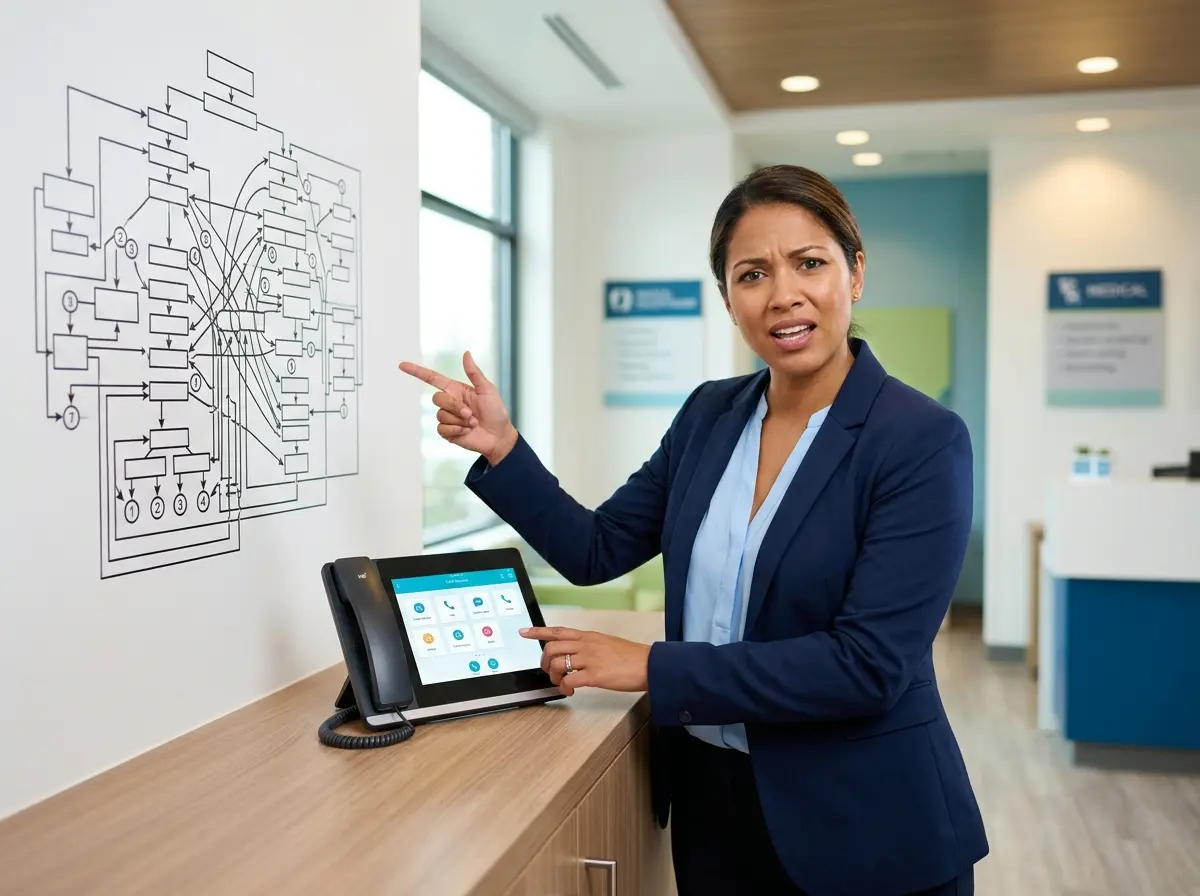
A 90-page wall of text is technically an operations manual the same way a phone book is technically a social network. Technically. In practice, no one is reading it, referencing it, or benefiting from it.
Format your manual for usability. Use a clear table of contents with section numbers. Break content into logical, named chapters. Use headers and subheaders liberally. Include quick-reference checklists at the end of relevant sections so staff can run through them without reading the full section every time. If your manual is digital — and it should be, at least in part — make it searchable.
Consider using a shared platform like Google Drive, Notion, or a dedicated operations software tool so that updates are instantly visible to your whole team. Physical binders are fine as backups, but if the digital version is the source of truth, you'll only need to update one place.
Train Your Team on the Manual, Not Just the Job
Handing a new hire your operations manual and walking away is only marginally better than not having one. The manual is a reference tool, but your onboarding process should actively walk new employees through it. Have managers review key sections during training. Quiz employees on important procedures. Create a culture where "check the manual" is a real, expected answer to questions rather than a brush-off.
Experienced staff should know the manual well enough to reference it without frustration. If you notice the same questions coming up repeatedly — about specials, about policies, about procedures — that's a signal to both improve the manual's clarity on that topic and reinforce training around it.
Use Real Scenarios to Test Your Manual
One of the best ways to stress-test your operations manual is to run tabletop scenarios with your management team. Pick a situation — a power outage mid-service, a no-call no-show from a key kitchen role, a health inspector walk-in — and walk through exactly what the manual says to do. If your team is improvising, your manual has a gap. If they can follow the manual confidently, you're in good shape.
Some restaurant owners also run "manual-only days" during slower periods, where staff are instructed to consult the manual rather than ask a manager for common decisions. It's a useful exercise for identifying where the documentation is weak and where your team has genuinely internalized the standards. The discomfort is temporary. The improvements are lasting.
Quick Reminder About Stella
Stella is an AI robot employee and phone receptionist designed to give restaurants (and businesses of all kinds) a reliable, professional presence without the overhead. She greets customers in person, answers calls around the clock, promotes specials, and handles the repetitive questions that eat up your staff's time — all for $99/month with no upfront hardware costs. Think of her as the team member who never needs to be trained more than once and never has a bad shift.
Your Restaurant Can Run Without You — Start Building That Future Today
Creating an operations manual isn't the most glamorous project you'll ever tackle. It requires time, attention to detail, and a willingness to confront how much of your restaurant's operations currently exist only inside your own head. But the payoff is enormous: a more consistent guest experience, faster onboarding, less daily chaos, and the genuine possibility of stepping away without everything collapsing.
Here's how to get started this week:
- Audit your current documentation. What do you already have written down? What's missing? Start by listing every major operational area of your restaurant.
- Pick one section and write it completely. Don't try to build the whole manual at once. Start with opening or closing procedures — they're concrete, sequential, and immediately useful.
- Assign a manual owner. Identify who on your team will be responsible for maintaining and updating the document going forward.
- Choose a format and platform. Digital is best. Pick something your team will actually access and make sure it's organized for usability.
- Schedule a review cycle. Quarterly at minimum. Your restaurant changes — your manual should too.
The restaurant that runs without you doesn't happen by accident. It happens because someone — probably you — sat down and built the systems that make it possible. Start now, build consistently, and one day you might actually take that vacation. The manual will hold down the fort.