The Furniture Store's Hidden Goldmine (Yes, We're Talking About That Dusty Corner)
Every furniture store has one. That section in the back — or maybe wedged awkwardly near the entrance — where floor models go to retire, delivery returns come to live out their days, and slightly dinged dressers wait patiently for someone who appreciates "character." The As-Is section. It's either your best-kept secret or a disorganized graveyard of lost margin. Spoiler: it doesn't have to be the latter.
Done right, an As-Is section is a legitimate profit center — not just a place to offload imperfection. It drives foot traffic, moves inventory that would otherwise collect dust (and depreciate further), attracts a loyal budget-conscious customer base, and can actually improve your store's overall reputation when managed well. Done wrong, it's a liability that confuses customers, frustrates staff, and slowly eats your margin one unsellable loveseat at a time.
So let's talk about how to do it right. No fluff, no filler — just practical strategies to turn your As-Is section into something you're actually proud of.
Setting Up Your As-Is Section for Success
The foundation of a profitable As-Is section is intentionality. Most stores treat it like an afterthought. The stores that actually make money from it treat it like a curated department with its own identity, rules, and standards.
Curate, Don't Dump
This cannot be overstated: your As-Is section is not a storage unit. Every piece that enters it should be evaluated, priced, tagged, and displayed with purpose. Before moving an item to As-Is, ask yourself three questions: Is the damage cosmetic or structural? Can it be cleaned, tightened, or touched up inexpensively? And most importantly — is there a customer who would genuinely want this at the right price?
Structural damage (broken frames, wobbly legs that can't be fixed, torn-out hardware) belongs in the trash or at the salvage yard — not on your floor. Cosmetic damage (a scratch on a side panel, a small upholstery scuff, a discontinued color) is exactly what the As-Is section is for. Training your team to make this distinction consistently is step one.
Price It to Sell, Not to Sit
The most common As-Is pricing mistake is pricing too high. Customers browsing the As-Is section are already expecting a deal — and they're mentally calculating the cost of repair, touch-up, or just living with the imperfection. If your discounts feel token (10–15% off), they'll walk. Meaningful discounts in the 30–50% range move product. And product that moves makes room for new inventory, improves cash flow, and eliminates the carrying cost of items sitting on your floor indefinitely.
Consider using tiered markdown schedules: if a piece hasn't sold within 30 days at its initial As-Is price, drop it again. Set clear internal rules so the pricing doesn't become a management debate every month. Automate the decision-making, and your team will thank you.
Make It Look Like a Feature, Not a Flaw
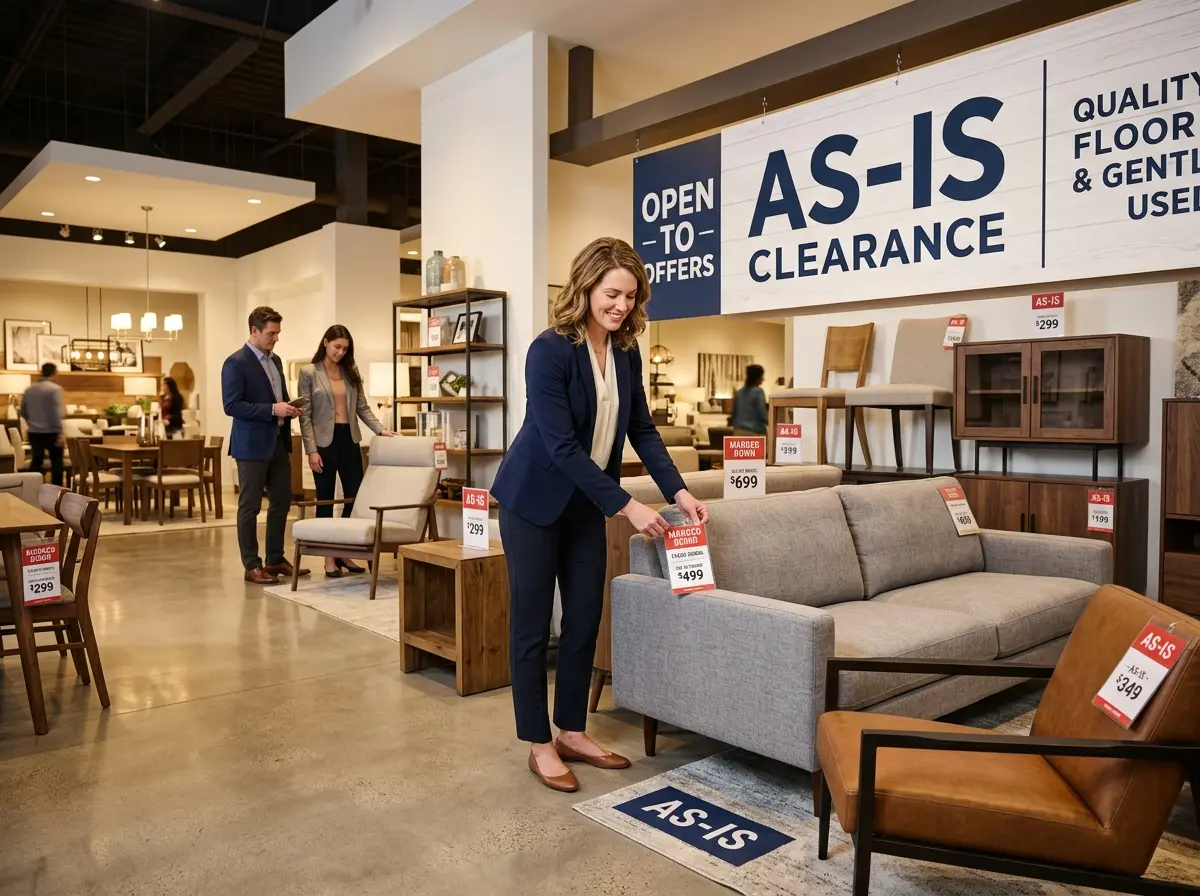
Signage matters enormously. "As-Is" sounds like a warning. "Clearance Finds," "Final Sale Favorites," or even "The Good Stuff at Great Prices" tells a different story. The framing shifts the customer's mindset from something is wrong with this to I'm getting something good for less. Use clear, attractive signage, ensure the section is well-lit, and arrange pieces so they look intentionally displayed — not abandoned. A small investment in the aesthetics of this section pays dividends in conversion rate.
Managing Inventory and Keeping It Fresh
An As-Is section lives and dies by its turnover. A stale section with the same pieces sitting for months tells customers the deals aren't actually that good — and it stops being a reason to visit.
Establish a Pipeline, Not a Pile
The best-run furniture stores treat As-Is inventory like a separate SKU category with its own intake process. When a floor model is rotated out, when a delivery return comes in, or when a piece gets damaged in transit, there's a clear, documented process: assess condition, decide disposition (trash, repair, or As-Is), photograph, tag, price, and place. This sounds obvious, but without a written process, it defaults to "someone deals with it eventually," which is not a strategy.
Set a cadence for reviewing As-Is inventory — weekly is ideal for busy stores. What's moving? What's stagnant? What needs a price adjustment? Keeping this section dynamic gives customers a reason to check back regularly, and a segment of your customer base will absolutely do exactly that.
How Stella Can Help You Run a Tighter Ship
When customers walk into your As-Is section and have questions — "Is this price negotiable?" "Does this come with a warranty?" "Do you have anything else like this coming in?" — those questions either interrupt your sales staff or go unanswered. Neither is great. Stella, the AI robot employee and phone receptionist, can be stationed on your floor to greet customers proactively, answer common questions about your As-Is policies, and highlight current deals — all without pulling your team away from higher-value conversations. And when customers call ahead to ask what's currently in the As-Is section or whether you take trade-ins, Stella handles those calls 24/7 with accurate, up-to-date business knowledge. She won't put anyone on hold, and she never needs a break.
Marketing Your As-Is Section to Drive Foot Traffic
Here's a reality check: most furniture store customers have no idea your As-Is section exists, and the ones who do don't know when new items arrive. That's a marketing problem, and it's an easy one to fix.
Build a "New Arrivals" Notification Strategy
A simple email or SMS list specifically for As-Is shoppers can be surprisingly powerful. These customers are motivated, budget-conscious, and often ready to buy quickly — they just need to know what's available. Promote sign-up for this list in-store and on social media. When a particularly good piece hits the section, send a quick note. You'll be amazed how many people will drive in specifically for a deal they heard about before anyone else.
Social media is equally effective here. A quick photo of a new As-Is arrival with a compelling caption ("Just in: solid wood dining table, small scratch on one leg, $299 — first come, first served") generates urgency and engagement without any ad spend. Scarcity is your friend. Use it.
Create a Loyalty Loop Around Your Clearance Shopper
Budget-conscious customers are often extremely loyal when they feel seen and valued. If someone buys from your As-Is section and has a great experience, they'll be back — and they'll tell people. Consider a light loyalty mechanic: a punch card, an exclusive early-access list, or simply a warm follow-up after purchase asking if they're happy with their find. These customers won't always buy full-price, but they'll increase your transaction volume, fill gaps in your revenue, and refer full-price customers too. Don't underestimate them.
Tie As-Is Into Your Broader Promotional Calendar
As-Is inventory doesn't have to wait passively to be discovered. Feature it intentionally during slow traffic periods — mid-week promotions, January clearance events, back-to-school season for apartment dwellers, or "scratch and dent" weekends. Give it a moment in the spotlight, and it will reward you. Coordinating this with your regular sales calendar means you're always driving traffic with something compelling rather than hoping foot traffic finds you.
Quick Reminder About Stella
Stella is an AI robot employee and phone receptionist that works in-store as a human-sized kiosk and answers phone calls around the clock — starting at just $99/month with no hardware costs. She greets customers, promotes deals, answers questions, and keeps your staff focused on selling rather than fielding repetitive inquiries. If running a high-traffic, well-marketed As-Is section sounds like it might create more customer questions than your team can comfortably handle, Stella is worth a serious look.
Turn That Corner Into a Competitive Advantage
The furniture stores winning with As-Is sections aren't doing anything magical — they're just being intentional where most stores are passive. They curate thoughtfully, price aggressively, display attractively, market proactively, and treat their clearance shoppers like the valuable repeat customers they are.
Here's your action plan to get started:
- Audit your current As-Is section this week. What needs to be repriced, removed, or better displayed?
- Write a simple intake process for how items move from the floor or returns into the As-Is section — and share it with your team.
- Build your As-Is notification list. Even 50 engaged subscribers who want early access to deals is a meaningful asset.
- Plan one As-Is promotional event in the next 60 days to drive targeted foot traffic.
- Review your signage and section layout. Make it feel like a destination, not a consolation prize.
Done consistently, these steps will transform your As-Is section from a liability into a line item you actually look forward to reviewing. And that dusty corner in the back? It's about to earn its keep.