So Someone Actually Called Your Therapy Practice — Now What?
Let's be honest: getting a potential client to actually pick up the phone and call a therapy practice is no small miracle. Between the stigma, the anxiety, the "I'll do it later" spiral, and the fourteen times they typed your number before finally hitting call — that inquiry is precious. And yet, countless therapy practices fumble the handoff between "interested caller" and "booked appointment" simply because no one on the team knows exactly what to say.
Enter the discovery call script. Not a robotic, read-off-a-card interrogation — but a warm, structured conversation guide that helps your front desk (or you, if you're a solo practitioner wearing seventeen hats) turn a nervous inquiry into a confirmed appointment. Studies suggest that therapy practices that use structured intake scripts convert initial inquiries at rates up to 30% higher than those that wing it. That's not a small difference. That's the difference between a full caseload and an empty calendar.
Building a Discovery Call Script That Converts
The First 30 Seconds: Make or Break
The opening of your discovery call does more heavy lifting than any other part of the conversation. A caller who just worked up the nerve to reach out needs to feel immediately welcomed — not processed. Avoid cold, clinical openers like "What are you calling about?" (yikes) and instead lead with warmth and intent.
A strong opening sounds something like: "Hi, thanks so much for calling [Practice Name] — my name is [Name]. I have a few minutes set aside to chat with you. Can I ask your first name so I can make this feel a little less like a phone call?" Simple, human, and it subtly signals that this is a dedicated conversation, not a quick screening. From there, your script should guide the staff member to ask one or two open-ended questions about what's bringing the caller in — not a checklist, just genuine curiosity.
The Core Script Structure
- Warm greeting and name exchange — Set the tone immediately.
- Open-ended exploration question — "What's been going on that made you want to reach out today?" Let them talk. Don't interrupt.
- Empathetic acknowledgment — Reflect back what you heard before launching into logistics. This step alone dramatically reduces hang-ups.
- Brief practice overview — One or two sentences about your approach, specialties, and what working with you looks like.
- Logistics and fit check — Insurance, availability, session format (in-person vs. telehealth).
- The ask — Clearly and confidently invite them to book: "I'd love to get you set up with an appointment — do you have a few minutes to look at availability together?"
Handling the Most Common Objections
"I need to think about it." "Let me check my schedule and call back." "I'm not sure I'm ready." These are the objections your team will hear regularly, and the worst response is to simply say "Of course, no problem!" and hang up. A good script anticipates these moments and offers gentle, non-pushy responses that acknowledge the hesitation while keeping the door open.
For "I need to think about it," try: "Absolutely — that makes complete sense. Would it be helpful if I sent you a quick email with our information so you have it on hand when you're ready?" This keeps the relationship alive and gets you a contact. For the "not sure I'm ready" caller, a brief normalizing statement — "A lot of our clients feel that way right before their first call, and most of them tell us afterward they wish they'd called sooner" — can gently move the needle without pressure.
How Technology Can Support Your Intake Process
Never Miss an Inquiry Again
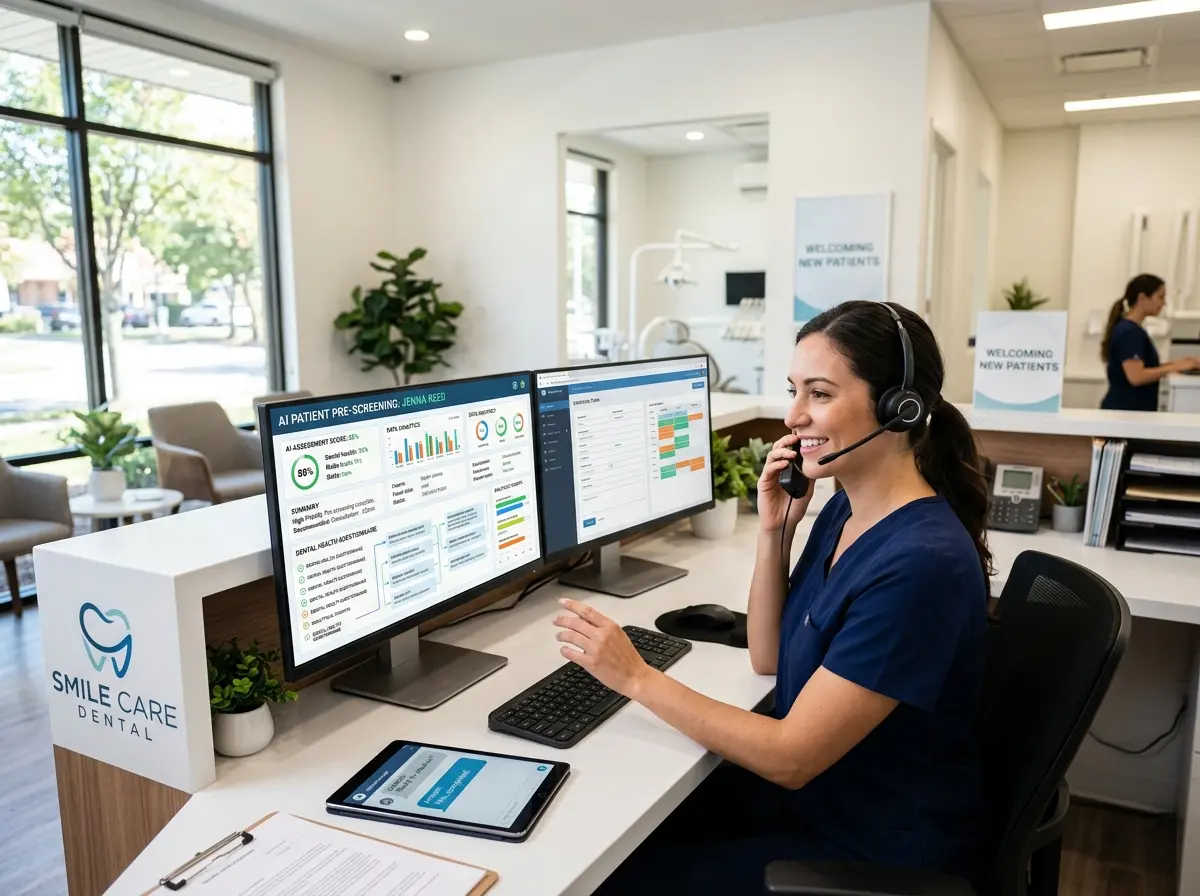
Stella, the AI robot employee and phone receptionist, can answer every call your practice receives — 24 hours a day, 7 days a week — using the same warm, knowledgeable approach your best front desk staff would use. She can walk callers through an intake conversation, collect key information using built-in conversational intake forms, and store everything in her built-in CRM with AI-generated caller profiles, custom fields, and notes. For practices with a physical office, she also operates as an in-person kiosk, greeting walk-ins and answering questions about your services, therapists, and availability. So whether your inquiry arrives at 2pm or 11pm, it gets a real, informed response — and your staff wakes up to a clean summary and push notification rather than a missed opportunity.
Training Your Team to Use the Script Effectively
Role-Playing: Yes, It's Awkward — Do It Anyway
Customizing the Script for Different Specialties or Presenting Concerns
For example, a couples inquiry script might include: "We often find that the couples who benefit most from therapy are the ones who are still invested enough to make the call — so the fact that you're reaching out says a lot." That kind of tailored acknowledgment resonates far more than a generic response. Build a simple reference sheet your staff can pull up during a call with these variations organized by presenting concern. It doesn't need to be elaborate — just accessible and specific enough to feel personal.
Measuring What's Working
A Quick Reminder About Stella
Stella is an AI robot employee and phone receptionist built to help businesses — including therapy practices — handle calls, collect intake information, manage contacts, and ensure no inquiry ever goes unanswered. She's available 24/7, costs just $99/month with no upfront hardware costs, and is designed to work seamlessly alongside your human staff. Think of her as the front desk team member who never calls in sick, never forgets the script, and never lets a nervous caller hit voicemail at 9pm.
Your Next Steps Start With One Phone Call
The therapists and practice owners who consistently fill their caseloads aren't necessarily doing something dramatically different from everyone else — they've just taken the time to be intentional about the first conversation. They've made it easier for nervous, ambivalent callers to say yes. That's it. That's the whole secret.