Why Your Pricing Strategy Is Probably Costing You Money
Consumer psychology tells us that customers don't evaluate prices objectively. They evaluate them emotionally, then justify those feelings with logic after the fact. That means the number you put on your product isn't just a number — it's a signal, a story, and a psychological trigger all rolled into one. Understanding how to use that to your advantage isn't manipulation; it's just smart business. So let's dig into the principles that actually move the needle.
The Core Psychology Behind Pricing Decisions
Charm Pricing and the Power of the Number Nine
You've seen it a thousand times: $9.99 instead of $10.00. You've probably even rolled your eyes at it. And yet — it works. Studies consistently show that prices ending in .99 or .95 outsell rounded prices, sometimes by as much as 24%. The reason is a cognitive quirk called the left-digit anchoring effect: our brains process the leftmost digit first and anchor our perception of value around it. So $9.99 feels meaningfully closer to $9 than to $10, even though the difference is a single penny.
Anchoring: The Art of Making Your Price Look Reasonable
Anchoring is one of the most powerful tools in your pricing arsenal. The basic idea is that people evaluate prices relative to a reference point, not in absolute terms. If you show a customer a $200 item next to a $500 item, the $200 item suddenly feels like a bargain — even if it would have seemed expensive standing alone.
The Decoy Effect: A Third Option Changes Everything
Imagine you're selling two subscription tiers: Basic at $29/month and Pro at $79/month. Customers agonize over the jump. Now add a middle tier — let's call it Standard — at $69/month with slightly fewer features than Pro. Suddenly, Pro at $79 looks like an obvious deal. You've introduced what behavioral economists call a decoy: an option that isn't necessarily meant to sell well, but exists to make another option look significantly more attractive. This technique is used everywhere from movie theater popcorn sizes to SaaS pricing pages, and it can dramatically shift your revenue mix toward higher-margin products.
A Quick Word on Tools That Help You Execute
How Stella Can Support Your Pricing Strategy in Action
Great pricing strategy doesn't stop at the price tag — it extends to how your offers are communicated to customers. This is where Stella, the AI robot employee and phone receptionist, quietly earns her keep. In a physical retail or service environment, Stella greets every customer who walks by, proactively highlights current promotions, and can talk through product options in a way that naturally guides customers toward your higher-margin offerings. She's essentially a tireless upsell engine who never forgets to mention the premium option — and never has an off day.
On the phone side, Stella answers calls 24/7, answers questions about pricing and services, and promotes current deals with the same consistency and polish whether it's 2pm on a Tuesday or 11pm on a Sunday. When you're running a limited-time pricing promotion, the last thing you want is inconsistent messaging from tired staff or missed calls going to voicemail. Stella handles it so your pricing strategy actually lands the way you designed it.
Advanced Pricing Tactics Worth Stealing
Bundle Pricing: The "Might As Well" Effect
Scarcity, Urgency, and the Fear of Missing Out
Limited-time offers, "only 5 left in stock" labels, and exclusive pricing for members all leverage this principle. The key is authenticity — manufactured scarcity that customers can see through will backfire and damage trust. But genuine scarcity and real deadlines are completely fair game. If you're running a promotion through the end of the month, say so clearly and let the clock do the psychological heavy lifting.
Price Presentation: Format, Framing, and the Words Around the Number
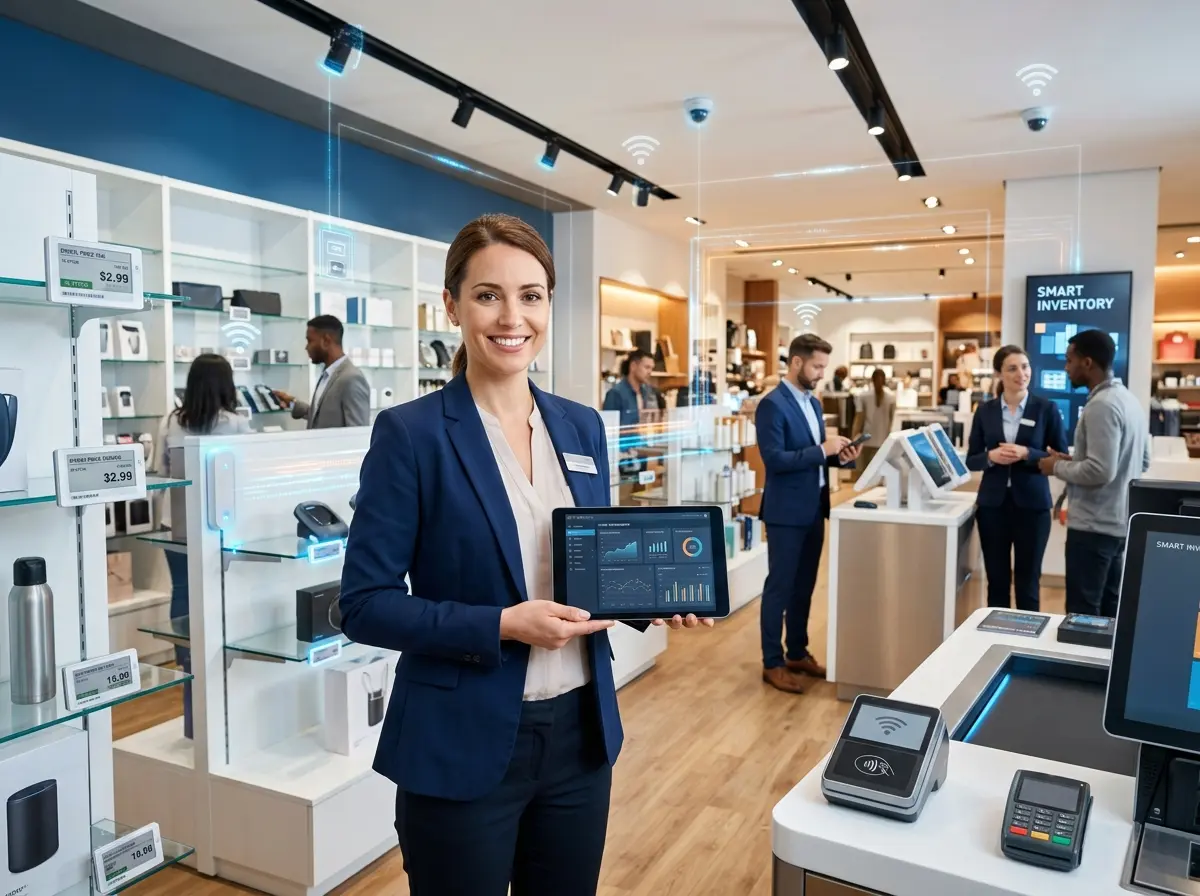
The way a price is displayed has a measurable impact on how it's perceived. Research published in the Journal of Consumer Psychology found that prices with fewer syllables when spoken aloud are perceived as lower — meaning "$27.82" feels more expensive than "$28.16" simply because it takes longer to say. Beyond syllable counts, removing the dollar sign from menus and price tags has been shown to increase spending in upscale environments. Describing a price as "a small daily investment of $1.30" versus "$475 per year" can produce dramatically different reactions to the exact same number.
Quick Reminder About Stella
Stella is an AI robot employee and phone receptionist built for businesses of all sizes. She stands in your store greeting and engaging customers in person, and she answers your phone calls 24/7 — handling questions, promoting offers, and providing a consistent, professional presence without breaks, turnover, or bad days. All for $99/month with no upfront hardware costs and an easy setup that gets her working fast.
Start Pricing with Intention, Not Instinct
- Audit your current pricing — Are your prices anchored effectively? Is there a decoy option in your lineup? Are you using charm pricing where it helps and premium pricing where it matters?
- Identify your top three products or services and experiment with framing, bundling, or reordering how they appear to customers.
- Test one change at a time — pricing experimentation only works if you isolate variables. Change one thing, measure the impact, then move on to the next.
- Train your team (and your tools) to communicate pricing in ways that reinforce your strategy — not just recite numbers.
- Revisit regularly. Market conditions change, customer expectations shift, and the pricing that worked last year may be quietly underperforming today.
The businesses that win aren't always the ones with the best products. More often, they're the ones who understand how customers think about value — and design their entire experience, from price tag to pitch, around that understanding. Start there, and the profits tend to follow.