So You've Got Great Products — Now Get Customers to Buy More of Them
Here's a scenario that probably sounds familiar: A customer walks into your specialty food store, beelines straight for the artisan hot sauce they came in for, pays, and leaves. Meanwhile, three feet away sat the perfect charcuterie board, the imported crackers that would have paired beautifully with it, and the small-batch craft beer that basically completes the experience. You had everything they needed. They just didn't know it — and nobody told them.
That's the cross-selling gap, and it's quietly costing specialty food retailers a significant chunk of revenue every single day. Studies suggest that cross-selling can increase revenue by 10–30%, yet most small food retailers leave this entirely to chance — or to whichever staff member happened to be in a chatty mood that afternoon.
Cross-selling isn't about being pushy. It's about being helpful. When done right, it enhances the customer's experience, introduces them to products they genuinely love, and builds the kind of loyalty that keeps them coming back. In a specialty food store — where discovery and curation are literally your competitive advantage — cross-selling is one of the most natural sales strategies you can deploy. Let's talk about how to actually do it well.
Building a Cross-Selling Strategy That Doesn't Feel Like a Strategy
Know Your Product Relationships Inside and Out
The foundation of effective cross-selling in a specialty food context is understanding which products belong together — not just logically, but experientially. You're not just selling food; you're selling moments. A customer buying a high-end olive oil isn't just buying a cooking fat — they might be planning a dinner party, trying to impress someone, or recreating a meal they had in Tuscany. When you understand the "why" behind a purchase, you can suggest the "what else" far more convincingly.
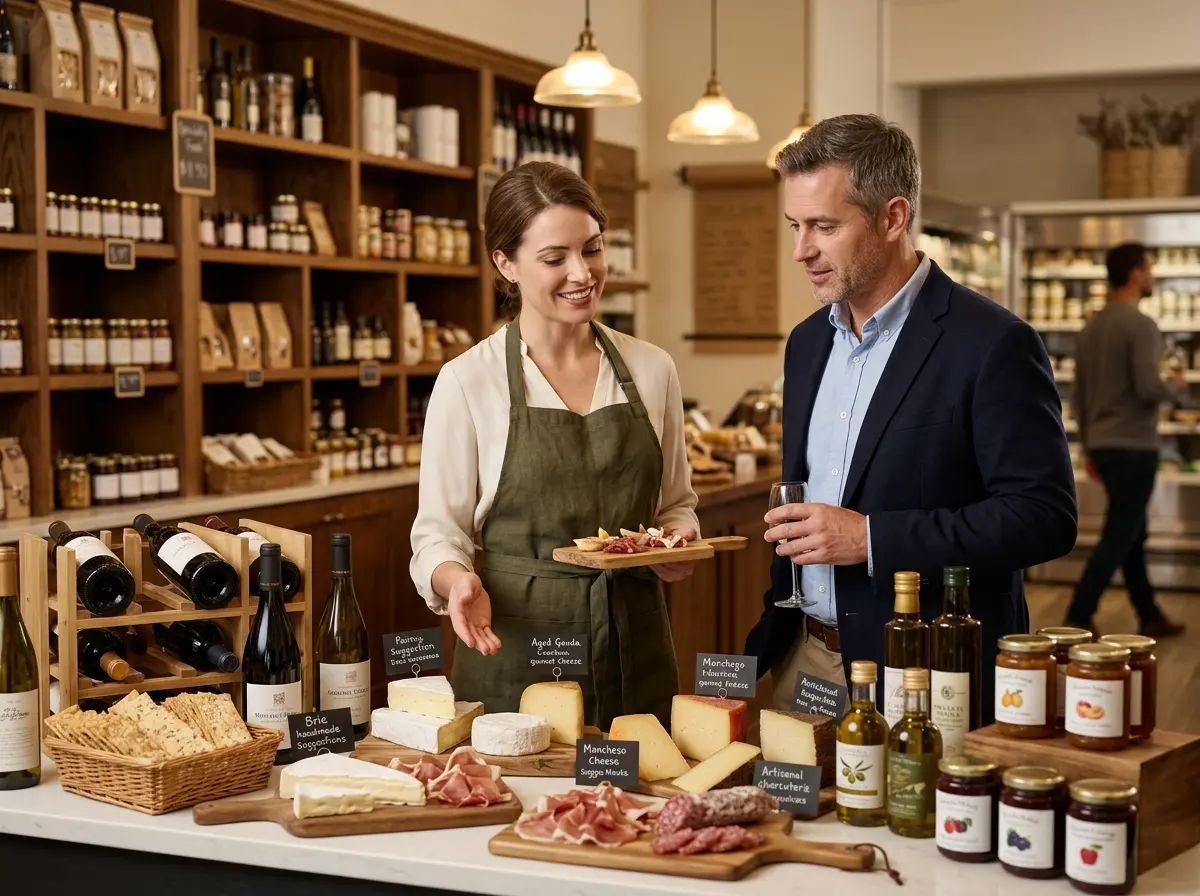
Start by mapping your inventory into natural pairing clusters. Think cheese and charcuterie, hot sauces and dry rubs, specialty pastas and artisan sauces, craft preserves and aged cheeses, coffee and biscotti. Once you've identified these clusters, make sure your staff can speak to them confidently. A team member who can say, "That Calabrian chili paste is incredible — a lot of our customers grab the bronze-die pasta to go with it and say it completely changes the dish" is worth their weight in truffle salt.
Use Store Layout to Do the Heavy Lifting
Your store layout is your silent salesperson, and in specialty food retail, thoughtful merchandising is one of the highest-leverage activities you have. Placing complementary products physically near each other isn't just good retail psychology — it's practically a service to the customer. Nobody wants to figure out what pairs with that aged manchego on their own. Show them.
Consider building themed displays around use cases: a "Backyard BBQ" station featuring smoked salts, craft hot sauces, and artisan barbecue rubs; a "Date Night In" setup with pasta, wine reduction sauces, and a specialty chocolate bar nearby. Point-of-sale signage like "Customers also love..." or "Complete the pairing" can do a tremendous amount of work without requiring any staff involvement at all. And don't underestimate the power of the checkout area — a well-curated impulse section near the register is one of the oldest tricks in retail for good reason.
Train Your Team to Cross-Sell Conversationally
The best cross-sell never sounds like a cross-sell. It sounds like a recommendation from a knowledgeable friend. Train your staff to ask natural, curious questions: "What are you making with this?" or "Have you tried this with the smoked almonds we just got in?" These conversations should feel organic, not scripted — which means your team needs to genuinely know and love the products they're selling.
Consider running regular staff tastings so your team can speak from personal experience. When an employee says "I actually tried this last week and it was incredible," customers feel that authenticity immediately. You might also establish a simple internal standard — something like always mentioning one complementary product per customer interaction — without making it feel like a quota. Culture beats scripts every time.
How Technology Can Help You Cross-Sell Without Adding Headcount
Let Your In-Store Presence Work Smarter
Even the best-trained team can't be everywhere at once. Staff get busy, get pulled into the back, or simply have an off day. That's where Stella — the AI robot employee and phone receptionist — can genuinely move the needle for specialty food retailers. Positioned inside your store, Stella greets customers proactively, answers questions about products, and can suggest complementary items based on what a customer is asking about. She doesn't get distracted, doesn't forget to mention the new product you're pushing this week, and never has an off day.
On the phone side, Stella handles incoming calls 24/7 — answering questions about what's in stock, current promotions, and store hours, so your human staff can stay focused on the in-person experience. For a specialty food store where customer education and product discovery are central to the value you provide, having a reliable, knowledgeable presence at both the front door and the phone line is a quietly powerful advantage.
Turning One-Time Buyers Into Repeat Customers Through Smart Cross-Selling
Create Bundles and Curated Collections
One of the most effective cross-selling mechanisms in specialty food retail is the pre-built bundle. Not only does it make gifting easier for customers (which is a huge driver in this category), it also naturally introduces them to products they might never have picked up individually. A "Hot Sauce Enthusiast" bundle featuring three of your top sellers, a branded bottle opener, and a small jar of locally made pickled jalapeños gives the customer a curated experience — and gives you a higher average order value without any awkward upsell conversation required.
Seasonal bundles are particularly powerful. A fall harvest box featuring apple butter, spiced nuts, a specialty cider vinegar, and a small pumpkin seed oil creates urgency and discovery at the same time. Price these thoughtfully — a slight bundle discount (even 10%) feels generous to the customer while still increasing the total transaction size substantially. And consider making some bundles gift-ready with minimal packaging upgrades; you'd be surprised how many customers will pay a premium just to skip the wrapping step.
Follow Up After the First Purchase
The period immediately after a first purchase is one of the most valuable windows you have for deepening the customer relationship — and most small food retailers completely ignore it. If you've collected customer contact information (which you absolutely should be doing), a well-timed follow-up message that references what they bought and suggests a natural next product can be remarkably effective. Something like: "We noticed you picked up our Calabrian chili oil last week — you might love the spicy nduja spread we just restocked. Customers who try one almost always come back for the other."
This kind of personalized outreach doesn't require a massive marketing operation. It requires a basic contact list, a little segmentation, and genuine knowledge of your product range — all things a well-run specialty food store should already have. The goal is to make the customer feel seen and guided, not marketed to. That distinction makes all the difference.
Use Loyalty Programs to Reinforce Cross-Category Exploration
A loyalty program in a specialty food context works best when it encourages breadth, not just frequency. Rather than simply rewarding repeat purchases of the same item, consider structuring rewards around trying new product categories — something like a "Discovery Bonus" that gives extra points when customers purchase from a category they haven't bought from before. This naturally drives cross-selling behavior while making the customer feel like they're being rewarded for adventurousness rather than manipulated into buying more.
Keep the program simple enough that your staff can explain it in thirty seconds. Complexity kills adoption. A clean, easy-to-understand structure with genuine rewards will outperform an elaborate tiered system that nobody fully understands — including the people running it.
A Quick Reminder About Stella
Stella is an AI robot employee and phone receptionist built for businesses like yours. She stands inside your store greeting and engaging customers, and she answers your phones 24/7 — handling questions, promoting specials, and cross-selling products without ever needing a break. At $99/month with no upfront hardware costs, she's one of the more practical additions a specialty food retailer can make to their customer experience toolkit.
Start Small, Stay Consistent, and Watch the Numbers Move
Cross-selling in a specialty food store isn't complicated — but it does require intentionality. The stores that do it well aren't running sophisticated sales programs; they're simply making sure that every customer touchpoint includes a genuine, relevant suggestion. They've thought about their product relationships, trained their teams to talk about them naturally, arranged their store to tell a visual story, and followed up with customers in ways that feel personal rather than promotional.
Here's where to start this week: Pick three high-performing products and identify two natural companions for each. Build one small cross-sell display pairing them together. Brief your team on what to say about the pairing. Measure your average transaction value over the next 30 days and compare it to the previous month. That's it. No grand strategy required — just a consistent, thoughtful effort to help your customers discover more of what you already carry.
Your products are good. Your customers want to love them. Cross-selling is just making sure those two things actually meet.