You Did the Consultation — Now What?
Here's a scenario that should sound painfully familiar: a prospective client sits down with you for a consultation, you knock it out of the park, they say "we'll think about it" — and then you never hear from them again. You follow up once, maybe twice if you're feeling ambitious, and then… nothing. Meanwhile, that lead is quietly signing a retainer with a competitor who had the audacity to send a well-timed email sequence.
The hard truth is that most law firms are leaving serious money on the table not because their consultations are bad, but because their post-consultation follow-up is basically nonexistent. According to research from the Legal Trends Report, a significant portion of potential legal clients contact more than one law firm before making a decision. The firm that follows up fastest and most consistently tends to win — full stop.
The good news? You don't need to hire another paralegal or glue yourself to your inbox to fix this. Automated post-consultation follow-up is the missing piece of your intake funnel, and when it's done right, it converts hesitant leads into signed clients almost on autopilot. Let's talk about how to build it.
Building a Follow-Up System That Actually Works
Understanding the Follow-Up Window
Timing is everything in post-consultation follow-up, and most firms dramatically underestimate how fast the window closes. Studies across professional services industries consistently show that leads are most responsive within the first 24 to 48 hours after an initial interaction. After that, interest drops sharply — not because they no longer need legal help, but because life gets in the way, other options appear, or they simply forget the details of your conversation.
Your automated follow-up sequence should begin within hours of the consultation ending, not days. A same-day email that summarizes the next steps, reinforces your value proposition, and gives the prospect a clear call to action is worth more than three follow-up emails sent a week later. Think of it like striking while the iron is hot — except in this case, the iron cools down remarkably quickly and has absolutely no loyalty to you whatsoever.
Map out your follow-up timeline before you build anything. A practical structure might look like this: an immediate post-consultation email, a check-in message at the 48-hour mark, a value-add email at day five (perhaps a relevant FAQ or resource), and a soft final reach-out at day ten. Beyond that, most unresponsive leads can be moved to a long-term nurture list rather than an active sequence.
Crafting Messages That Convert Without Sounding Like a Robot
Automation does not have to mean impersonal. The biggest mistake law firms make with automated follow-up is writing messages that feel like they were generated by a very bored intern in 1997. Your follow-up emails and texts should feel warm, specific, and human — even when they're being sent automatically at 11 PM on a Tuesday.
The trick is personalization at scale. Use your intake data to pull in the prospect's name, the area of law they consulted about, and any specific details from their situation where appropriate. An email that opens with "Hi Sarah, it was great speaking with you today about your business contract dispute" converts at a dramatically higher rate than one that opens with "Dear Valued Potential Client."
Each message in your sequence should serve a specific purpose. Your first follow-up should confirm next steps and express genuine enthusiasm about working together. Your mid-sequence touchpoints should address common objections — cost concerns, timeline questions, uncertainty about whether they even have a case — with helpful content rather than a sales pitch. Save the direct call to action for messages two and three. By the time you're asking them to sign, they should already feel like they know and trust you.
Choosing the Right Automation Tools for Your Firm
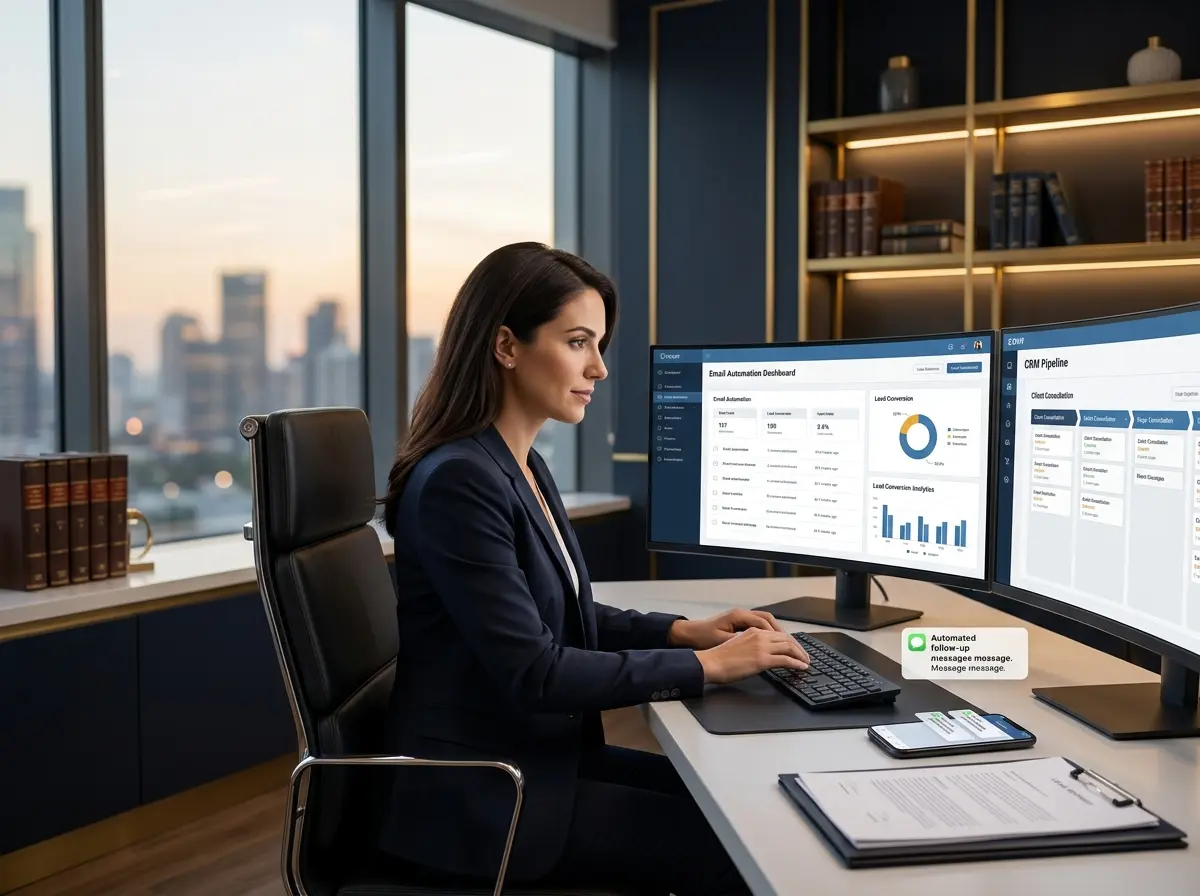
You don't need an enterprise-level marketing platform to build an effective follow-up system. What you do need is a tool that integrates with your intake process, supports both email and SMS, allows for conditional logic (so a lead who books a follow-up call automatically exits the sequence), and gives you visibility into open rates and responses.
Popular options for law firms include practice management platforms with built-in CRM capabilities, standalone tools like HubSpot or ActiveCampaign, or legal-specific solutions like Clio Grow. The right choice depends on your volume, budget, and how much technical setup you're willing to tolerate. Whatever you choose, make sure it can trigger sequences automatically based on a consultation being completed — not based on someone remembering to click a button, because that person is you, and you're busy.
How Smarter Intake Makes Follow-Up Easier
Capturing the Right Information From the Start
Your follow-up sequence is only as good as the information you're feeding it. If your intake process is collecting a name, a phone number, and a vague "reason for inquiry," your automated messages are going to be generic at best and awkward at worst. Strong follow-up starts with strong intake — and that means capturing structured, detailed information during or before the consultation itself.
This is where Stella, an AI robot employee and phone receptionist, genuinely earns her keep. Stella handles phone inquiries around the clock, collecting prospect information through conversational intake forms during the call itself — practice area, case type, urgency, contact preferences, and more. That data flows directly into her built-in CRM, where you can add custom fields, tags, and notes to segment your leads and personalize your follow-up sequences with the kind of specificity that actually moves the needle. For law firms dealing with a steady stream of inbound calls from prospective clients, having Stella manage that initial intake means your follow-up automation starts with real, usable data instead of a half-filled sticky note from whoever answered the phone between other tasks.
Optimizing Your Sequence Over Time
Tracking What's Working (and What's Embarrassingly Not)
Setting up a follow-up sequence and never looking at it again is only marginally better than having no sequence at all. Automation gives you a superpower that manual follow-up never could: data. Use it. Monitor your open rates, click-through rates, response rates, and — most importantly — your conversion rate from consultation to signed client for leads who entered your sequence versus those who didn't.
If your day-one email has a 60% open rate but your day-five email is being opened by three people and a bot, that's a signal. Maybe the subject line is stale, maybe the content isn't addressing a real objection, or maybe the timing is off. Run simple A/B tests on subject lines and CTAs, adjust your send times, and rewrite underperforming messages based on what you're learning. A follow-up system isn't a set-it-and-forget-it tool — it's a living part of your intake funnel that should improve every quarter.
Handling Replies and Reengaging Cold Leads
When a prospect replies to your automated email, the automation stops and the human relationship begins. Make sure your team has a clear protocol for handling responses quickly — a warm reply that goes unanswered for three days has done more harm than good. Set up notifications so that any response triggers an immediate alert to whoever is responsible for closing that lead.
For leads who go completely silent after your initial sequence, don't write them off entirely. A well-crafted long-term nurture sequence — a monthly newsletter, a quarterly check-in, a relevant blog post on a topic related to their original inquiry — keeps your firm in their peripheral vision for when circumstances change. Legal needs don't always have an urgent timeline, and the person who ghosted you in October might be very ready to hire a lawyer in February. Be the firm they think of when that moment comes.
Segmenting Leads for Higher Relevance
Not all prospective clients are the same, and your follow-up shouldn't pretend they are. A lead who came in for a family law consultation has entirely different concerns, objections, and emotional states than someone who needs help with a commercial real estate transaction. Segment your sequences by practice area at a minimum, and consider additional segmentation based on where the lead is in their decision-making process.
Prospects who attended a consultation and explicitly said they're comparing firms need different messaging than someone who came in with an urgent situation and just needs a little confidence boost to sign. Tailor your sequences accordingly, and your conversion rates will reflect the effort. Generic follow-up gets generic results.
Quick Reminder About Stella
Stella is an AI robot employee and phone receptionist built for businesses of all sizes — including law firms — who need a reliable, professional presence without the overhead of additional staff. She answers calls 24/7, conducts conversational intake with prospective clients, manages contacts in her built-in CRM, and ensures no lead slips through the cracks simply because no one picked up the phone. At $99 per month with no upfront hardware costs, she's the easiest hire you'll ever make.
Your Next Steps Start Today
If you walk away from this post with one actionable insight, let it be this: the consultation is not the finish line — it's the starting gun. What happens in the 48 hours after a prospect walks out your door determines whether your firm gets the case or whether someone else does.
Start by auditing your current follow-up process honestly. If your answer to "what happens after a consultation?" is "we try to remember to send an email," you have significant room to grow. Build a simple three-to-five step email sequence triggered automatically at consultation completion. Personalize it with intake data. Monitor it monthly and improve it quarterly. Segment it by practice area as your volume grows.
The firms winning at client conversion aren't necessarily doing better consultations than you — they're just doing dramatically better follow-up. The barrier to entry on automated post-consultation follow-up has never been lower. The only thing left to do is actually build it.