Introduction: Your Spa Clients Don't Just Appear — They Go on a Journey
Running a spa is a beautiful thing. You've created a sanctuary where people come to unwind, recharge, and temporarily forget that they have 47 unread emails waiting for them. But here's the not-so-relaxing truth: most spa owners spend so much energy delivering amazing experiences inside the treatment room that they completely neglect what happens before and after a client ever sets foot on the massage table.
The result? Clients who visited once, loved it, and then somehow never came back. Sound familiar?
That's where the customer lifecycle comes in. Every single person who walks through your door — or considers walking through your door — is at a different stage of their relationship with your business. Understanding those stages, and intentionally nurturing each one, is the difference between a spa that struggles to fill its books and one that has a loyal, recurring clientele who practically considers your treatment rooms a second home.
This guide breaks down the customer lifecycle for a small spa, what each stage actually looks like in practice, and how you can stop leaving money (and loyal clients) on the table.
The Five Stages of the Spa Customer Lifecycle
Stage 1: Awareness — "Wait, This Place Exists?"
Before anyone books a facial, they have to know you exist. The awareness stage is all about getting your spa in front of people who have never heard of you but would absolutely love what you offer if they did. This includes local SEO, social media presence, Google Business Profile optimization, word-of-mouth referrals, and yes — even the good old-fashioned foot traffic that comes from having an inviting storefront.
At this stage, your job is not to close a sale. Your job is simply to make a memorable impression. According to a Nielsen study, 92% of consumers trust recommendations from friends and family above all other forms of advertising — which means your current happy clients are your most powerful marketing team. Make it easy for them to refer people with a simple referral program, shareable gift cards, or an Instagram-worthy lobby that practically begs to be posted.
Actionable tips for the awareness stage:
- Claim and fully optimize your Google Business Profile with current photos, services, and hours.
- Run a "bring a friend" promotion for existing clients.
- Partner with complementary local businesses like yoga studios or boutique fitness gyms.
- Make sure your signage and storefront are doing their job — people do judge books by their covers.
Stage 2: Consideration — "Okay, But Should I Actually Book?"
This is the stage where a potential client knows you exist and is actively weighing their options. They're reading your reviews, browsing your menu of services, checking your prices, and deciding whether you're worth their hard-earned relaxation budget. Research shows that 77% of people read online reviews before visiting a local business, so if your review game is weak, this is where you're losing people.
Your website, social media, and the ease of your booking process all play a massive role here. If someone lands on your site and can't figure out how to book within about 30 seconds, they're gone — probably over to the spa three blocks away that made it easier. Make your services crystal clear, your pricing accessible, and your booking process frictionless. An FAQ section addressing common hesitations (cancellation policies, what to expect for first-timers, parking) can also do a lot of heavy lifting at this stage.
Stage 3: Conversion — The First Visit (Make It Count)
Someone has officially booked. Congratulations! Now don't blow it. The conversion stage isn't just about taking payment — it's about delivering an experience so good that returning becomes a no-brainer. Studies suggest it costs five times more to acquire a new customer than to retain an existing one, which means every first-time client is a significant investment. Treat them accordingly.
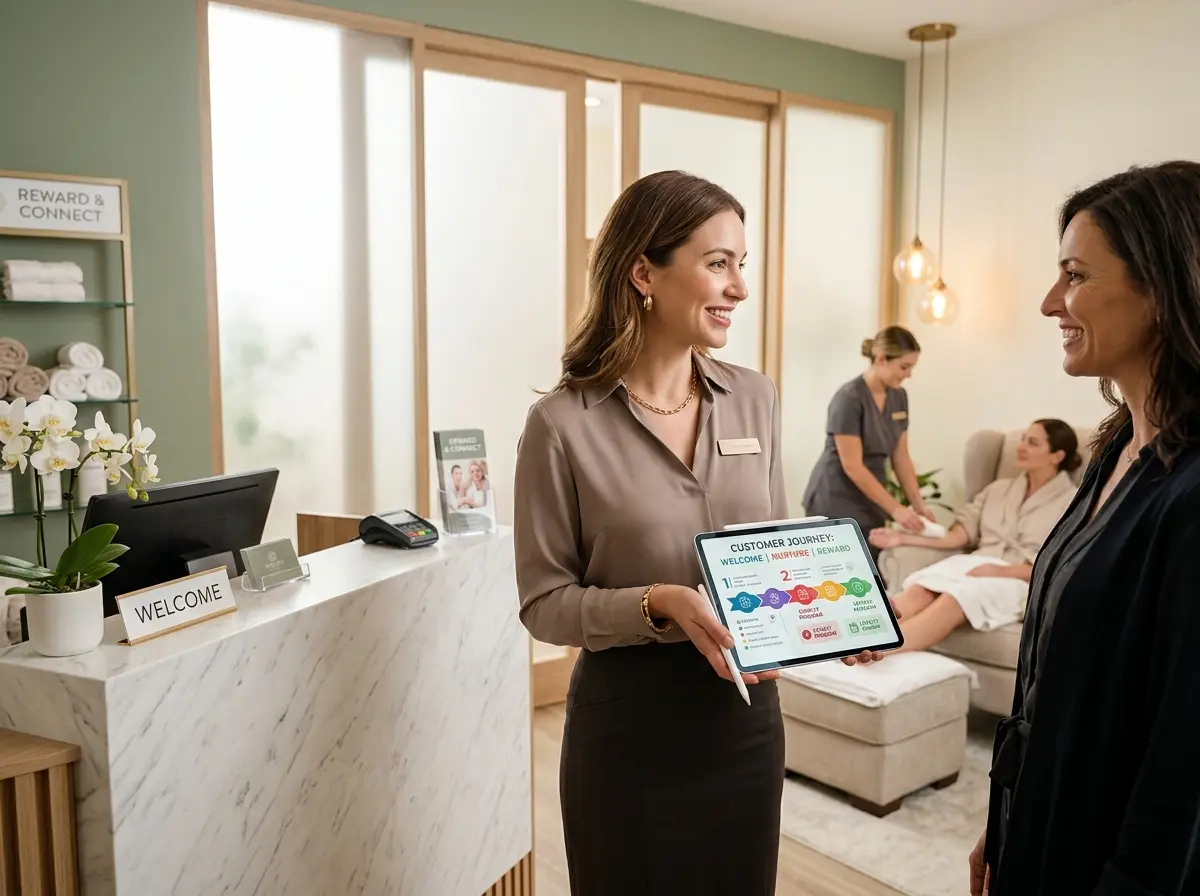
The first visit sets the tone for the entire relationship. From the greeting at the door to the checkout experience, every touchpoint matters. Train your staff to remember names, note preferences, and make recommendations for follow-up services or products. A warm, professional welcome that makes someone feel seen and valued is worth more than any discount code.
How Technology Can Support Your Lifecycle Strategy
Keeping Up With Clients Across Every Stage
Here's where a lot of small spas quietly fall apart — not because they lack talent or passion, but because they simply don't have the systems in place to consistently nurture clients at every stage. Your receptionist is juggling check-ins, phones, and product questions simultaneously. Opportunities get missed. New clients stand at the front desk waiting while your team scrambles. Potential clients calling after hours get voicemail and then book somewhere else.
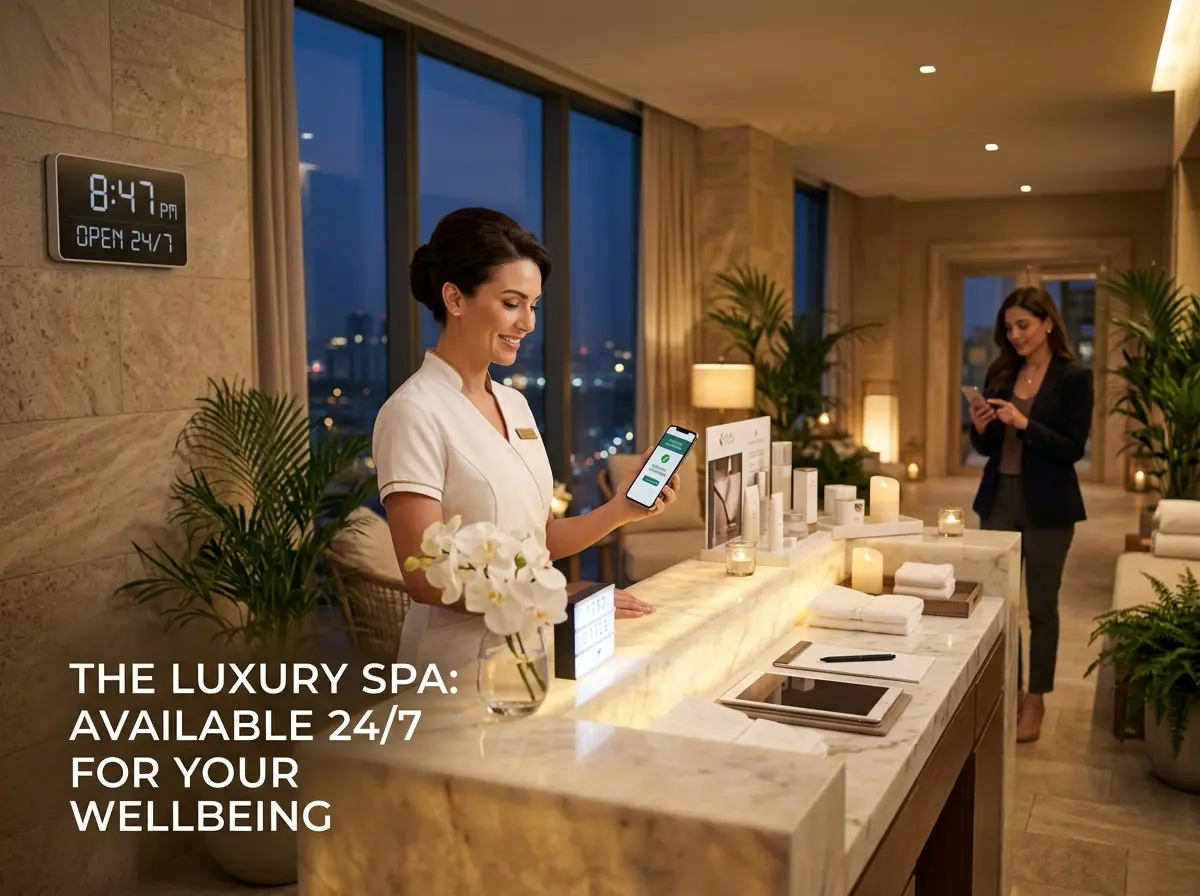
Stella, the AI robot employee and phone receptionist, is built for exactly this problem. As a friendly, human-sized kiosk inside your spa, she can greet every person who walks through the door, answer questions about your services and promotions, and make first-time visitors feel immediately welcome — all without pulling your staff away from the treatment rooms. At the same time, she answers your phone calls 24/7, so that potential client comparing spas at 10 PM on a Tuesday actually gets a real, informative conversation instead of a voicemail black hole. Stella also captures client information through conversational intake forms and stores it in a built-in CRM with custom fields, tags, and AI-generated profiles — so you always know where a client is in their journey.
Retention, Loyalty, and the Art of Keeping Clients Coming Back
Stage 4: Retention — Turning One-Timers Into Regulars
The retention stage is where the real business is built. A client who visits once is a transaction. A client who visits monthly is a relationship — and a significantly more profitable one. Research from Harvard Business School found that increasing customer retention rates by just 5% can increase profits by 25% to 95%. Those are numbers worth paying attention to.
Retention is driven by consistent follow-up, personalized communication, and giving clients a reason to return before they even think about going somewhere else. This means post-visit emails that feel personal rather than automated, membership or package options that make regular visits financially sensible, and proactive outreach around seasonal promotions or service anniversaries. If a client's last visit was 60 days ago, they should be hearing from you — not the other way around.
Practical retention strategies for spas:
- Offer a membership program with a monthly service and added perks.
- Send a personalized follow-up message after every visit referencing the specific service received.
- Create seasonal packages that give clients a reason to book during slower periods.
- Track visit frequency in your CRM and flag clients who are overdue for outreach.
Stage 5: Advocacy — When Your Clients Become Your Marketing Team
The final stage of the lifecycle is the most powerful and the most underutilized: advocacy. An advocate isn't just a repeat client — they're someone who actively tells other people how great you are. They leave glowing reviews, refer their friends, share your posts, and defend your honor in local Facebook groups. They are, frankly, worth their weight in gold.
Creating advocates doesn't happen by accident. It happens when you consistently exceed expectations, make people feel genuinely valued, and give them easy, low-friction ways to spread the word. A simple post-visit review request via text or email dramatically increases the number of people who actually leave reviews. A referral incentive — even a modest one — turns passive fans into active promoters. The goal is to close the loop: your advocates fuel your awareness stage, and the whole beautiful cycle begins again.
Quick Reminder About Stella
Stella is an AI robot employee and phone receptionist designed to support businesses like your spa at every customer touchpoint — whether someone walks through your front door or calls after hours. She greets guests, promotes your services, answers questions, and handles phone calls 24/7, all for just $99/month with no upfront hardware costs. If you're trying to nurture clients across every stage of the lifecycle without burning out your human team, she's worth a very serious look.
Conclusion: Stop Hoping and Start Mapping
The customer lifecycle isn't a complicated concept — but it does require intentionality. Most small spas are fantastic at the middle part (delivering great services) and inconsistent at everything else (attracting, converting, retaining, and activating advocates). The good news is that fixing the gaps doesn't require a complete business overhaul. It requires systems, follow-through, and the right tools.
Here's your actionable starting point:
- Audit your current touchpoints. Walk through your own customer journey from Google search to post-visit email and identify where the experience drops off.
- Prioritize one stage to improve first. Don't try to fix everything simultaneously. Pick the stage where you're losing the most clients and start there.
- Invest in retention before acquisition. It's cheaper, faster, and more sustainable to keep existing clients than to constantly chase new ones.
- Use technology to handle the gaps your team can't. After-hours calls, front-desk overflow, and client follow-up are all areas where smart tools pay for themselves quickly.
- Build a referral and review system. If you're not actively asking for reviews and referrals, you're leaving advocacy entirely to chance — and chance is a terrible marketing strategy.
Your clients are on a journey. With a little intention and the right support, you can make sure that journey leads them back to your spa again and again — and brings a few friends along for the ride.