So Your Loyalty Program Has a Punch Card. How Adorable.
Let's be honest — the classic "buy 10 get 1 free" punch card has been a staple of salon loyalty programs since roughly the dawn of time. And while there's nothing technically wrong with it, there's also nothing particularly compelling about it. Customers stuff it in their wallet, forget about it for six months, lose it entirely, and then sheepishly ask if you can just start them a new one. Sound familiar?
The hard truth is that most salon loyalty programs don't actually change customer behavior — they just reward behavior that was already going to happen anyway. A truly effective loyalty program doesn't just thank people for showing up. It nudges them to come back sooner, spend a little more, try something new, and bring their friends along for the ride. That's the difference between a loyalty program as a nice gesture and a loyalty program as a genuine growth engine.
The good news? You don't need a Fortune 500 budget or a team of data scientists to build something that actually works. You just need the right structure — and a willingness to ditch the punch card.
Building a Loyalty Program That Does More Than Collect Dust
Tier-Based Structures: Give Clients Something to Chase
One of the most psychologically effective loyalty structures is the tiered model — and salons are uniquely well-positioned to use it. The idea is simple: the more a client spends or visits, the higher their tier, and the better their perks. Think Bronze, Silver, and Gold. Or, if you want to lean into your brand, something more creative like "Refresh," "Renew," and "Radiant."
What makes tiers so powerful is status motivation. People genuinely enjoy being recognized as a "top client." It feels good. And once someone reaches a tier, they're highly motivated to maintain it — which means they're booking more consistently, not just when they happen to remember your number. Research consistently shows that tiered programs generate higher average spend per customer compared to flat-reward programs, often by 20–30% in service-based industries.
The key is making sure each tier has perks that are actually meaningful. Early access to booking slots, complimentary add-ons, birthday bonuses, or a small discount on retail products can all work beautifully without destroying your margins.
Points Systems: Make Every Dollar Feel Like Progress
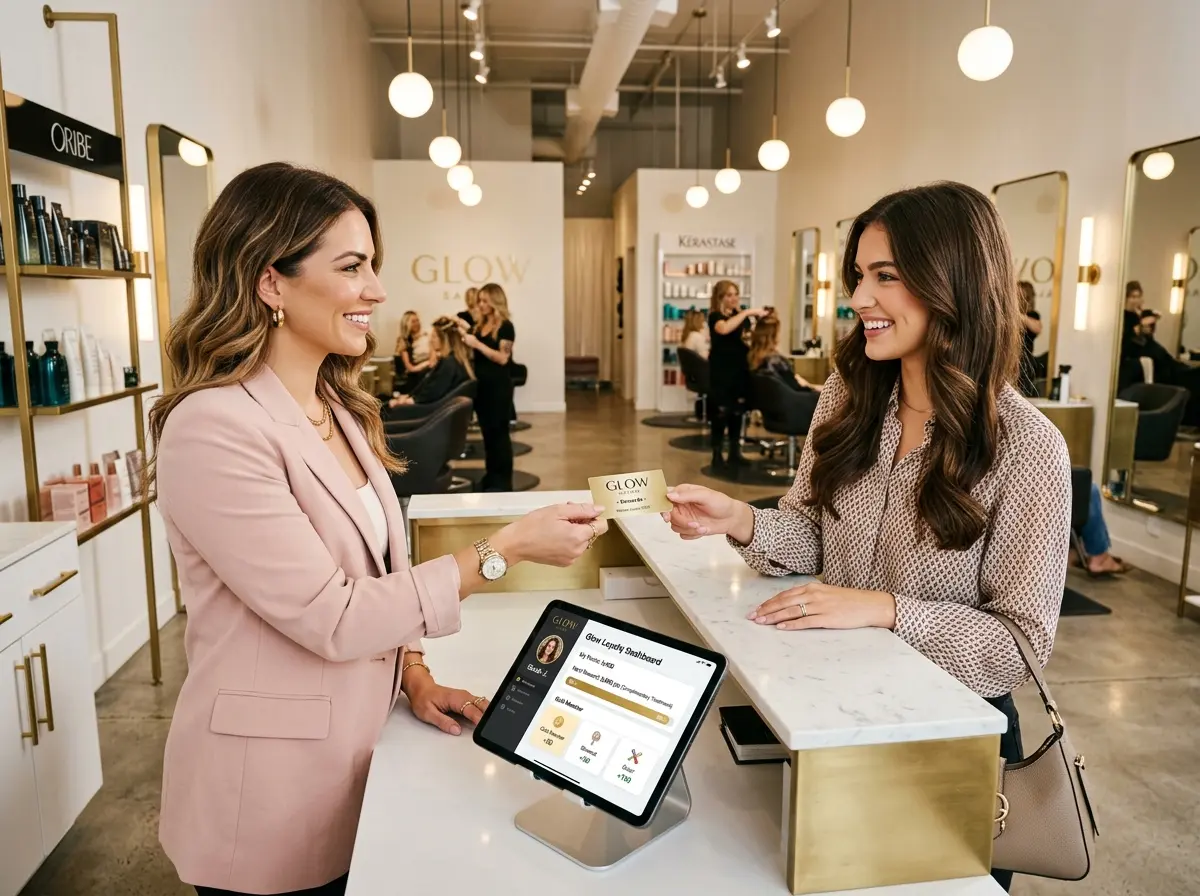
Points-based programs work because they tap into the same part of our brains that loves video games — every transaction feels like leveling up. For salons, this translates well: clients earn points on services, retail purchases, referrals, and even actions like leaving a review or rebooking before they leave the chair.
The design matters enormously here. If points feel impossible to accumulate or the rewards feel underwhelming, the whole thing collapses. A good rule of thumb is the "one dollar, one point" model, where clients can redeem 100–200 points for a meaningful reward — say, $10 off their next service or a complimentary deep conditioning treatment. The redemption threshold should feel achievable within two to four visits, not two years.
Critically, don't make redemption confusing or annoying. If clients have to jump through hoops to use their points, they'll stop caring about earning them.
Referral Rewards: Your Best Clients Are Your Best Marketers
Word-of-mouth has always been the lifeblood of salons, and a well-structured referral component turns your loyalty program into an active recruitment tool. When a loyal client refers a friend, both parties should benefit — the referrer earns bonus points or a reward, and the new client gets a first-visit incentive. This removes friction on both ends and gives clients a genuine reason to talk about you.
The numbers on referral programs are hard to argue with: referred customers tend to have higher lifetime value, convert at higher rates, and are more likely to refer others themselves. You're essentially bootstrapping a growth loop directly into your loyalty structure.
How the Right Tools Make This Effortless to Manage
Stop Trying to Run This Out of a Spreadsheet
A loyalty program is only as good as your ability to actually track and manage it. The moment a client calls to ask about their points balance and your staff has to say "um, let me check the spreadsheet," you've lost the magic. Managing customer data, tier status, referral tracking, and communication manually is a recipe for errors, inconsistency, and a very stressed front desk team.
This is where Stella — the AI robot employee and phone receptionist — fits neatly into the picture. Stella's built-in CRM lets you track customer contacts with custom fields, tags, and notes, making it genuinely straightforward to log loyalty tier status, track visit history, and flag high-value clients for personalized outreach. Her conversational intake forms can collect client information during phone calls or at the in-store kiosk, so you're always building a richer profile without your staff having to remember to ask. And when a client calls after hours to book an appointment or ask about their rewards status, Stella is there to handle it — no hold music, no missed calls, no lost opportunities.
Designing Rewards That Actually Motivate Behavior Change
The Difference Between Rewarding Visits and Rewarding Value
Here's a nuance that most salon loyalty programs completely miss: not all visits are created equal. A client who comes in for a $40 trim every eight weeks and a client who books a $200 color service every five weeks are both loyal — but they're not the same business asset. Your rewards structure should reflect that reality.
Spend-based earning (rather than visit-based) naturally scales your rewards to client value. It also incentivizes clients to add on services — because if they know they're close to their next reward, that scalp massage or gloss treatment suddenly looks a lot more appealing. This is upselling that doesn't feel like upselling, which is the best kind.
Expiration Dates and Urgency: The Underused Secret Weapon
Nothing motivates action quite like a deadline. Building thoughtful expiration mechanics into your loyalty program — points that expire after 12 months of inactivity, tier status that resets annually, or limited-time bonus point events — creates urgency without feeling predatory. A gentle reminder that a client's points are about to expire is one of the most effective re-engagement tools in your arsenal, and it's completely automated if your systems are set up properly.
Seasonal bonus point events ("Double Points in January!") also serve a dual purpose: they fill your slower months and they make loyal clients feel like insiders getting access to something special. That feeling of exclusivity is enormously valuable and costs you very little to manufacture.
Tracking What's Actually Working
The final piece of a well-designed loyalty program is measurement. Are clients actually redeeming rewards? Is your referral component generating new bookings? Which tier perks are most popular? Without data, you're essentially flying blind and hoping for the best — a strategy with a surprisingly poor track record.
Track redemption rates, average visit frequency by tier, and revenue per loyalty member versus non-members. These numbers will tell you quickly whether your program is genuinely changing behavior or just giving discounts to people who were going to come back anyway. Adjust accordingly, and don't be afraid to retire elements that aren't pulling their weight.
Quick Reminder About Stella
Stella is an AI robot employee and phone receptionist designed to help businesses like yours run more smoothly — whether she's greeting walk-ins at the kiosk inside your salon, answering calls at 2am, or helping you keep your client data organized through her built-in CRM. She works for $99/month with no upfront hardware costs, which means she costs less than most part-time employees and complains significantly less.
Your Next Steps Start Today
A loyalty program that actually changes behavior isn't complicated, but it does require intention. Start by auditing what you're currently offering and asking honestly: does this give clients a real reason to come back sooner, spend more, or send their friends? If the answer is "not really," it's time for a redesign.
Here's a simple action plan to get moving:
- Define your tiers and thresholds. Three tiers is plenty. Keep the criteria simple and the perks genuinely appealing.
- Set up spend-based points earning. Reward dollars spent, not just visits logged. Include retail purchases and referrals.
- Build in urgency mechanics. Annual resets, expiration reminders, and seasonal bonus events will do more for re-engagement than almost anything else.
- Get your client data organized. You cannot personalize a loyalty experience if you don't know who your clients are. Invest in tools that make tracking effortless.
- Measure and iterate. Check your redemption rates quarterly. Kill what isn't working. Double down on what is.
Your clients already like you enough to sit in your chair for two hours while someone touches their hair. That's a pretty solid foundation. Give them a loyalty program that honors that relationship — and gives them a genuinely compelling reason to keep coming back.