Introduction: The Clock Is Ticking (And So Is Your Competitor's)
Imagine this: A homeowner just discovered something unspeakable scurrying across their kitchen floor at 11:47 PM. They're not sleeping. They're not waiting until morning. They're grabbing their phone and searching for pest control — right now. The first company that responds gets the job. The second company gets a polite "we already found someone, thanks." The third company gets nothing but silence and a quiet reminder that speed matters.
Here's the uncomfortable truth for pest control businesses: responding to leads within five minutes makes you 21 times more likely to convert them compared to responding within 30 minutes, according to research from the Harvard Business Review. And yet, most pest control companies are still playing phone tag, letting calls go to voicemail, and following up the next business day like it's still 1987.
The good news? Artificial intelligence has made instant lead response not just possible, but surprisingly affordable and shockingly easy. This guide will walk you through exactly how pest control companies can use AI to respond faster, close more jobs, and stop losing customers to the guy down the street who picked up the phone first.
Why Speed Wins in the Pest Control Business
The Emotional Urgency Factor
Pest control is not a "I'll think about it" industry. When someone has a wasp nest the size of a basketball hanging from their eave or a trail of ants marching through their pantry, they are motivated. That motivation has a very short shelf life. Studies consistently show that lead intent peaks at the moment of inquiry and drops off sharply with every passing minute. A customer who searched "emergency pest control near me" at noon and received a callback at 4 PM has already either called someone else, convinced themselves it wasn't that bad, or — in rare and unfortunate cases — attempted to handle it themselves with a can of Raid and deeply misplaced confidence.
Being fast isn't just a competitive advantage in pest control — it's often the entire ballgame. Customers aren't comparison shopping the way they might for, say, a new couch. They want someone reliable who answers quickly and sounds like they know what they're doing.
The Missed Call Problem Is Bigger Than You Think
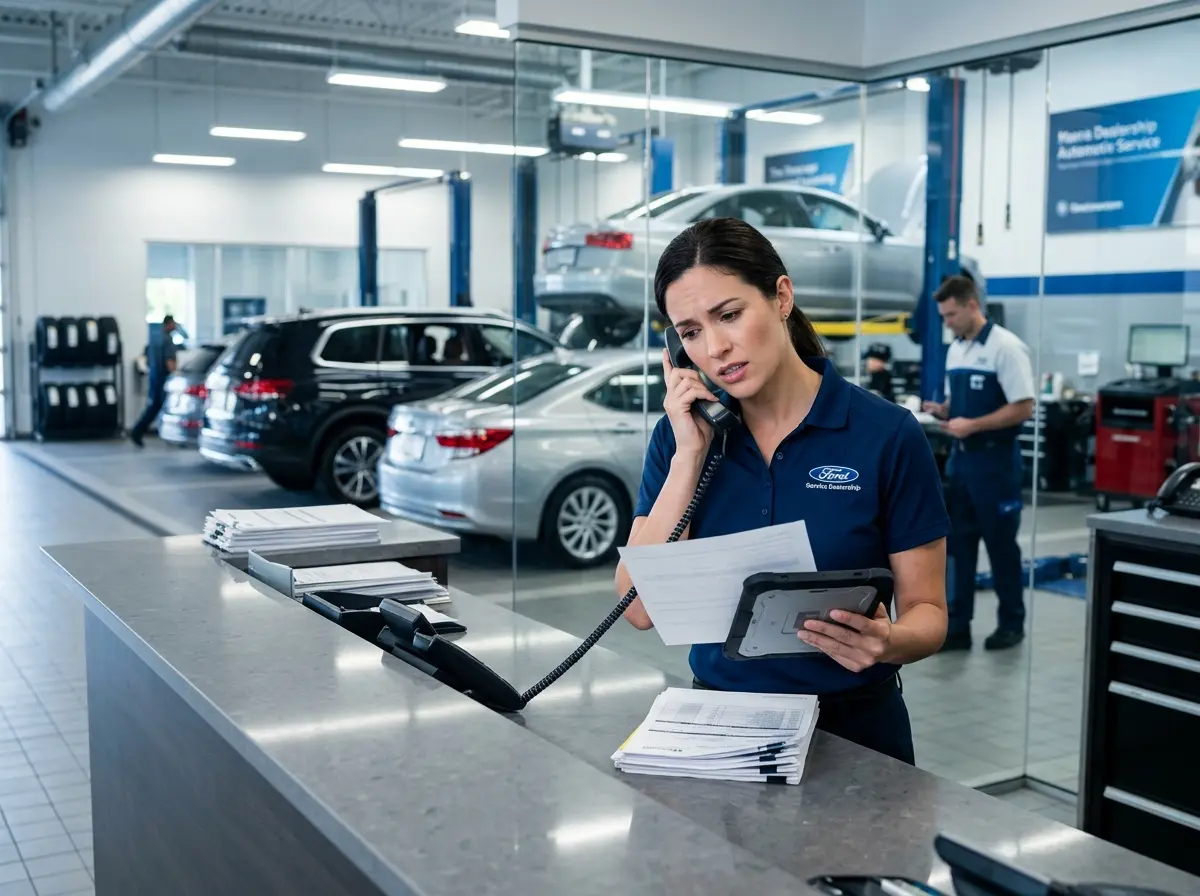
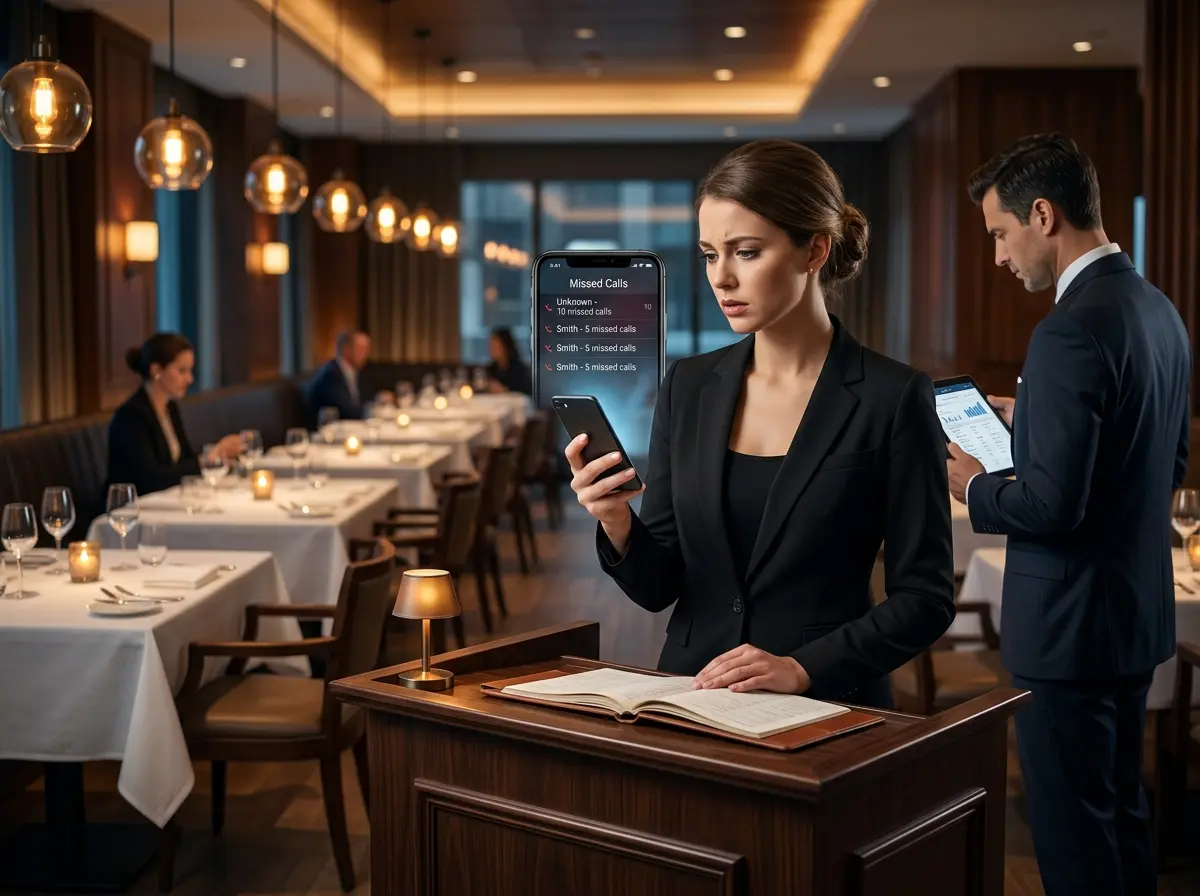
Most pest control businesses, especially smaller and mid-sized operators, miss a staggering number of calls. Technicians are in the field. Office staff are handling existing customers. Lunch happens. After-hours calls go to voicemail. And here's the brutal reality: 80% of callers who reach voicemail do not leave a message — they simply call the next business on the list.
If your pest control company runs lean (and most do), every missed call is a missed opportunity, and those stack up fast. Even if you have the best technicians, the best pricing, and a five-star reputation, none of that matters if customers can't reach you when they need you.
Seasonality Makes This Even More Critical
Pest control is famously seasonal. When mosquito season hits, when termite swarms begin, or when rodents start looking for winter warmth, your call volume doesn't gently increase — it spikes. Hard. And of course, that's exactly when your team is already stretched thin, callbacks are delayed, and the window to capture a lead shrinks to almost nothing. AI tools built for lead response are specifically valuable during these peak periods because they don't get overwhelmed, they don't take smoke breaks, and they definitely don't call in sick on the busiest Saturday in June.
How AI Tools — Including Stella — Fit Into Your Workflow
Instant, 24/7 Phone Coverage That Doesn't Sleep
This is where AI phone receptionists genuinely shine for pest control companies. Stella is an AI robot employee and phone receptionist that answers calls around the clock, engages callers naturally, answers questions about your services and pricing, and collects customer information through conversational intake — all without putting anyone on hold or sending them to voicemail purgatory. For a pest control company, this means the panicked homeowner calling at midnight gets a real, helpful response immediately. Stella can gather their name, address, pest type, urgency level, and preferred appointment window — everything your team needs to dispatch or follow up first thing in the morning.
For businesses with a physical location, Stella also operates as a human-sized kiosk, greeting walk-in customers proactively and answering questions about services. Her built-in CRM automatically logs customer details, tags contacts, and generates AI-powered profiles — so every lead that comes in through a phone call or in-person visit is captured, organized, and ready for your team to act on. No sticky notes. No lost callback numbers. No "I think someone called about termites but I'm not sure who took the message."
Setting Up an AI-Powered Lead Response System
Step One: Audit Where Your Leads Are Slipping Through
Before you implement anything, spend a week tracking where inquiries come in and how quickly they're addressed. Are after-hours calls being returned same-day or the next morning? Are web form submissions sitting in an inbox for hours? Are missed calls getting follow-up within five minutes or five hours? Most pest control owners who do this exercise are genuinely surprised — and not in a good way — by the gaps they find. Identifying the specific leakage points lets you apply AI tools where they'll have the most immediate impact rather than just piling on technology for the sake of it.
Step Two: Automate the First Response, Always
The goal of your first response is not to close the sale — it's to make the customer feel heard and keep them from calling your competitor. An AI system that answers a call immediately, greets the customer warmly, and begins gathering their information is infinitely better than even the most charming voicemail greeting. Configure your AI receptionist to handle common questions (What pests do you treat? Do you offer same-day service? Are your products pet-safe?) and to collect intake information that lets your human team hit the ground running when they follow up.
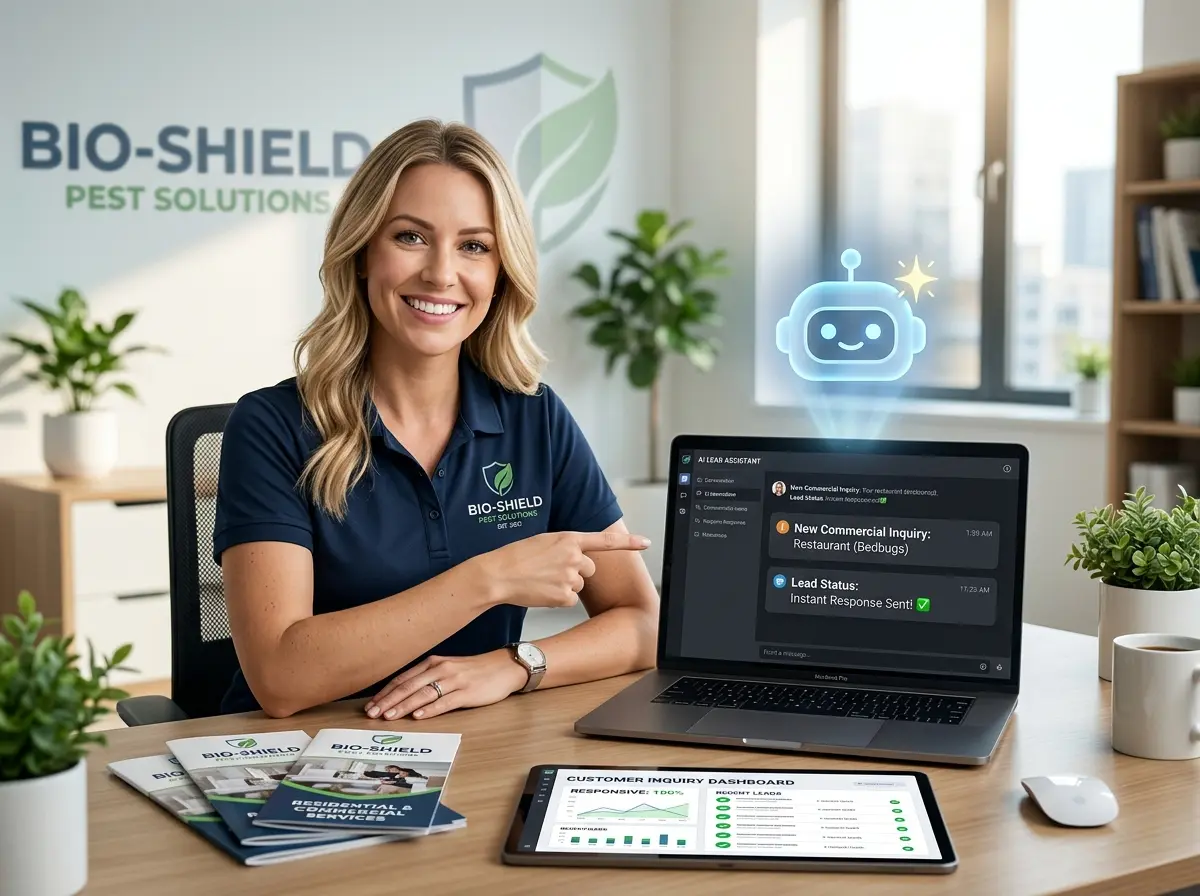
For leads coming through web forms or online directories, pair your AI phone system with automated SMS or email responses that acknowledge the inquiry instantly and set expectations for when a human will follow up. Customers who receive an immediate acknowledgment are far more patient than those who hear nothing at all.
Step Three: Use AI to Prioritize and Route Smartly
Not all pest control leads are equal. A homeowner who suspects a termite infestation is a very different — and likely much higher-value — call than someone asking about a one-time ant treatment. Configuring your AI system to identify urgency signals and route high-priority calls directly to a human staff member (or flag them prominently in your CRM) ensures your team's limited time goes to the opportunities with the biggest potential. Smart routing also means that routine inquiries get handled automatically, freeing up your office staff to focus on scheduling, estimates, and the complex calls that actually require human judgment.
Quick Reminder About Stella
Stella is an AI robot employee and phone receptionist built for businesses exactly like yours — answering calls 24/7, collecting lead information conversationally, managing customer contacts through a built-in CRM, and delivering a professional, consistent presence without the overhead of additional staff. She runs on a straightforward $99/month subscription with no upfront hardware costs, making her one of the most practical investments a growing pest control company can make. If instant lead response is a gap in your business right now, Stella is worth a very serious look.
Conclusion: Stop Letting Leads Walk (or Scurry) Away
The pest control market is competitive, and customers are not loyal to a company they've never spoken to. Every unanswered call, every delayed follow-up, and every voicemail that never gets returned is a direct transfer of revenue to your competition. The math here is not complicated.
Here's what you should do this week:
- Audit your current lead response times — be honest about the gaps, especially after hours and during peak season.
- Identify your highest-volume lead channels — phone, web form, online directories — and prioritize AI coverage for those first.
- Implement an AI phone receptionist that answers every call, collects intake information, and routes or escalates based on urgency.
- Set up automated first-response messages for any non-phone channels so no inquiry goes unacknowledged.
- Review your CRM workflow to make sure every AI-captured lead flows cleanly into your follow-up process.
You didn't get into pest control to spend your days chasing down missed calls and playing phone tag with homeowners who've already booked someone else. AI makes it entirely possible to respond instantly, capture more leads, and let your team focus on the work they're actually good at — getting rid of the critters, not managing the chaos of an overwhelmed front office.
The technology is here. It's affordable. It works. The only question is whether your competitors are going to figure that out before you do.