Why Your Plumbing Business Is Leaving Money on the Table (And How to Stop)
Let's be honest — most plumbers are exceptionally good at fixing things that are broken and remarkably bad at building systems that prevent them from having to chase their next job. If your revenue looks like a rollercoaster (feast in summer, famine in February), you're not alone. But you might be in denial about the fix.
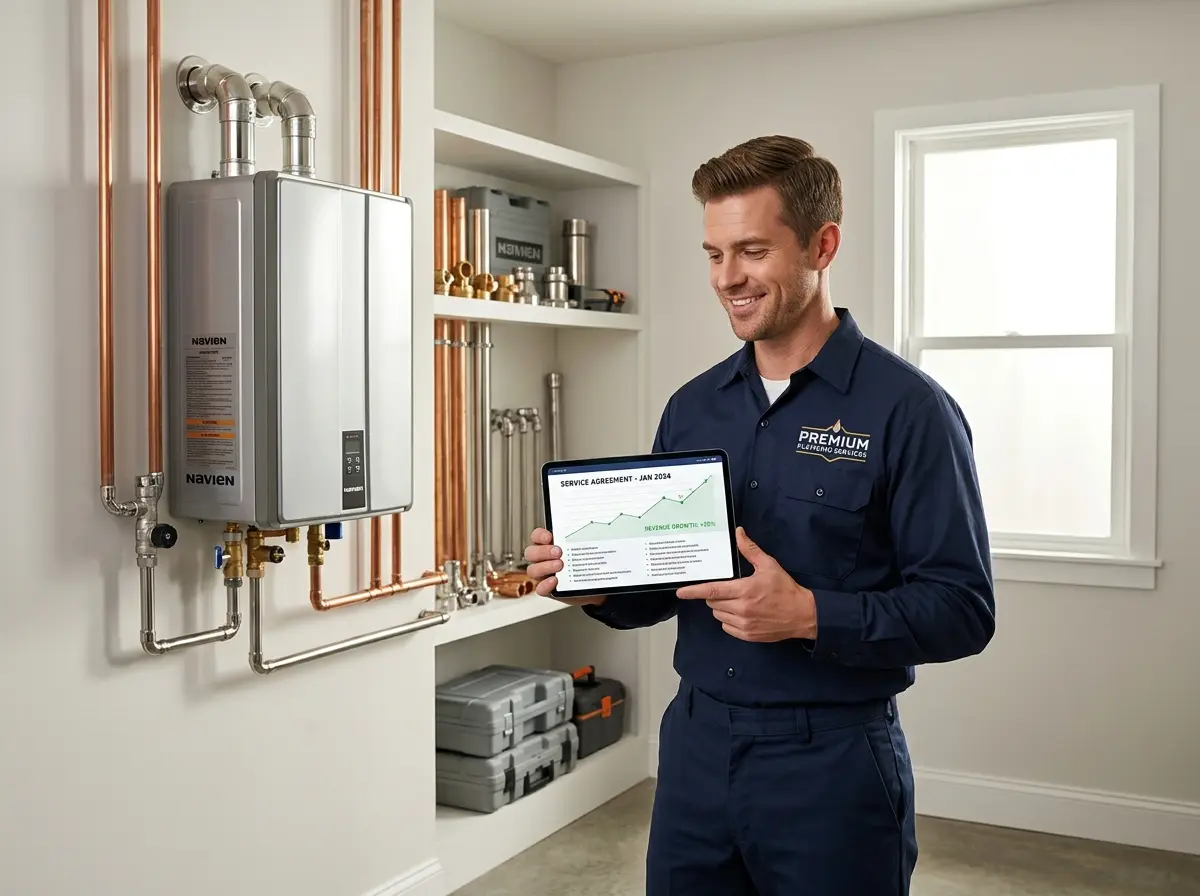
Water heater replacement programs are one of the most underutilized revenue opportunities in the residential plumbing space. The average tank water heater lasts 8–12 years. The average homeowner has no idea when theirs was installed. That's not a problem — that's an opportunity wearing a disguise. A well-structured replacement program transforms one-time emergency calls into a predictable pipeline of scheduled, high-ticket jobs that your competitors aren't thinking about because they're too busy answering phones at 2 AM.
This guide walks you through how to build a water heater replacement program from scratch — one that generates consistent, forecastable revenue without requiring you to pray for pipe bursts every January.
Building the Foundation of Your Replacement Program
Start With What You Already Have: Your Existing Customer Base
The gold mine is already in your truck's glovebox — or it should be. Every service call you've completed in the last decade represents a household with aging infrastructure. If you've been keeping even basic records of what you've installed and when, you're sitting on a surprisingly powerful dataset. A water heater installed in 2014 is now 10+ years old. That's a replacement conversation waiting to happen.
Start by segmenting your customer list by installation date. If your records are incomplete (no judgment — you're a plumber, not an archivist), prioritize customers you haven't heard from in 5 or more years and make proactive outreach a habit. A simple postcard, email, or phone call saying "Hey, we installed your water heater back in 2015 — want us to come take a look before it becomes an emergency?" has a surprisingly high conversion rate because most homeowners are genuinely grateful someone remembered.
Create Tiered Service Packages Worth Buying
A replacement program only works if there's something to enroll in. Consider building two or three distinct tiers that give customers a reason to commit rather than just call around for quotes. A basic tier might include a scheduled annual inspection and priority scheduling. A mid-tier could add a parts and labor discount on replacements, plus a free flush service. A premium tier bundles everything with a multi-year warranty, a tankless upgrade path, and guaranteed same-day emergency response.
Pricing these packages isn't a guessing game — survey your average service call revenue, factor in customer lifetime value, and price tiers so that even the basic plan pays for itself with a single avoided emergency replacement. The psychological win for the homeowner is certainty. They know what they're getting, when they'll hear from you, and that they won't be blindsided by a $1,200 emergency call on a Sunday morning.
Set Up a Tracking and Reminder System That Actually Works
The fatal flaw of most service programs is follow-through. You build the concept, maybe even sell a few enrollments, and then life happens and nobody sends the renewal reminders. The solution is simple: automate it. Whether you're using a full-blown field service management platform like ServiceTitan, a CRM, or even a well-maintained spreadsheet with calendar triggers, the key is that no renewal or inspection reminder should depend on a human remembering to send it. Systems beat intentions every time.
Using Technology to Stop Losing Customers Between Calls
The Phone Problem Nobody Talks About
Here's a scenario that plays out in plumbing businesses every single day: a homeowner calls to ask about your water heater program, gets sent to voicemail, calls your competitor instead, and you never know it happened. According to industry research, nearly 85% of customers who can't reach a business on the first call will not call back. That's not a lead problem — that's a phone coverage problem masquerading as a lead problem.
This is exactly where Stella, an AI robot employee and phone receptionist, becomes genuinely useful for plumbing businesses. Stella answers every call 24/7, can explain your water heater replacement program in detail, collect customer information through conversational intake forms, and even forward urgent calls to your on-call technician based on whatever conditions you configure. She also comes with a built-in CRM that stores customer profiles, tags, notes, and AI-generated summaries — so when a homeowner calls back three months later, you already know they were interested in your premium tier. For $99/month, Stella handles the front-end customer experience so your team can focus on the work that actually generates revenue.
Marketing Your Program Without Sounding Desperate
Educate First, Sell Second
Nobody wakes up excited to buy a new water heater. They wake up excited to have hot water, avoid a flooded basement, and not spend their Saturday on hold with an HVAC company. Your marketing job, therefore, is not to sell water heaters — it's to sell peace of mind and avoided disasters. That reframe changes everything about how you communicate your program.
Content marketing works remarkably well here. A short blog post titled "5 Signs Your Water Heater Is About to Fail" will attract exactly the homeowner you want — the one quietly nervous about the rusty tank in their basement. A simple email campaign to your existing customer list explaining the cost difference between a planned replacement ($1,200–$2,500) versus an emergency replacement after flooding ($3,000–$5,000+) is genuinely helpful information that also happens to make enrollment in your program look like an obvious decision. Be useful. The sales follow naturally.
Leverage Seasonal Campaigns Strategically
Water heater demand spikes in fall and early winter as homeowners realize cold showers are less charming than they remembered. Plan your outreach campaigns accordingly. A "Pre-Winter Water Heater Check" promotion launched in late September or early October gives you a natural, timely hook that doesn't feel forced. Offer a discounted inspection fee — or a free one for enrolled members — and use the visit as an opportunity to assess whether a replacement conversation is appropriate.
Equally important: don't ignore summer. While it's peak season for other plumbing work, it's also the best time to schedule non-urgent replacements. Homeowners are less stressed, your schedule is easier to manage, and you can often negotiate better equipment pricing when suppliers aren't overwhelmed with emergency orders. Building a seasonal rhythm into your program makes your revenue less volatile and your schedule more manageable year-round.
Ask for Referrals Like You Mean It
Word of mouth is still the dominant acquisition channel for residential service businesses, and yet most plumbers treat referrals as something that either happens or doesn't. It does not have to be passive. At the end of every successful installation or enrollment conversation, simply say: "If you know anyone with an older home who's been thinking about their water heater, we'd love to take care of them." That's it. No complicated referral program required — though offering a modest discount or credit for referrals who convert doesn't hurt.
Customers who join your replacement program are ideal referral sources precisely because they've already made a commitment. They're not just satisfied customers — they're enrolled customers, which means they've bought into the concept and are far more likely to recommend it to neighbors, family, and coworkers who share the same homeownership anxieties.
Quick Reminder About Stella
Stella is an AI robot employee that works as both an in-store kiosk and a 24/7 phone receptionist for businesses of all types — including plumbing companies. She answers calls, explains your services, collects customer information, and keeps your CRM updated without requiring a dedicated office staff member to manage it all. At $99/month with no upfront hardware costs, she's the kind of employee who never calls in sick and never puts a customer on hold indefinitely.
Turning Your Program Into a Revenue Engine: Next Steps
Building a water heater replacement program that generates predictable revenue isn't complicated — but it does require intention. The plumbing businesses that do this well aren't necessarily the ones with the best technicians or the fanciest trucks. They're the ones who treated their business like a business: with systems, follow-up processes, and a genuine commitment to staying in front of customers before problems become crises.
Here's where to start this week:
- Pull your installation records and identify every customer with a water heater more than 7 years old. That's your first outreach list.
- Design two or three service tiers with clear pricing, defined benefits, and automatic renewal reminders built into your system.
- Audit your phone coverage. If calls are going to voicemail after hours — or during busy stretches — you're losing enrolled customers before they even get a chance to sign up.
- Write one piece of educational content this month, whether it's an email, a social post, or a blog entry, that explains the value of proactive replacement in plain, homeowner-friendly language.
- Ask for referrals at the close of every job for the next 30 days and track what happens.
The water heaters in your customers' basements are aging whether you're paying attention or not. The only question is whether you get to replace them — or whether they'll call whoever answers the phone first when it finally fails at 10 PM on a Tuesday. Build the program. Make the calls. Answer the phone. The predictable revenue you've been looking for has been hiding in plain sight all along.