First Impressions Don't End at the Front Door
You've done the hard part. A new patient found your dental practice, called to schedule, survived the parking situation, and actually showed up. Congratulations — that's no small feat in today's world of endless options and two-second attention spans. But here's the thing most dental practice owners don't realize: the moment that patient walks out the door after their first appointment, that's when the real relationship either begins or quietly dies.
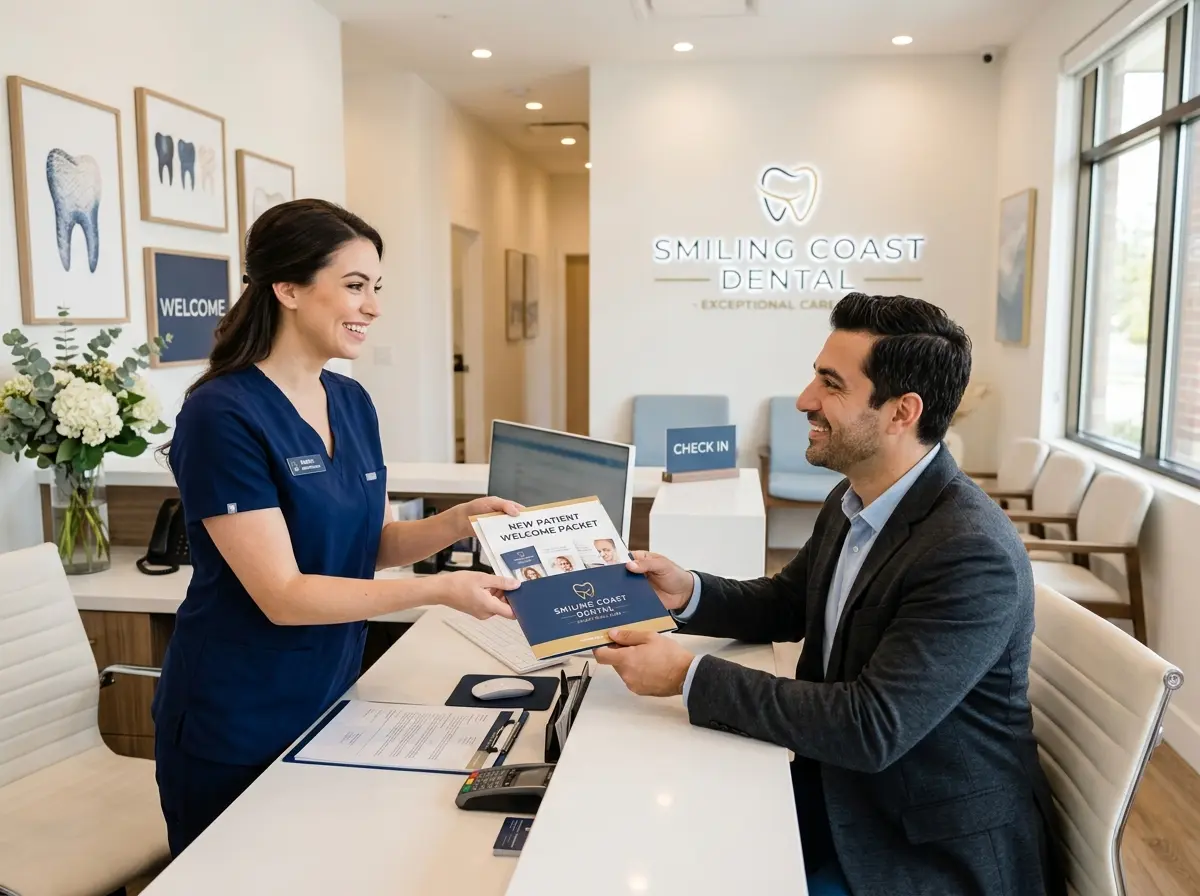
Your new patient welcome packet is one of the most underestimated tools in your practice. It's not just a stack of forms and insurance paperwork stuffed into a manila folder. Done right, it's a handshake, a promise, and a retention strategy all rolled into one. Done wrong, it's a paper monument to missed opportunity that patients politely accept and then leave on their passenger seat for six weeks.
So let's talk about what actually makes a new patient welcome packet work — and why getting it right matters far more than you think.
What Your Welcome Packet Is Actually Communicating
It Sets the Tone for the Entire Patient Relationship
Whether you realize it or not, your welcome packet is sending a message. A disorganized, generic packet says, "You're patient number 847 and we hope you come back." A thoughtful, well-designed packet says, "We're glad you're here, we take our work seriously, and we're going to take care of you." Patients absolutely notice the difference, even if they can't articulate why one practice feels more professional than another.
According to a study by Bain & Company, increasing patient retention by just 5% can increase profits by 25% to 95%. The new patient welcome packet is one of the earliest and most tangible touchpoints you have to start building that retention. It's worth treating it that way.
It Reduces Friction and Builds Confidence
New patients arrive with questions they may not feel comfortable asking out loud. What's covered by insurance? What happens if I need to cancel? Do I need a referral for a specialist? A well-crafted welcome packet answers these questions proactively, reducing anxiety and building trust before the patient even sits in the chair. Include a clear overview of your services, your financial and cancellation policies, how to reach your office, and what patients can expect during routine and specialized appointments. The more informed your patients feel, the more confident they are — and confident patients are loyal patients.
It's a Marketing Asset in Disguise
Here's one most practices overlook entirely: your welcome packet is an opportunity to upsell and cross-sell in the most non-pushy way imaginable. A brief, well-written overview of your cosmetic services, teeth whitening options, or Invisalign offerings — framed helpfully, not aggressively — plants seeds that often bloom at the next appointment. You're not being salesy. You're being informative. There's a meaningful difference, and patients respond to it positively when the tone is right.
How Technology Can Take the Pressure Off Your Team
Streamlining Intake Before the Appointment Even Starts
One of the biggest pain points in the new patient experience is the dreaded clipboard marathon. Patients arrive, get handed a small novel of forms, and spend their first ten minutes at your practice filling out information that probably already lives somewhere in your system. This is exhausting for patients and creates unnecessary bottlenecks for your front desk staff.
This is where Stella — an AI robot employee and phone receptionist — can genuinely change the dynamic. Stella can collect new patient intake information conversationally, either over the phone when a patient first calls to book, through your website, or at her in-office kiosk. Instead of a form that feels like a tax return, patients answer simple questions in a natural, friendly conversation. That information flows directly into Stella's built-in CRM, complete with AI-generated patient profiles, custom fields, and tags — so your team walks into every new patient appointment already knowing who they're about to meet. Less clipboard chaos, more meaningful first impressions.
Building a Welcome Packet That Actually Gets Read
Design and Format Matter More Than You Want to Admit
Let's be honest — if your welcome packet looks like it was designed in 2003 using clip art and a printer that's been out of magenta since the Obama administration, patients are not reading it. Design doesn't need to be expensive or elaborate, but it does need to look intentional. Use your brand colors, include your logo, and keep the layout clean and easy to skim. Break content into clearly labeled sections. Use headers, bullet points, and white space generously. A visually approachable document communicates professionalism before the reader absorbs a single word.
Consider offering a digital version as well — a well-formatted PDF sent via email after booking is something patients can reference from their phone at any time, which dramatically increases the likelihood they'll actually use it.
What to Actually Include (and What to Leave Out)
The most effective welcome packets are comprehensive without being overwhelming. Here's a practical framework for what to include:
- A warm, personal welcome letter — signed by the dentist, not the practice in general. People connect with people.
- An overview of your services — including any specialties or technologies that set your practice apart.
- Insurance and billing information — clearly explained, not buried in legalese.
- Office policies — cancellation, emergency contact procedures, and what to do if they have an urgent concern.
- Contact information and hours — obvious, but frequently missing or buried.
- A brief "what to expect" section — especially helpful for patients who have dental anxiety.
- Optional: a patient referral card — a gentle, gracious ask that many satisfied new patients are happy to act on.
What to leave out: anything redundant, overly legal, or condescending. If something requires a lawyer to interpret it, it doesn't belong in a welcome packet — it belongs in a separate document handed over with an actual explanation.
Follow Up After the First Visit
The welcome packet's job isn't done when the appointment ends. A brief follow-up — a personalized email, a handwritten card, or even a quick phone call from a team member — extends the welcome and reinforces that your practice genuinely values the relationship. Studies show that new patients who receive a follow-up communication after their first visit are significantly more likely to return for their next scheduled appointment and to refer friends and family. It doesn't need to be elaborate. It just needs to be genuine and timely.
Quick Reminder About Stella
Stella is an AI robot employee and phone receptionist that works 24/7 — greeting patients at your in-office kiosk, answering calls after hours, collecting intake information, and managing patient details through a built-in CRM. She runs on a simple $99/month subscription with no upfront hardware costs and is ready to work from day one. For a dental practice focused on making every new patient feel like a priority, Stella handles the logistics so your human team can focus on the care.
Your Welcome Packet Is Worth Getting Right
The new patient welcome packet doesn't get a lot of glory. It's not as exciting as a new piece of equipment or a social media campaign. But it quietly does some of the most important relationship-building work in your entire practice. It reassures anxious patients, answers unasked questions, introduces your services, and signals — clearly and consistently — the kind of experience patients can expect every time they walk through your door.
Here's where to start if you haven't revisited yours in a while:
- Pull out your current welcome packet and read it as if you're a new patient. Does it feel warm? Clear? Professional? Or does it feel like a formality?
- Audit the content. Is everything accurate and up to date? Are your services, policies, and contact information current?
- Evaluate the design. Could it use a refresh? Even simple improvements to layout and typography make a meaningful difference.
- Add a digital version. Create a PDF that patients receive by email after booking — something they can reference from anywhere.
- Build in a follow-up touchpoint. Decide on a consistent process for reaching out to new patients after their first visit, and make sure your team actually follows it.
The practices that retain patients long-term aren't always the ones with the fanciest equipment or the most aggressive marketing budgets. They're the ones that make people feel genuinely welcomed, informed, and cared for from the very first interaction. Your welcome packet — humble as it may seem — is one of the most direct ways to do exactly that.