Your Menu Is Doing More Work Than You Think (Just Not the Good Kind)
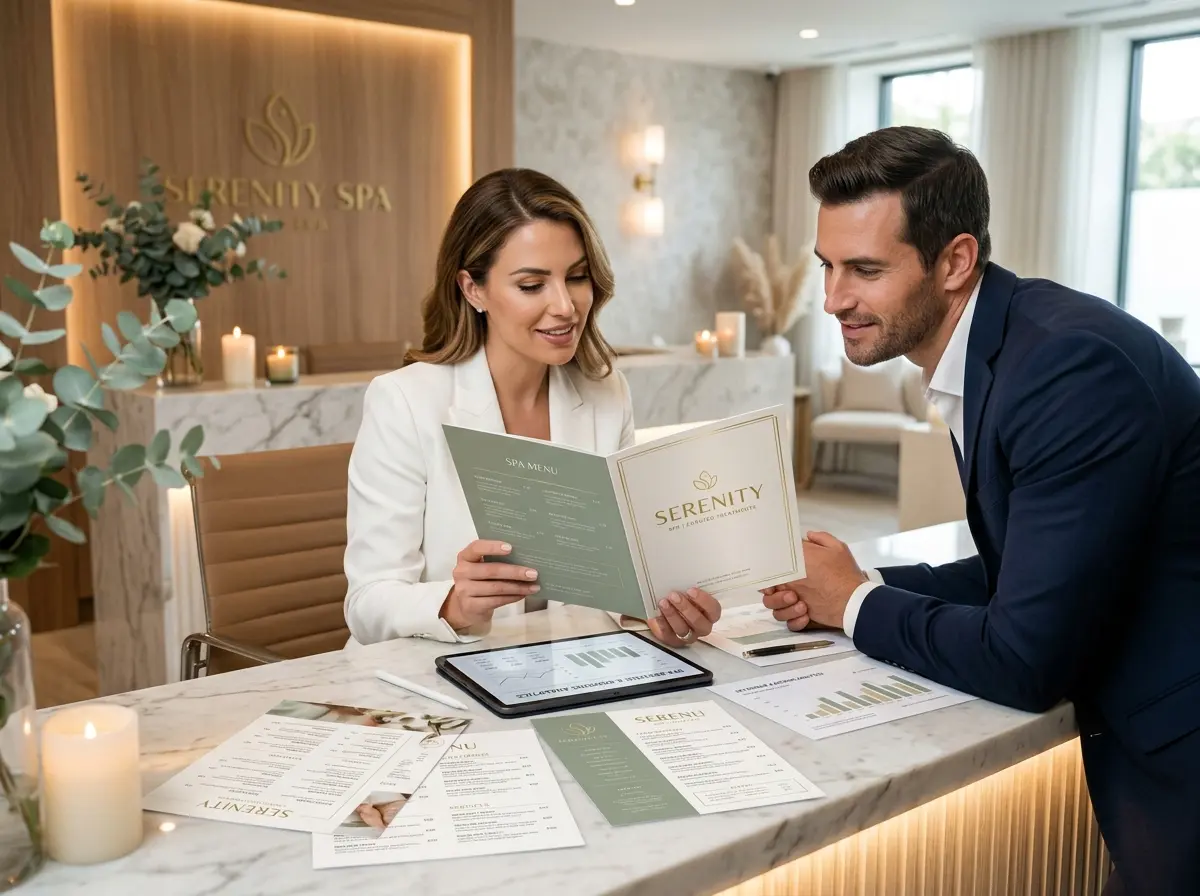
Let's talk about something that's sitting right on your front desk, getting handed to every single client who walks through your door — and quietly costing you money every time it does. Your spa menu. That lovingly laminated (or, bless your heart, photocopied) document that lists your services, prices, and maybe a stock photo of someone getting a cucumber facial.
Most spa owners spend enormous amounts of energy on the treatments themselves — the ambiance, the products, the training — and then hand guests a menu that was designed in Microsoft Word circa 2014 and hasn't been updated since the last time you raised prices. The result? Clients leave spending less than they could have, your staff awkwardly tries to upsell at checkout, and you wonder why your average ticket isn't budging.
Here's the thing: menu design is not just aesthetics — it's strategy. Restaurants figured this out decades ago. The spa industry? Still catching up. Let's fix that.
The Psychology Behind What Clients Actually Order
The Eye Tracks Where You Tell It To
There's a reason high-end restaurant menus never look like a spreadsheet. Menu engineers — yes, that's a real profession — have spent years studying where the human eye naturally travels when scanning a page. The same principles apply directly to spa menus, and ignoring them is essentially leaving money on the table while sipping your own chamomile tea.
The upper-right corner of a menu is prime real estate. It's where eyes tend to land first. If your highest-margin service — say, a signature facial or a premium body wrap — is buried on page two between your basic manicure and your cancellation policy, you're doing it wrong. Your best, most profitable services should be featured prominently, visually distinct, and described in a way that makes them irresistible.
Anchoring: The Art of Making $180 Feel Reasonable
Price anchoring is one of the oldest tricks in the book, and it works beautifully in spa menus. The idea is simple: when clients see a $280 deluxe package listed first, your $180 signature treatment suddenly feels like the sensible, middle-ground choice — even though it's still a premium offering. Without that anchor, $180 might feel steep.
Strategic placement of your high-ticket items at the top of each category doesn't just make those items look premium — it reframes how clients perceive everything else on the menu. According to menu engineering research, repositioning items alone (without changing prices or descriptions) can increase average spend by 8–15%. That's not nothing for a busy spa doing 20+ services a day.
Language That Sells Without Feeling Salesy
There is a massive difference between "60-min Deep Tissue Massage – $120" and "Tension Release Deep Tissue Massage – 60 minutes of targeted therapeutic work to melt away chronic muscle tension – $120." One reads like a line item. The other reads like a reason to book. Descriptive, sensory language increases perceived value, and perceived value is what justifies price — and drives upgrades.
This also applies to add-ons. "CBD oil upgrade – $15" is forgettable. "Enhance your massage with our premium CBD-infused oil for deeper muscle relief – $15" is an easy yes. Small language tweaks compound across hundreds of transactions.
How Smart Tools Can Help You Sell More, Effortlessly
Let Technology Do the Upselling You're Too Polite to Do
Even the most perfectly designed menu has one limitation: it's passive. It sits there and hopes clients read it carefully. Your front desk staff, meanwhile, is juggling check-ins, phones, product questions, and the occasional client who just wants to chat about their dog. Consistent, enthusiastic upselling often falls through the cracks — not because your team doesn't care, but because they're human.
This is where Stella steps in. Stella is an AI robot employee and phone receptionist that greets every client who walks through your door and proactively engages them about your services, specials, and promotions — every single time, without hesitation. She can highlight your featured treatments, mention current promotions, and recommend add-ons based on what a client is already booking. She never has an off day, never forgets to mention the monthly special, and never feels awkward asking if someone wants to upgrade their service.
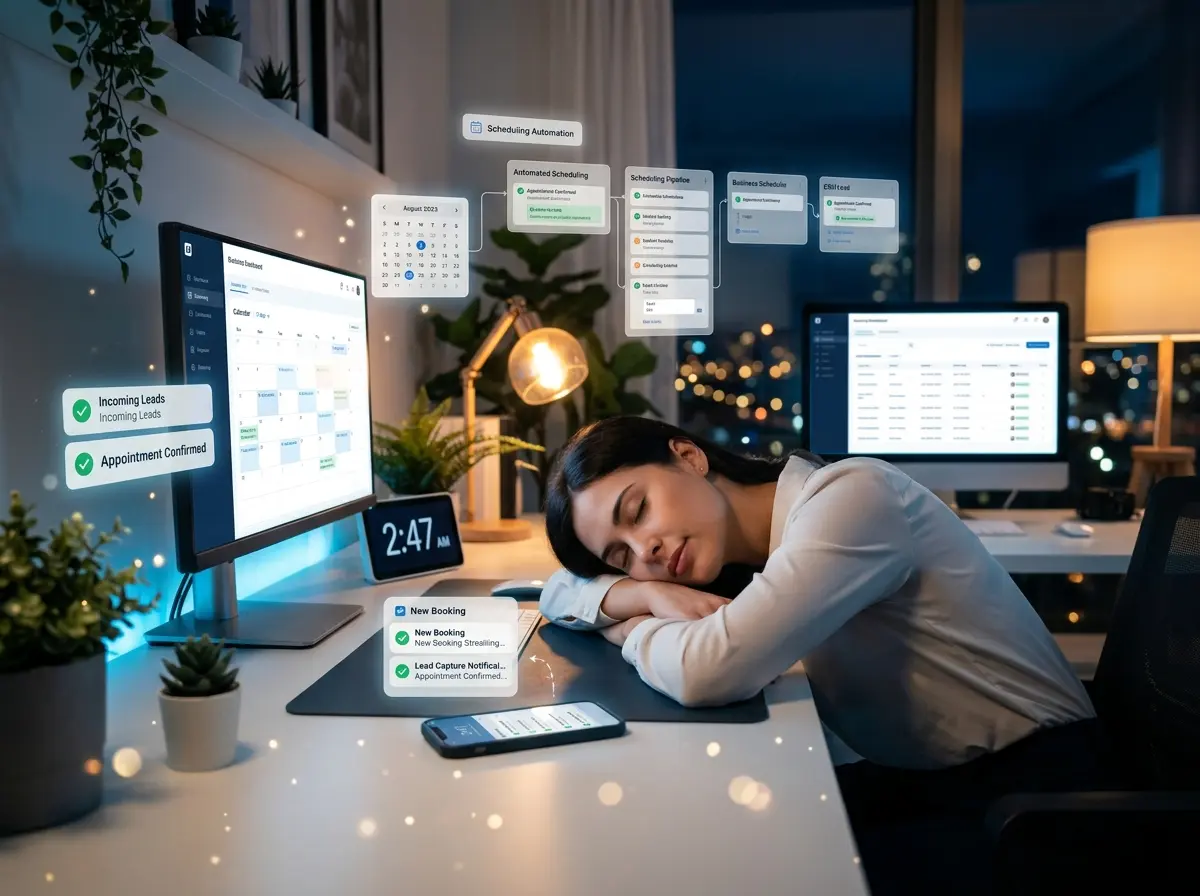
Stella also answers your phones 24/7, which means potential clients calling after hours don't just hit voicemail — they get a knowledgeable, friendly AI who can tell them all about your menu, pricing, and packages. For a spa, that's a significant number of bookings that might otherwise be lost to competitors who picked up the phone.
Structural Changes That Immediately Impact Your Average Ticket
Create Packages That Make the Math Obvious
One of the most powerful things you can do with your menu is bundle services into packages — not just because clients love value, but because packages naturally increase the total transaction without requiring any selling at all. The key is making the math feel obvious and favorable. A "Bridal Bliss Package" that combines a facial, massage, and mani-pedi for $295 (when à la carte would run $360) gives clients a clear, tangible reason to spend more in a single visit.
Packages also work beautifully for first-time clients who aren't sure what to choose. Instead of scanning a long list of individual services and picking the cheapest option out of uncertainty, a well-named package gives them a curated decision that tends to be higher value. Consider creating a tiered structure — a foundational package, a premium package, and a "go all out" package — so clients naturally gravitate toward the middle option (which should, of course, be your most profitable).
Add-Ons Deserve Their Own Featured Section
Add-ons are the unsung heroes of spa revenue, and most spas treat them like a footnote. A dedicated, visually prominent "Enhancements" section — not buried at the bottom of each service description — signals to clients that these are real, desirable options, not afterthoughts. Keep the list short and curated: five to eight genuinely popular upgrades, each with a compelling one-line description and a price that feels like an easy decision ($15–$35 hits the sweet spot for most markets).
Train your team to mention one specific add-on at booking confirmation, not at checkout. "I've added a note for your therapist about the hot stone enhancement — would you like to include that for just $25?" is far more effective when the client is still in a "yes" mindset than when they're reaching for their wallet to pay and mentally already out the door.
Review and Refresh Your Menu Quarterly
A menu that hasn't changed in two years is a missed opportunity disguised as a document. Seasonal treatments, limited-time add-ons, and rotating featured services not only keep your offerings fresh — they create urgency. "Available through March only" is one of the most reliable motivators in consumer psychology. A quarterly review also gives you the chance to retire low-performing services that clutter your menu and confuse decision-making, and to elevate the services that are actually driving revenue.
Pay attention to what clients ask about most often but don't see on the menu, what your staff gets asked to explain repeatedly, and which services consistently get upsold successfully. Your real-world data is the best menu designer you have.
Quick Reminder About Stella
Stella is an AI robot employee and phone receptionist built for businesses exactly like yours. She greets clients in your spa, answers calls around the clock, promotes your services and specials, and helps increase average ticket through natural, consistent conversation — all for $99/month with no upfront hardware costs. Think of her as your most reliable team member who never calls in sick and always knows today's promotions.
Your Next Steps Start With One Menu Audit
You don't need to overhaul everything at once. Start by printing out your current menu and looking at it the way a first-time client would — with fresh eyes, no prior knowledge of your business, and a moderate budget. Ask yourself: Is my most profitable service easy to find? Does the language make me want to book? Are add-ons presented as desirable options or buried footnotes?
Then, make three changes this week. Move your best service to a more prominent position. Rewrite two or three service descriptions with sensory, benefit-focused language. Add or elevate a dedicated enhancements section. Track your average ticket over the next 30 days and compare it to the previous period. The numbers will do the convincing from there.
Your spa experience is already excellent — your menu should be working just as hard as your team to communicate that. A strategic, well-designed menu isn't a vanity project. It's one of the highest-ROI investments you can make without spending a dollar on advertising.
Now go update that menu. Your average ticket is waiting.