Introduction: The Mess You Can't See Is Costing You Money
Every retail store owner has a front-of-house strategy. The displays are curated, the signage is on-brand, and the checkout area is (mostly) tidy. But the back of house? That's where good intentions go to quietly fall apart. Inefficiencies in your operations don't usually announce themselves with a flashing neon sign — they just steadily drain your time, money, and sanity until one day you're staring at your margins wondering what happened.
The truth is, operational inefficiency is one of the most expensive problems a retail business can have, and also one of the most overlooked. According to a McKinsey report, retailers lose an estimated 20–30% of operational efficiency to process breakdowns and poor workflow design. That's not a rounding error. That's your profit margin quietly walking out the back door.
This post is your back-of-house audit guide — a practical, slightly painful look at where retail stores commonly bleed efficiency, and what you can actually do about it. We'll cover inventory chaos, staff time sinks, and customer experience gaps, along with some tools (including one that doesn't need a lunch break) that can help you tighten things up. Let's get into it.
The Inventory Problem Nobody Talks About Enough
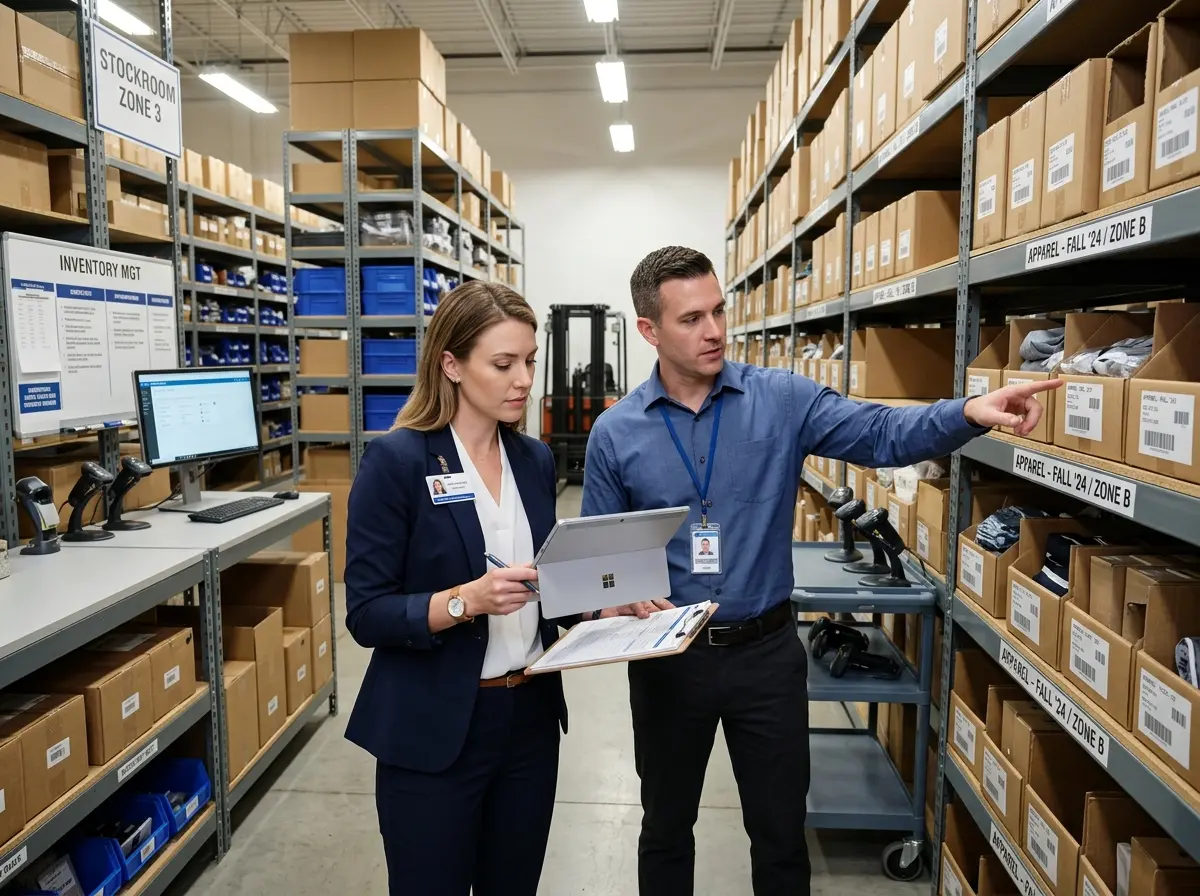
Inventory management is the backbone of retail operations, and yet it's also where some of the most spectacular inefficiencies live. If your current system involves a combination of spreadsheets, sticky notes, and institutional memory, you're not alone — but you are leaving money on the table.
Shrinkage, Overstock, and the Goldilocks Problem
Retail shrinkage — the loss of inventory due to theft, damage, administrative errors, or supplier fraud — costs U.S. retailers approximately $112 billion per year, according to the National Retail Federation. That's a staggering number, and a significant chunk of it comes not from organized retail crime but from simple internal errors: miscounts, mislabeling, and items that just... disappear into the system.
Then there's the equally painful problem of overstock. Ordering too much of a product ties up cash, takes up valuable floor space, and eventually forces markdowns that cut into margins. The goal is to find that Goldilocks zone — not too much, not too little — and the only way to reliably do that is with a proper inventory tracking system and consistent cycle counts rather than annual panic audits.
Action Steps for a Tighter Inventory Operation
Start with an honest assessment of your current system. Can you, right now, tell how many units of your top 10 SKUs are on hand without physically counting them? If the answer is no, that's your first problem. Here are some actionable steps to get started:
- Implement barcode or RFID scanning if you haven't already. Manual data entry is the enemy of accuracy.
- Run weekly cycle counts on your highest-velocity products rather than waiting for a full annual inventory.
- Set reorder thresholds in your inventory software so you're never caught flat-footed by stockouts on popular items.
- Audit your receiving process. How products are checked in when they arrive is often where discrepancies begin.
The upfront investment in better inventory systems almost always pays for itself quickly — both in recovered product and in the hours your staff will stop spending on manual reconciliation.
Where Your Staff's Time Actually Goes (Spoiler: Not Where You Think)
Labor is typically a retail store's largest expense, and yet most owners have only a vague idea of how that labor is actually being spent throughout the day. If you've ever wondered why your team always seems busy but certain things never get done, the answer is usually task fragmentation — the constant interruption of productive work by low-value but high-frequency tasks.
The Hidden Cost of Answering the Same Questions Over and Over
Ask any retail employee what they spend most of their time doing, and somewhere near the top of the list will be answering customer questions — about hours, about product availability, about return policies, about whether you carry a specific item. These interactions are individually short, but collectively they represent a significant time drain that pulls staff away from tasks that actually move the business forward.
This is exactly where Stella, the AI robot employee and phone receptionist, earns her keep. Standing inside your store as a human-sized interactive kiosk, Stella proactively greets customers, answers product and policy questions, promotes current deals, and handles the repetitive informational requests that eat up your team's time — all without needing to be asked twice or taking a coffee break. She also answers your phone calls 24/7, so after-hours inquiries and lunchtime call spikes don't fall through the cracks or land on a frazzled employee who's trying to ring up a customer at the same time. Your staff gets to focus on higher-value interactions; Stella handles the volume.
Scheduling Mismatches and Labor Waste
Beyond task fragmentation, scheduling inefficiency is another silent profit killer. Overstaffing on slow days and understaffing on busy ones isn't just a cost problem — it affects customer experience, employee morale, and your reputation. Pull your historical sales data by hour and day of week, and compare it honestly against your scheduling patterns. You may find that your intuitions about "busy times" don't quite match reality. Investing in workforce management tools or even just more data-driven scheduling conversations can meaningfully improve both labor costs and team satisfaction.
The Customer Experience Gaps That Are Quietly Hurting You
Operational efficiency isn't just about what happens in the stockroom — it directly shapes what customers experience on the floor and on the phone. And in a retail environment where online competition is always one click away, the in-store experience has to work hard to justify the trip.
First Impressions and the Greeting Problem
Research consistently shows that customers who are greeted within the first few seconds of entering a store are significantly more likely to make a purchase. Yet in reality, employees are often occupied, distracted, or simply unaware that someone has walked in. The solution isn't to hire more people whose sole job is to stand by the door — it's to build systems that ensure every customer feels acknowledged from the moment they arrive. Whether that's a staff protocol, a greeting station, or a proactive in-store presence like an AI kiosk, the goal is the same: no customer should feel invisible.
Inconsistent Upselling and Promotion Communication
Here's a frustrating truth: most retail stores run promotions that their own staff inconsistently communicates. One employee mentions the add-on warranty. Another forgets entirely. The customer who got the pitch buys it; the one who didn't, doesn't. Over hundreds of transactions, that inconsistency compounds into real revenue loss.
The fix is partly training, but it's also partly systematization. Build upsell prompts into your POS flow, create simple scripts for staff to reference, and consider tools that can reliably communicate promotions to every customer — not just the ones who happen to catch an employee at the right moment. Consistent promotion execution isn't flashy, but it's one of the highest-ROI improvements most retailers can make.
Returns, Complaints, and the Processes That Slow You Down
Every retail operation needs a clear, documented process for handling returns and complaints — not just a general policy, but an actual step-by-step workflow that any employee can follow without guesswork. When these processes are undefined or inconsistently applied, they create longer transaction times, customer frustration, and staff stress. Audit your returns process specifically: How long does the average return take? How is the returned inventory tracked back into your system? Are refunds processed consistently? Small frictions here have a way of amplifying into bigger problems at scale.
Quick Reminder About Stella
Stella is an AI robot employee and phone receptionist built for businesses like yours — she greets customers in-store, answers product and policy questions, promotes deals, and handles your phones 24/7, all for just $99/month with no upfront hardware costs. She's easy to set up, requires no training, and never calls in sick. If your audit reveals that your team is stretched thin on customer-facing tasks, Stella is worth a serious look.
Conclusion: Run the Audit, Then Fix One Thing at a Time
The back-of-house audit isn't a fun exercise — it has a way of surfacing problems you'd rather not see. But identifying inefficiencies is the only way to address them, and even small improvements in inventory accuracy, labor utilization, and customer experience consistency can have an outsized impact on profitability over time.
Here's your action plan to get started:
- Pull your inventory data and honestly assess your current accuracy rate. Schedule your first cycle count this week.
- Shadow your staff for a day and track where their time actually goes. You'll be surprised — possibly horrified — but it's necessary.
- Review your last 30 days of sales data against your scheduling patterns and look for mismatches.
- Walk through your store as a customer and note every friction point: unclear signage, slow processes, unanswered questions, missed greetings.
- Document one key process that currently lives only in someone's head and formalize it into a written workflow.
You don't need to fix everything at once. In fact, trying to overhaul everything simultaneously is a reliable way to fix nothing. Pick the highest-impact area your audit reveals, make meaningful improvements there, measure the results, and then move on to the next one. Operational efficiency is a long game, but it's one of the few games in retail where the rules actually favor the business owner who pays attention.
Your back of house is talking. It's time to listen.