Surviving Mother's Day: A Florist's Field Guide to Controlled Chaos
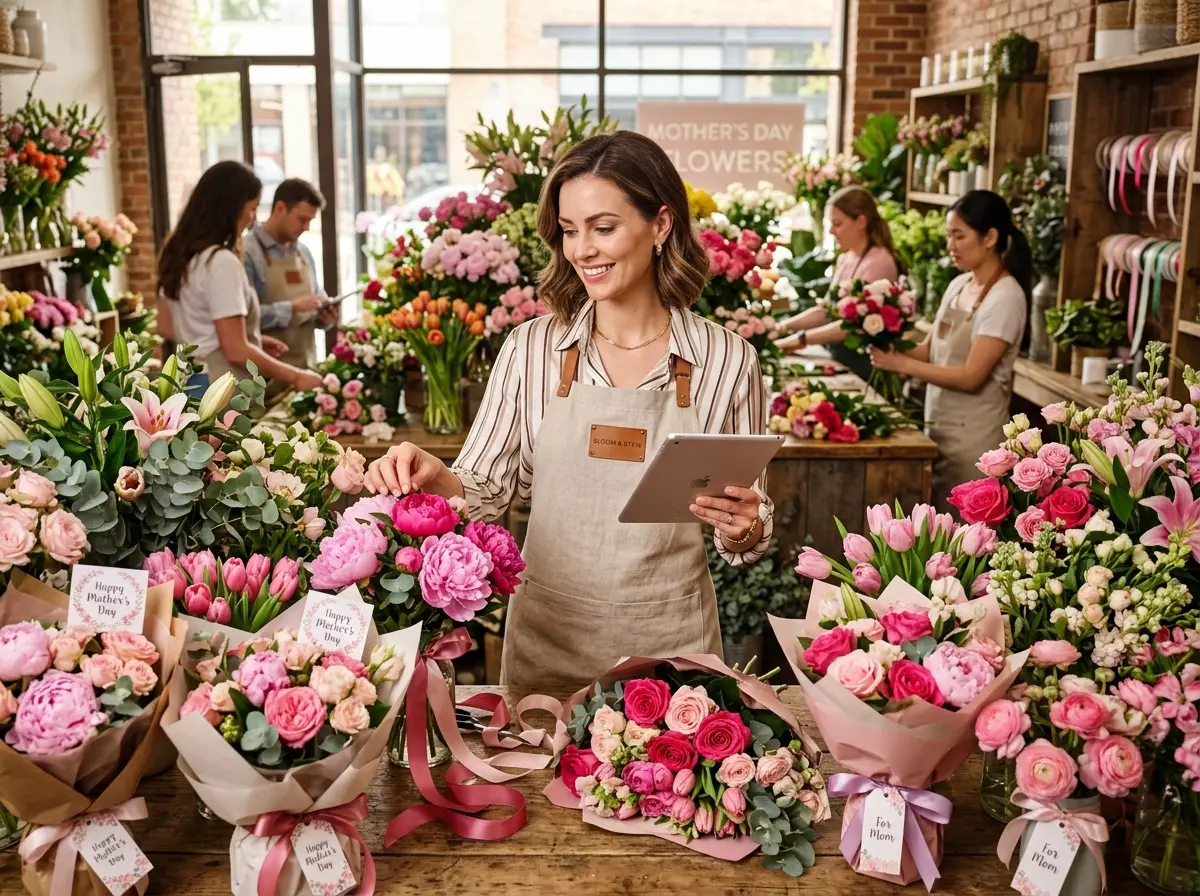
Let's be honest — Mother's Day is to florists what tax season is to accountants, except instead of paperwork, you're drowning in roses, crying customers who waited until 4 PM on Sunday to order, and a phone that hasn't stopped ringing since February. It's the single busiest floral holiday of the year, accounting for roughly 25% of annual floral sales for many shops — and it can make or break your quarter. So yes, the stakes are real.
The good news? With the right preparation, Mother's Day doesn't have to feel like a beautiful, fragrant disaster. The florists who thrive during this holiday aren't just the ones with the freshest inventory or the most Instagram-worthy arrangements — they're the ones who planned ahead, streamlined their operations, and figured out how to handle a hundred customers without losing their minds (or their staff). This guide is here to help you do exactly that.
Preparation Is Everything (Yes, Starting Now)
The florists who struggle most on Mother's Day are usually the ones who treated it like any other busy weekend — just with more flowers. The ones who thrive treat it like a military operation. Here's how to build your battle plan.
Forecast Your Inventory Like Your Profits Depend on It (They Do)
Pull your sales data from the last two or three Mother's Days and look at it carefully. What arrangements sold out by noon? What were you still stuck with on Monday morning? Knowing your numbers takes the guesswork out of ordering and helps you negotiate better with your wholesalers. If you're newer to the business, industry benchmarks suggest that roses, tulips, and mixed spring arrangements are perennial bestsellers — but local preferences matter too. Don't overbuy on exotic stems your clientele hasn't asked for just because they photograph well.
Order your inventory in tiers: a confirmed baseline amount, a second order ready to trigger mid-week before the holiday, and a small emergency buffer. Wholesalers get slammed too — placing your orders early and building relationships with multiple suppliers means you're not at the mercy of one vendor's stock running dry.
Create Pre-Set Packages and Limit Customization Windows
Custom orders are wonderful — and they are also time-consuming, communication-heavy, and logistically complex at scale. During Mother's Day week, consider offering a focused menu of three to five pre-designed arrangements at different price points rather than fielding endless bespoke requests. This speeds up production dramatically, reduces decision fatigue for customers, and lets your team work in an efficient, repeatable rhythm.
Set a clear deadline for custom orders — ideally by Wednesday or Thursday before the holiday — and communicate it everywhere: your website, social media, your storefront, and your phone greeting. Customers who miss the window aren't left out; they simply choose from your curated holiday collection. This isn't a lesser experience; it's a managed one.
Staff Up and Brief Everyone Thoroughly
This is not the weekend to be short-staffed, and it's also not the weekend for your newest hire to be winging it. Bring in extra help — even part-time or seasonal — and make sure every person working knows your product lineup, pricing, policies, and where things are. A quick pre-holiday team briefing can save hours of confusion on the floor. Assign roles clearly: who's handling walk-ins, who's managing phone orders, who's arranging, who's handling pickups. When everyone knows their lane, the whole operation runs smoother.
Keeping the Phones and the Front Door Under Control
Here's where things get interesting. During peak Mother's Day hours, your staff will be simultaneously trying to help in-store customers, answer a relentless stream of phone calls, process orders, and somehow still produce beautiful flowers. Something usually gives — and it's often customer service.
Let Technology Handle the Volume Spikes
This is exactly where Stella, an AI robot employee and phone receptionist, becomes genuinely valuable for florists. During Mother's Day week, Stella can stand inside your shop and proactively greet walk-in customers — answering questions about your holiday arrangements, current pricing, pickup windows, and policies — while your human staff focuses on production and more complex interactions. At the same time, she answers every phone call around the clock, handles common questions, promotes your pre-set packages, and takes voicemails with AI-generated summaries pushed directly to your phone. That means no more missed calls, no more staff pulled away from the design table to answer the same question for the fortieth time, and no customers left standing at the counter wondering if anyone works here.
Stella can also collect customer information through conversational intake forms — useful for capturing order details, contact info, and preferences — and store everything in her built-in CRM. After the holiday rush, you'll have organized contact data, tags, and AI-generated customer profiles you can use for future promotions like Valentine's Day or anniversaries. It's the kind of thing that turns a chaotic holiday into a long-term growth asset.
The Customer Experience: Small Details That Drive Big Loyalty
Surviving Mother's Day operationally is one thing. Making customers want to come back — and tell their friends — is another. The florists with the strongest repeat business aren't just efficient; they're memorable.
Make the Pickup Process Painless
Nothing sours a beautiful purchase like a disorganized pickup. Set up a dedicated pickup area clearly labeled and organized alphabetically or by order number. Have orders ready to hand off quickly with minimal searching. If you're doing deliveries, send confirmation texts or emails with estimated windows — customers appreciate knowing when to expect their flowers, and it dramatically cuts down on "where's my order?" calls clogging your lines.
Consider offering an early pickup option for customers who want to grab their arrangements on Saturday. This spreads your traffic across two days instead of one chaotic Sunday morning and gives you breathing room to catch any issues before the holiday itself.
Add Value Without Adding Work
Small, low-effort touches can significantly elevate the customer experience. A printed care card tucked into every arrangement. A complimentary handwritten note option available at the counter. A QR code linking to a short video on how to keep flowers fresh longer. These details cost almost nothing in time or money but communicate that your shop is thoughtful and professional — exactly the kind of brand impression that turns a one-time Mother's Day buyer into a regular.
You can also use this holiday as a soft upsell moment. Suggest add-ons like a small succulent, a candle, or a box of chocolates alongside arrangements. Train your staff to mention these naturally — not pushy, just helpful. If your average transaction goes up by even $10–15 across hundreds of sales, you'll feel it in your totals.
Follow Up After the Holiday
The sale doesn't end when the customer walks out. A simple follow-up email or text a few days after Mother's Day — asking how Mom liked her flowers and offering a small discount toward a future purchase — is an underutilized retention strategy in floral retail. Most customers who had a great experience simply forget to come back; a timely nudge is all they need. If you captured customer data during the holiday (say, through an intake form or CRM), this becomes easy and systematic rather than a manual chore.
Quick Reminder About Stella
Stella is a friendly AI robot employee and phone receptionist that works inside your shop as a kiosk and answers your phones 24/7 — all for just $99/month with no upfront hardware costs. She's ready to greet customers, answer questions, promote your offerings, and handle intake so your team can stay focused on what they do best. If Mother's Day has ever left you feeling like you needed six more employees, she's worth a look.
Your Mother's Day Action Plan Starts Today
Mother's Day rewards the florists who treat it as a project, not just a busy day. Start by reviewing last year's numbers and locking in your inventory strategy. Build your pre-set package menu and set your custom order cutoff. Staff up, brief your team, and make sure your pickup and delivery logistics are airtight. Look for small experiential touches that make your shop memorable, and don't let the post-holiday follow-up fall through the cracks.
Most importantly, figure out where your operation is most vulnerable under pressure — whether that's the front door, the phone lines, or the handoff process — and address it before the holiday arrives, not during it. The florists who look calm and collected on Mother's Day aren't magic. They just planned better than everyone else.
You've got the talent and the product. Now give yourself the systems to match. This could be your best Mother's Day yet — and next year, you'll actually have data to prove it.