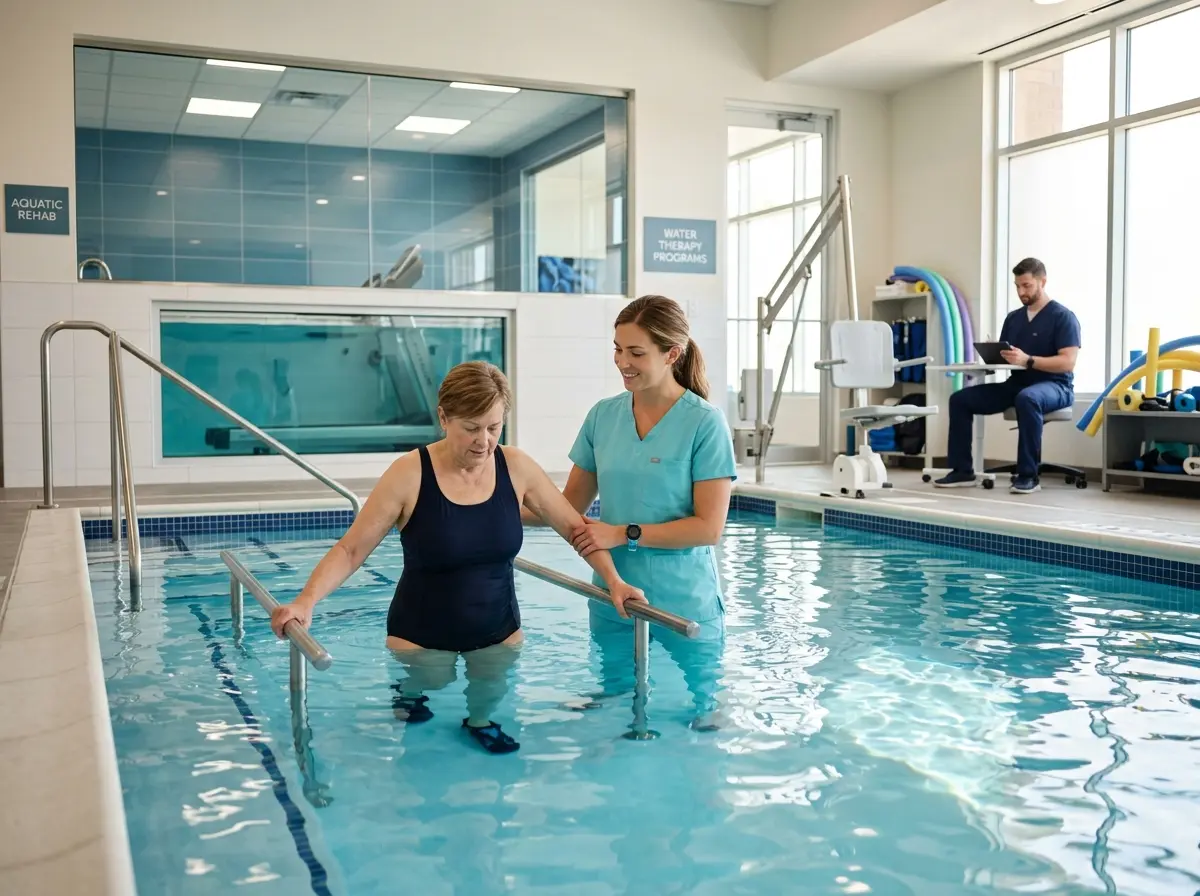
So You Want to Get Your Patients Wet (Therapeutically Speaking)
Let's be honest — offering the same services as every other physical therapy clinic on the block is not exactly a recipe for explosive growth. Ultrasound therapy, manual manipulation, resistance bands in various colors of disappointment... your patients have seen it all. But aquatic therapy? Now that's a conversation starter. More importantly, it's a clinically powerful, genuinely differentiated service that can attract new patient populations, improve outcomes, and give your clinic a serious competitive edge.
Aquatic therapy leverages the unique properties of water — buoyancy, hydrostatic pressure, resistance, and temperature — to facilitate rehabilitation in ways that land-based therapy simply cannot replicate. It's particularly effective for patients dealing with arthritis, post-surgical recovery, neurological conditions, chronic pain, and obesity-related mobility challenges. The market for aquatic therapy is growing, too: the global hydrotherapy market is projected to exceed $4.5 billion by 2030, and clinics that establish themselves early stand to benefit enormously.
Building the Foundation: Clinical and Operational Readiness
Understanding Who Aquatic Therapy Actually Serves
Certification, Staffing, and Liability — The Unsexy But Critical Stuff
Speaking of insurance — contact your malpractice and general liability carriers before you offer a single aquatic session. Pool-based therapy carries unique risks including falls on wet surfaces, drowning liability, and infection control exposure, and your current policy may not cover any of it. You'll also want to review ADA compliance requirements for pool access, water temperature protocols (therapeutic pools are typically maintained between 92°F and 96°F), and your state's specific PT practice act to ensure aquatic services fall within your licensed scope.
The Build-vs-Partner Decision
Unless you have significant capital, building your own therapeutic pool is probably not your first move. A commercial therapy pool can run anywhere from $50,000 to $200,000+ depending on size, features (underwater treadmills are a game-changer), and installation complexity. The operational costs — heating, filtration, chemical maintenance, and dedicated space — add up quickly.
Streamlining Patient Communication and Intake
Why Aquatic Therapy Creates Unique Front-Desk Challenges
This is exactly the kind of problem that Stella was built to solve. Stella is an AI robot employee and phone receptionist that can answer patient questions about your aquatic therapy program 24/7 — including what to expect, how to prepare, scheduling information, and insurance basics — without ever putting anyone on hold or sending calls to voicemail purgatory. For clinics with a physical location, Stella also stands inside the clinic as a friendly, human-sized kiosk, greeting patients who walk in and proactively answering questions about your services, including your new aquatic offerings. She can also collect new patient intake information conversationally — over the phone, on the web, or right at the kiosk — and store everything in her built-in CRM with AI-generated patient profiles, custom fields, and tags. It's the kind of seamless, professional intake experience that makes your clinic look like it has a much larger team than it actually does.
Marketing Your Aquatic Program Like You Mean It
Physician Referral Networks Are Your Best Friend
Digital Marketing That Actually Converts
Community Presence and Educational Events
Quick Reminder About Stella
If you're growing your clinic with a differentiated service like aquatic therapy, the last thing you need is your front desk drowning in repetitive calls and intake paperwork. Stella is an AI robot employee and phone receptionist available for just $99/month — no upfront hardware costs — that greets patients in your clinic, answers calls around the clock, and handles intake and CRM management so your staff can focus on delivering great care. She's the team member who never calls in sick, never takes a lunch break, and never accidentally puts a referring physician on hold for seven minutes.
Your Next Steps: Dive In (Carefully, Near the Shallow End)
- Assess your target patient population and confirm there is sufficient local demand for aquatic therapy services.
- Identify a pool partnership opportunity in your area before committing to any infrastructure investment.
- Pursue staff credentialing through ATRI or a comparable program, and review your liability coverage thoroughly.
- Build your referral network by reaching out to orthopedic surgeons, rheumatologists, and senior care coordinators in your community.
- Launch a dedicated digital presence for your aquatic therapy program with strong local SEO and video content.
- Host a community education event to build awareness and establish your clinic as the local authority on aquatic rehabilitation.