When "We'll See You Next Year" Actually Means Something
Let's be honest — most businesses say they prioritize customer retention. They put it in their mission statement, they mention it in team meetings, and then they watch 40% of their customers quietly disappear without so much as a goodbye. For optometrists, this problem is particularly painful. You've invested real time and real money into acquiring a patient, built a relationship with them, learned their prescription history, and then… poof. They vanish into the arms of a big-box vision center offering a $99 frames special.
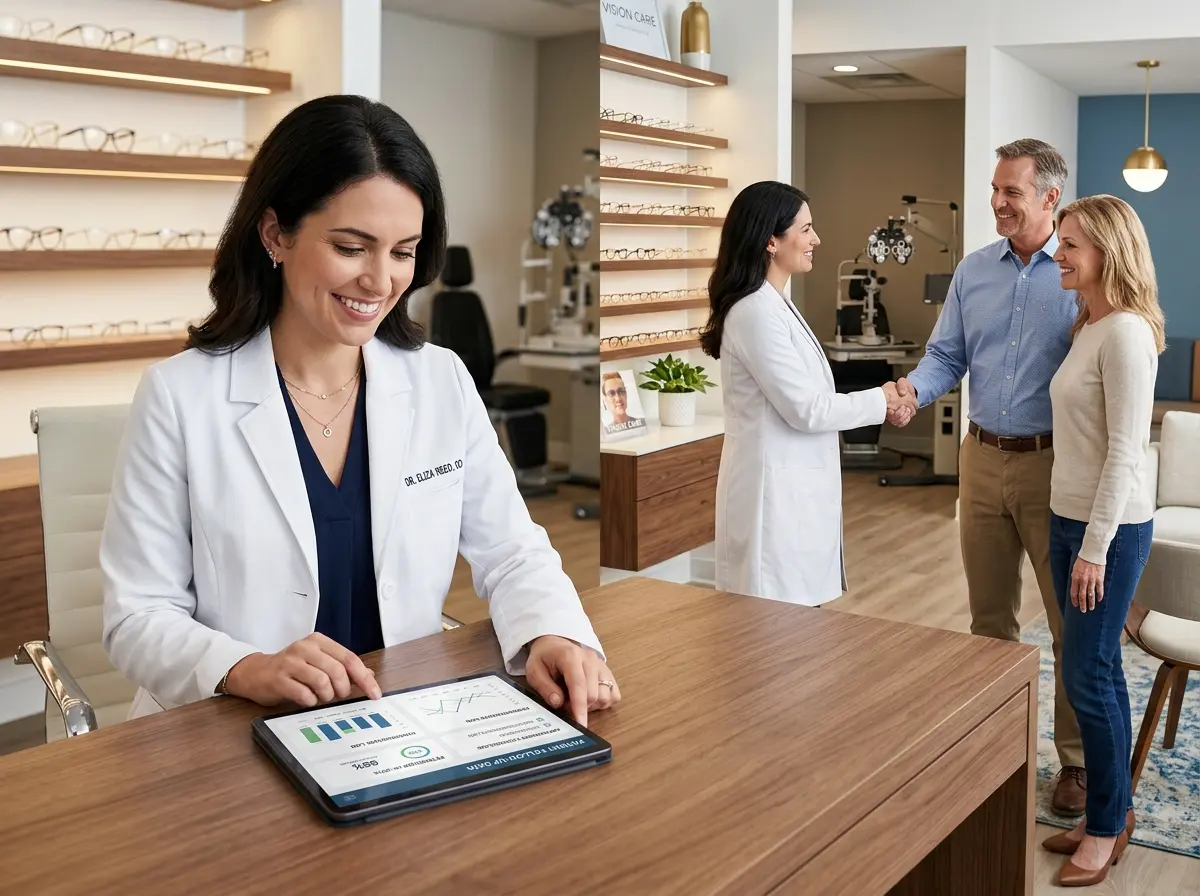
But Dr. Marcus Webb, an independent optometrist in Columbus, Ohio, decided he was done watching patients walk out the door — and not come back. Through a deliberate, low-tech-meets-smart-tech follow-up system, his practice now boasts a 90% annual patient retention rate, which is roughly double the industry average of around 40–50%. The kicker? The system didn't require a massive budget overhaul or a full-time patient coordinator. It required consistency, timing, and the right tools doing the heavy lifting.
Here's how he did it — and how you can apply the same principles to your own business, whether you're selling eyeglasses or engine repairs.
The Anatomy of a Follow-Up System That Actually Works
It Starts With Capturing the Right Information Upfront
The single biggest reason follow-up systems fail is embarrassingly simple: businesses don't collect the right information when the customer is right in front of them. Dr. Webb's practice transformed their intake process from a clipboard nightmare into a streamlined conversation. Every new patient provides not just contact details, but their preferred communication method, their annual exam reminder preference, and even notes about their lifestyle — do they work at a screen all day? Do they play sports? Are they interested in contact lenses down the road?
This information gets logged immediately into their patient management system, tagged appropriately, and used to personalize every future interaction. The result is that when the one-year reminder goes out, it doesn't feel like a mass email blast — it feels like someone actually remembered who they are. Because someone did. (Well, something did. But we'll get to that.)
Timing Is Everything — And Most Businesses Get It Wrong
Dr. Webb's team sends a three-touch follow-up sequence for every patient: a warm thank-you message within 24 hours of the visit, a check-in around the 6-month mark, and a personalized annual exam reminder at 11 months. That last one is critical — 11 months, not 12. By the time most patients receive a 12-month reminder, they've already mentally filed it under "I'll get around to it," which in calendar terms means never.
The messages themselves are conversational, not corporate. They reference the patient by name, sometimes mention a specific detail from their visit, and always include a frictionless way to book. No phone tag. No "call during business hours only." Just a link and a reason to come back. Studies show that a 5% increase in customer retention can boost profits by 25–95% — so the math on sending a couple of friendly messages is, frankly, embarrassing in its simplicity.
The Secret Weapon: Make It Personal Without Making It Manual
Here's where a lot of business owners roll their eyes and say, "Sure, sounds great — who's going to do all of this?" And that's a fair question. Dr. Webb's answer was to automate the scheduling of every follow-up at the point of intake, with templates that pull in personalized fields. His staff spends about 15 minutes per week reviewing and approving outgoing messages. The rest runs itself.
The key principle here applies to any business: systematize the timing, personalize the content, and automate the delivery. You're not replacing human connection — you're making sure human connection actually happens instead of getting buried under daily operations.
How the Right Tools Take the Guesswork Out of Follow-Up
From Sticky Notes to Smart Systems
For businesses that are still managing customer follow-ups with a combination of sticky notes, mental reminders, and good intentions, there's no gentle way to say this: that system is costing you money. A proper CRM — even a basic one — transforms follow-up from a heroic act of memory into a reliable, repeatable process.
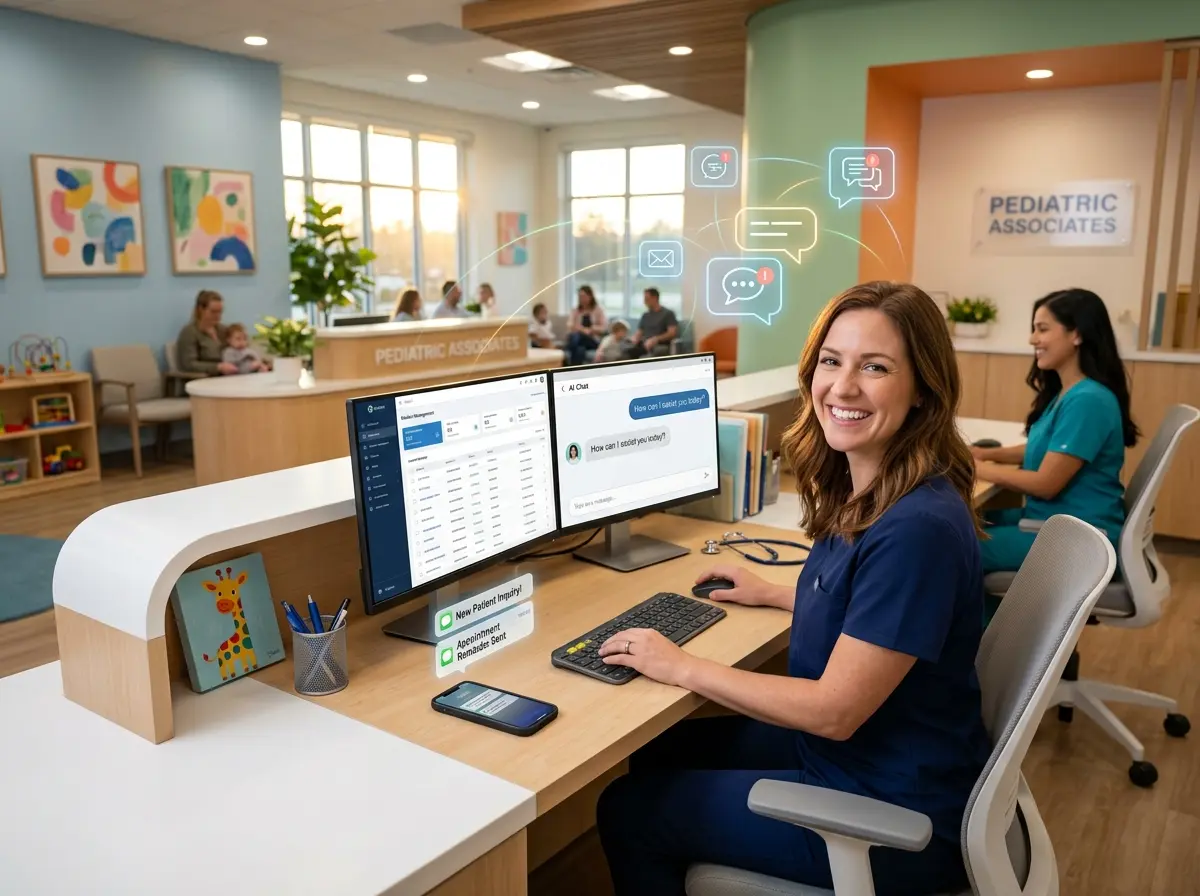
Stella, the AI robot employee and phone receptionist, is worth a mention here because she directly addresses one of the biggest gaps in the follow-up pipeline: capturing patient or customer information in the first place. Whether she's greeting patients at your front desk as a physical kiosk or answering your phones after hours, Stella collects intake information through natural conversation and feeds it directly into her built-in CRM — complete with custom fields, tags, and AI-generated contact profiles. That means by the time a patient walks out the door or hangs up the phone, their information is already logged, tagged, and ready for your follow-up sequence to kick in. No clipboards. No data entry backlog. No dropped balls.
Building a Retention Culture Beyond the Follow-Up Email
Train Your Team to Think in Relationships, Not Transactions
A follow-up system is only as effective as the experience it's following up on. Dr. Webb was clear that the emails and reminders work because his in-office experience is genuinely good — staff remember names, doctors take time to explain findings, and the checkout process doesn't feel like a hostage negotiation. Follow-up messages reinforce a relationship that already exists. If the in-person experience is forgettable, the best-crafted reminder email in the world won't save you.
Training your team to treat every interaction as the beginning of a long-term relationship — not a transaction to get through — creates the emotional foundation that makes patients and customers actually want to return. This is especially important in healthcare, where trust is the entire product. But it applies equally to salons, law firms, auto shops, and anywhere else people have options and memories.
Use Data to Improve, Not Just to Track
One underutilized superpower of a good follow-up system is the data it generates. Which message got the most appointment bookings? Which patient segment had the lowest return rate? Which communication channel — text, email, phone call — drove the most responses? Dr. Webb reviews these metrics quarterly and adjusts accordingly. His 6-month check-in message, for example, was originally a generic "Hope you're seeing clearly!" note. After reviewing engagement data, he replaced it with a specific lens care tip relevant to each patient's prescription type, and open rates jumped significantly.
The lesson here is simple: start with a system, then use what you learn to make it smarter. Most businesses never get to step two because they never properly commit to step one.
Loyalty Isn't Bought — It's Earned Through Consistency
Discounts and promotions can nudge a patient to book, but they're not what creates a 90% retention rate. Consistency is. Patients returned to Dr. Webb's practice year after year not because they were bribed, but because they trusted the experience would be the same quality every time, and because the practice demonstrated — through follow-up — that they valued the relationship beyond the transaction. That trust is extraordinarily hard to replicate and even harder for competitors to undercut.
Consistency in follow-up sends a clear message: we haven't forgotten about you, and we'd like you back. It sounds simple because it is. The hard part is doing it reliably, for every patient, every time, without fail — which is exactly why systems exist.
Quick Reminder About Stella
Stella is an AI robot employee and phone receptionist that works in-store as a human-sized kiosk and answers phone calls 24/7 for any type of business. She greets customers, answers questions, collects intake information, manages a built-in CRM, and promotes your services — all for $99/month with no upfront hardware costs. For practices and businesses where capturing the right customer data at the right moment is the foundation of a great follow-up system, she's the kind of employee who never forgets, never calls in sick, and never leaves a contact form unfinished.
Your Retention Rate Won't Fix Itself — But Here's Where to Start
Dr. Webb's 90% retention rate didn't happen because he's a uniquely gifted optometrist (though we're sure he's excellent). It happened because he built a system, committed to it, and let it run. The good news is that the core principles are entirely transferable — and the barriers to entry have never been lower.
Here's a practical starting point for any business owner ready to take retention seriously:
- Audit your intake process. Are you capturing the right information — contact preferences, key details, relevant notes — at the first interaction? If not, fix this first. Everything downstream depends on it.
- Map out a three-touch follow-up sequence. A thank-you after the visit, a check-in at the midpoint, and a timely return reminder. Keep each message brief, personal, and actionable.
- Choose a tool that automates the delivery. Whether that's a CRM, an email platform, or an AI-powered receptionist that captures data from the moment a customer walks in or calls — stop relying on memory and manual effort.
- Review your data quarterly. See what's working, what's getting ignored, and adjust. Treat your follow-up system like a living process, not a set-it-and-forget-it checkbox.
- Invest in the in-person experience. No follow-up system can compensate for a mediocre visit. Make sure there's something worth coming back to.
Retention isn't glamorous. It doesn't have the dopamine hit of a viral campaign or the excitement of a grand opening. But it is, quietly and reliably, one of the highest-return activities a business owner can invest in. Dr. Webb will tell you the same — probably right after he reminds you that your annual exam is due.