The Waiting Room Problem No One Talks About
Let's paint a familiar picture: a prospective patient calls your dermatology practice with what they insist is an urgent concern. Your front desk team — already juggling check-ins, insurance verifications, and a printer that's been "low on toner" since 2019 — picks up the phone. Twenty minutes later, after a well-meaning but meandering conversation, it turns out the caller just wanted to know if you treat dry elbows. Meanwhile, three other callers hung up, and a patient with a legitimate concern about a suspicious mole didn't get the attention they deserved.
This is the triage problem in dermatology, and it's more common — and more costly — than most practice owners realize. The good news? AI chat and conversational intake tools are quietly transforming how dermatologists handle new patient inquiries before that first appointment ever gets scheduled. And no, it doesn't mean replacing your staff with robots (well, not entirely).
Why Pre-Visit Triage Matters More Than You Think
The Hidden Cost of Unfiltered Inquiries
Dermatology practices field an enormous variety of inquiries — from genuinely urgent cases like rapidly changing lesions, to cosmetic consultations about Botox, to people who just discovered SPF exists at age 45 and have questions. Without a structured intake process, every inquiry gets the same level of human attention regardless of clinical urgency, and that's a resource allocation nightmare.
According to data from the American Academy of Dermatology, the average wait time to see a dermatologist in the U.S. is over 32 days — one of the longest of any specialty. Part of that backlog isn't just a supply problem; it's an efficiency problem. When front desk staff spend disproportionate time on low-complexity inquiries, the scheduling pipeline slows down for everyone. Structured pre-visit triage can help practices prioritize patients more effectively, reduce no-shows, and ensure that the right patient lands in the right appointment slot.
What AI Chat Triage Actually Looks Like
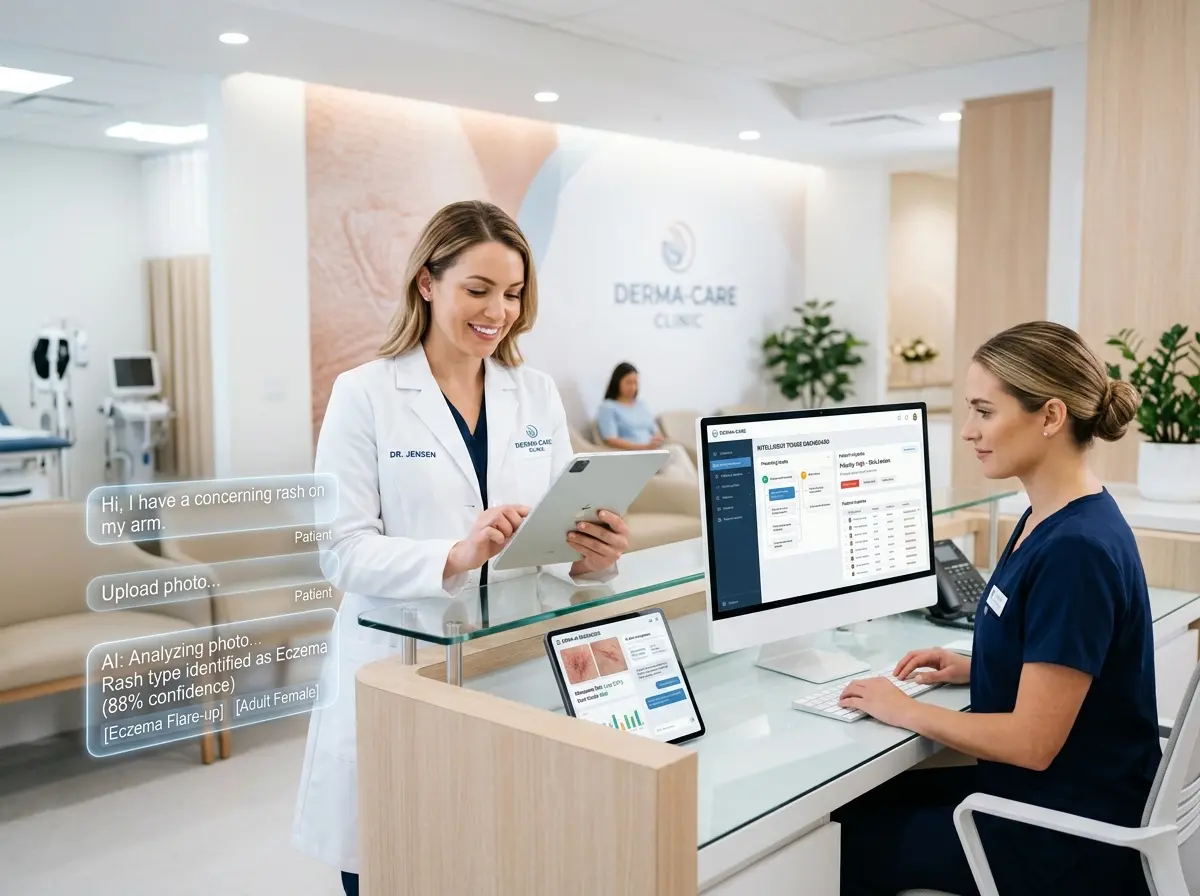
AI-powered conversational tools can gather critical information from prospective patients before any human staff member gets involved. Think of it as a smart, tireless intake coordinator that never calls in sick and never sighs audibly when asked the same question for the fifteenth time today.
In practice, this might look like a chat widget on your website or a phone-based voice assistant that asks structured questions: What's the primary concern bringing you in today? How long have you had this condition? Have you seen another provider for this issue? Do you have any relevant allergies or medical history? The responses get organized, summarized, and routed appropriately — flagging high-priority cases for same-week scheduling while placing lower-urgency cosmetic consultations into standard intake queues.
Some practices are also using AI triage to pre-qualify patients for specific service lines — separating medical dermatology inquiries from cosmetic ones early in the process, so the right provider and appointment type are matched from the start. Less confusion, fewer reschedules, happier patients.
Real-World Impact: Practices Seeing Results
Dermatology groups that have implemented AI-assisted intake report meaningful improvements in operational efficiency. A mid-sized practice in the Pacific Northwest noted a 40% reduction in front desk call time after deploying an AI phone assistant for new patient inquiries, with staff freed up to focus on in-office patient experience. Another group reported a measurable decrease in no-show rates after introducing pre-visit AI chat — patients who go through a structured intake process tend to feel more informed and more committed to their appointments.
The pattern holds: when patients feel heard and informed before they ever walk through your door, they show up more prepared, more engaged, and more likely to become long-term patients rather than one-time visitors who never rebook.
How Tools Like Stella Fit Into Your Practice
Handling Inquiries Before Your Team Even Clocks In
Stella is an AI robot employee and phone receptionist built for exactly the kind of front-line patient communication that dermatology practices struggle with. As a phone receptionist, she answers calls 24/7 with consistent, accurate information about your services — whether that's your hours, what skin conditions you treat, what to expect at a first visit, or how to prepare for a cosmetic consultation. She doesn't put patients on hold, she doesn't accidentally give wrong information because it's been a long Monday, and she doesn't cost your practice overtime.
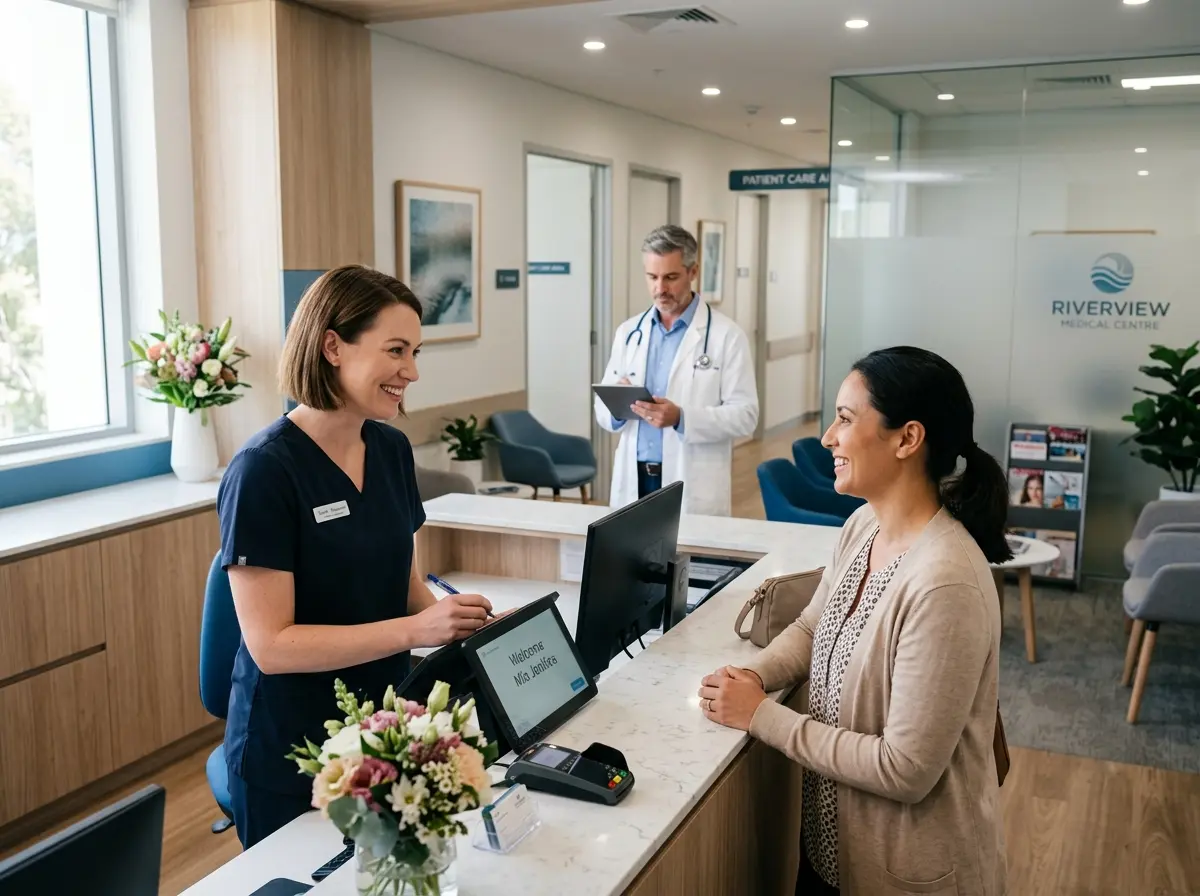
Beyond phone calls, Stella includes built-in conversational intake forms that can collect new patient information directly during a phone call or through a web interaction — feeding structured data into her built-in CRM with AI-generated patient profiles, custom fields, and tags. For a dermatology practice, that means every new inquiry can arrive pre-sorted, pre-summarized, and ready for your team to act on. If a call does need a human, she can forward it based on conditions you configure. If it doesn't, she handles it and sends your manager a push notification with an AI summary of the interaction. For practices with a physical location, she also works as an in-office kiosk — greeting patients as they arrive and answering questions while your front desk focuses on what actually requires a human touch.
Building an Effective AI Triage System for Your Dermatology Practice
Designing the Right Intake Questions
The quality of your AI triage is only as good as the questions you ask. Work with your clinical team to identify the key data points that actually influence scheduling priority and appointment type. At minimum, a solid dermatology pre-visit intake should capture the nature of the concern (medical vs. cosmetic), symptom duration, prior treatment history, insurance information, and any urgent red flags — bleeding, rapid change, pain, or other symptoms that warrant expedited scheduling.
Keep questions clear and jargon-free. Your AI assistant is likely talking to patients, not dermatologists, and the goal is to lower the barrier to sharing information, not intimidate people with clinical language before they've even booked. Simple, conversational phrasing gets better completion rates and more accurate responses.
Connecting Triage Data to Your Scheduling Workflow
Collecting intake data is only half the job — what happens with that data determines whether your triage system actually moves the needle. Ideally, your AI intake tool connects to or feeds into your practice management software, so triage responses directly inform how inquiries are routed and scheduled. At minimum, AI-generated summaries should be immediately visible to the staff member who follows up, so they're not starting from scratch on every new patient call.
Define clear escalation rules: what response triggers a same-day callback from a clinical team member? What gets routed to your cosmetic coordinator vs. your medical scheduling team? When these rules are clearly defined and built into your system, AI triage stops being a data collection exercise and starts being a genuine operational upgrade.
Setting Patient Expectations Early — And Doing It Well
One of the underappreciated benefits of pre-visit AI triage is the opportunity to set expectations before the appointment. A well-designed intake flow can inform patients what to bring, what to wear (goodbye, full-coverage foundation on patch test day), how long their appointment will take, and what the practice's cancellation policy looks like. Patients who arrive informed are easier to see, more satisfied with their care, and more likely to refer others.
Think of AI triage not just as a filtering mechanism, but as the beginning of the patient relationship. First impressions matter, and a smooth, professional, informative intake experience communicates that your practice values their time — which is exactly the kind of thing patients mention in Google reviews.
A Quick Reminder About Stella
Stella is an AI robot employee and phone receptionist available for just $99/month — no upfront hardware costs, no long setup process, and no turnover. She answers phones, collects intake information, manages a built-in CRM, and provides a consistent, professional presence for your practice around the clock. Whether patients reach you by phone or walk through your door, Stella makes sure the first interaction with your practice is a good one.
Start Triaging Smarter — Before You Lose Another Patient to Hold Music
The dermatology practices pulling ahead right now aren't necessarily the ones with the fanciest equipment or the longest provider lists. They're the ones that have figured out how to be operationally excellent — and that starts the moment a patient decides to reach out, not the moment they walk through the door.
If you're ready to build a smarter pre-visit triage process, here's where to start:
- Audit your current intake process. Time how long new patient phone calls actually take and identify where bottlenecks occur. You may be surprised.
- Define your triage criteria. Work with your clinical team to establish what information you actually need before scheduling and what urgency thresholds trigger different responses.
- Choose tools that talk to each other. Whether it's an AI phone assistant, a web chat intake form, or a CRM — make sure the data flows somewhere useful, not just into a void.
- Review and refine. AI triage systems improve over time when you pay attention to what's working. Check your summaries, monitor your no-show rates, and adjust your intake questions as your practice evolves.
Your front desk team went into healthcare to help people — not to spend half their shift answering questions about whether you accept a specific insurance plan (you do, it's on your website). Give them — and your patients — a better experience. The technology to do it is already here, it's affordable, and your competitors are starting to figure that out.