When Every Second (and Every Question) Counts
If you run a dermatology practice, you already know the intake process can feel like a full-time job in itself — because it basically is. New patients call in with a laundry list of questions before they've even booked an appointment. Do you treat rosacea? Is this mole worth worrying about? Does my insurance cover that? Meanwhile, your front desk staff is simultaneously checking in walk-ins, answering the phone, and trying to remember where they put the clipboard. It's a lot.
The good news? AI-powered chat and triage tools are quietly transforming how dermatology practices handle new patient inquiries — before the patient ever steps foot in the office. The even better news? You don't need a team of engineers or a Silicon Valley budget to make it work. You just need the right tools and a little strategy.
This post breaks down how dermatologists are using AI to pre-triage new patient inquiries, what that actually looks like in practice, and how your office can start doing the same without completely overhauling your workflow.
The New Patient Triage Problem (And Why It's Worse Than You Think)
The Hidden Cost of Unstructured Inquiries
Here's a fun fact that isn't actually fun: studies suggest that medical front desk staff can spend up to 60% of their time answering repetitive questions from patients — questions that, frankly, don't require a licensed human being to answer. "What should I bring to my appointment?" and "Do you accept Blue Cross?" are not clinical decisions. They're logistics. And yet, they eat up enormous amounts of staff time every single day.
For dermatology practices specifically, the volume of pre-visit inquiries tends to be especially high. Skin concerns are deeply personal, and patients often want to explain their entire history before they've even confirmed a time slot. Without a structured intake process, those conversations become long, inconsistent, and difficult to document — which creates problems not just for efficiency, but for patient care itself.
Why Traditional Intake Processes Fall Short
Paper forms handed out in the waiting room are a relic of a different era (a less efficient, more paper-cut-prone era). Online intake forms help, but they're passive — patients fill them out on their own time, in their own way, and often leave half the fields blank. Phone-based intake is thorough but labor-intensive, and it only works when someone is available to pick up.
The result is a patchwork of incomplete information, frustrated patients, and overwhelmed staff — none of which is great for your practice's reputation or your sanity. What dermatology practices actually need is a system that gathers structured, useful information from new patients before the first visit, without requiring a staff member to babysit every interaction.
How AI Triage Works in a Dermatology Context
Conversational Intake That Doesn't Feel Like a Form
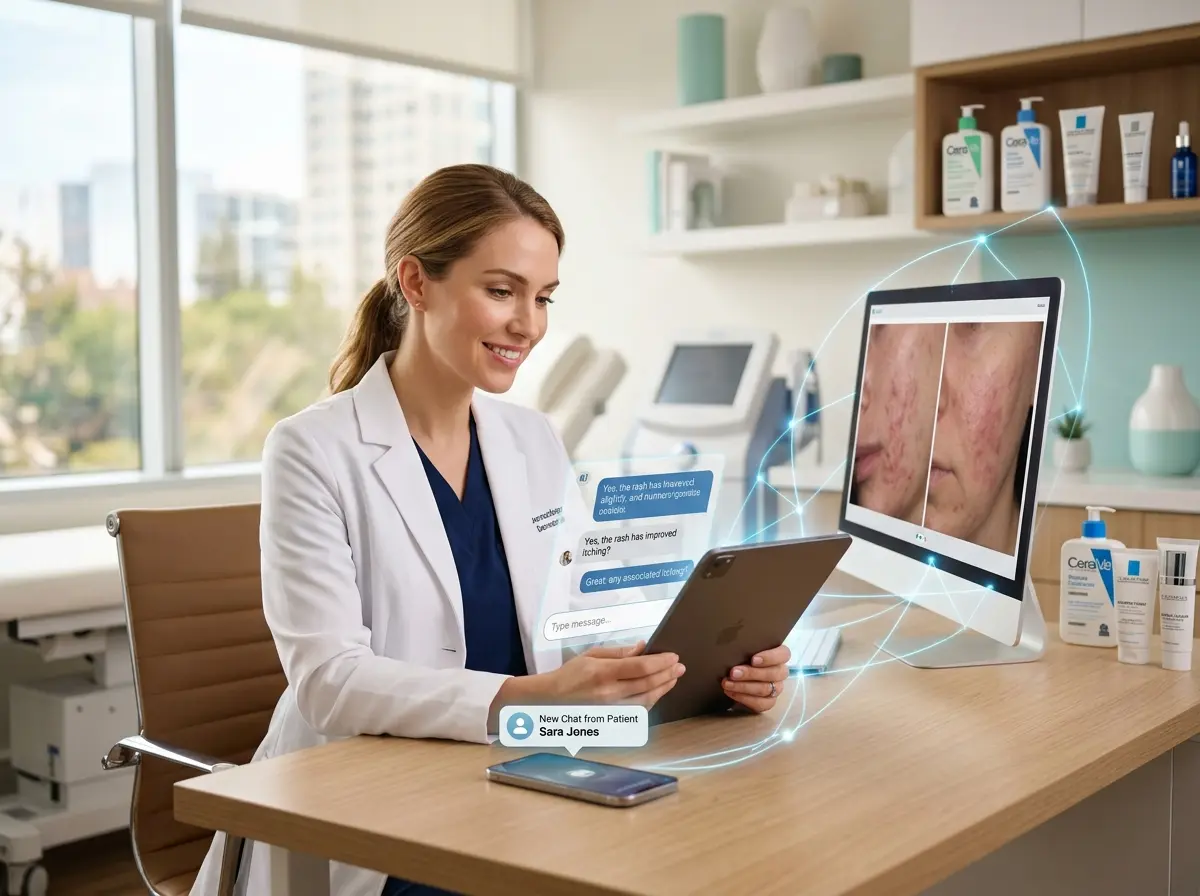
The most effective AI triage tools work by having a natural, conversational exchange with the patient — asking about their primary concern, how long they've had it, whether they've tried any treatments, and what their insurance situation looks like. The key word there is conversational. Nobody likes filling out a ten-page form. But people will happily chat for five minutes if it feels like someone (or something) is actually listening.
This is where modern AI shines. Rather than presenting a static list of fields, AI-powered intake flows adapt based on what the patient says. A patient who mentions a suspicious mole gets asked different follow-up questions than one calling about adult acne. The result is richer, more relevant information — gathered without a single staff member involved.
Routing and Prioritization: Letting Urgency Rise to the Top
Not every inquiry is equal. A patient asking about scheduling a routine skin check is a very different situation from someone describing a rapidly changing lesion. AI triage systems can be configured to flag certain responses for immediate follow-up, route urgent inquiries to a human staff member, and place routine requests into a standard booking queue — all automatically.
This kind of intelligent routing means your clinical staff spends their limited attention on the cases that actually need it, while administrative inquiries get handled efficiently in the background. It's not about replacing human judgment — it's about making sure human judgment is applied where it matters most.
Tools That Can Help Your Practice Get Started
Where an AI Receptionist Fits Into the Picture
For dermatology practices looking to improve how they handle new patient inquiries — especially over the phone — an AI receptionist can be a surprisingly practical starting point. Stella, for example, is an AI robot employee and phone receptionist that answers calls 24/7, walks patients through conversational intake forms, and stores all of that information in a built-in CRM with AI-generated patient profiles. For a practice with a physical location, she also operates as an in-office kiosk — greeting patients as they arrive and gathering intake information before they even reach the front desk.
What makes Stella particularly useful in a medical office context is the combination of phone coverage and structured data collection. When a new patient calls after hours (and they will — skin concerns don't keep business hours), she can gather their information, answer common questions about services and policies, and create a contact record with tags and notes that your staff can review the next morning. No voicemails that say "uh, yeah, hi, I had a question about, um..." and nothing else. Just clean, organized intake data waiting for you when you open up.
Making AI Triage Actually Work for Your Practice
Define What "Triaged" Means for Your Office
Before you implement any AI triage system, you need to decide what information you actually need before a first appointment. This sounds obvious, but many practices skip this step and end up with a tool that collects everything — or nothing useful. Sit down with your clinical and administrative team and list the top ten pieces of information that would meaningfully change how you prepare for a new patient visit. That list becomes the foundation of your intake flow.
Common priorities for dermatology practices include: primary skin concern, symptom duration, previous treatments tried, relevant medical history (autoimmune conditions, allergies, current medications), insurance information, and referral source. Keep it focused. You can always gather more detail during the actual appointment.
Train Your Team to Use the Data, Not Ignore It
Here's a reality check: AI triage is only as valuable as what your team does with the information. If your front desk staff glances at the AI-collected intake data for two seconds and then asks the patient all the same questions again, you've gained nothing except a slightly annoyed patient and a false sense of efficiency. Build a clear workflow for how pre-visit data gets reviewed, flagged, and incorporated into the appointment prep process. Make it part of your standard operating procedure, not an optional bonus step.
Communicate the Process to Patients Upfront
Patients who know what to expect are patients who actually complete the intake process. When someone books an appointment — whether online, by phone, or in person — let them know they'll receive a brief pre-visit intake conversation and explain why it helps. Most patients respond positively when they understand that the five minutes they spend answering questions upfront means their dermatologist walks in already knowing their history instead of spending half the appointment asking about it. Frame it as a service, not a requirement, and watch your completion rates improve significantly.
Quick Reminder About Stella
Stella is an AI robot employee and phone receptionist built for businesses of all sizes — including medical practices. She answers calls around the clock, handles conversational patient intake, manages a built-in CRM, and greets patients in person at her in-office kiosk. At $99/month with no upfront hardware costs, she's one of the more practical ways to modernize your front desk without hiring another person.
Your Next Steps Toward Smarter Patient Triage
The dermatology practices that are getting this right aren't necessarily the biggest or the best-funded. They're the ones that took the time to think through their intake process, identify where the gaps were, and put a structured system in place to fill them. That's achievable for practices of any size.
Here's a simple action plan to get started:
- Audit your current intake process. How is new patient information currently collected? Where does it break down? What questions do staff answer repeatedly that could be automated?
- Define your ideal pre-visit data set. What do you actually need to know before a first appointment? Build your intake flow around that list.
- Evaluate AI tools that fit your workflow. Look for solutions that handle both phone and in-person intake, integrate with your existing systems, and give you clean, organized data — not just a pile of transcripts.
- Train your team and set expectations. Make sure everyone understands how pre-visit data gets used and why it matters for patient experience and clinical efficiency.
- Measure and adjust. Track how much time your staff saves, how complete your intake data is, and how patients respond to the new process. Refine as needed.
The technology to triage patients more intelligently exists right now, it's affordable, and it's not going away. The only question is whether you'd rather spend the next five years watching your competitors figure it out first — or get ahead of it yourself. Given that you made it to the end of this article, we're guessing you're leaning toward the latter. Good call.