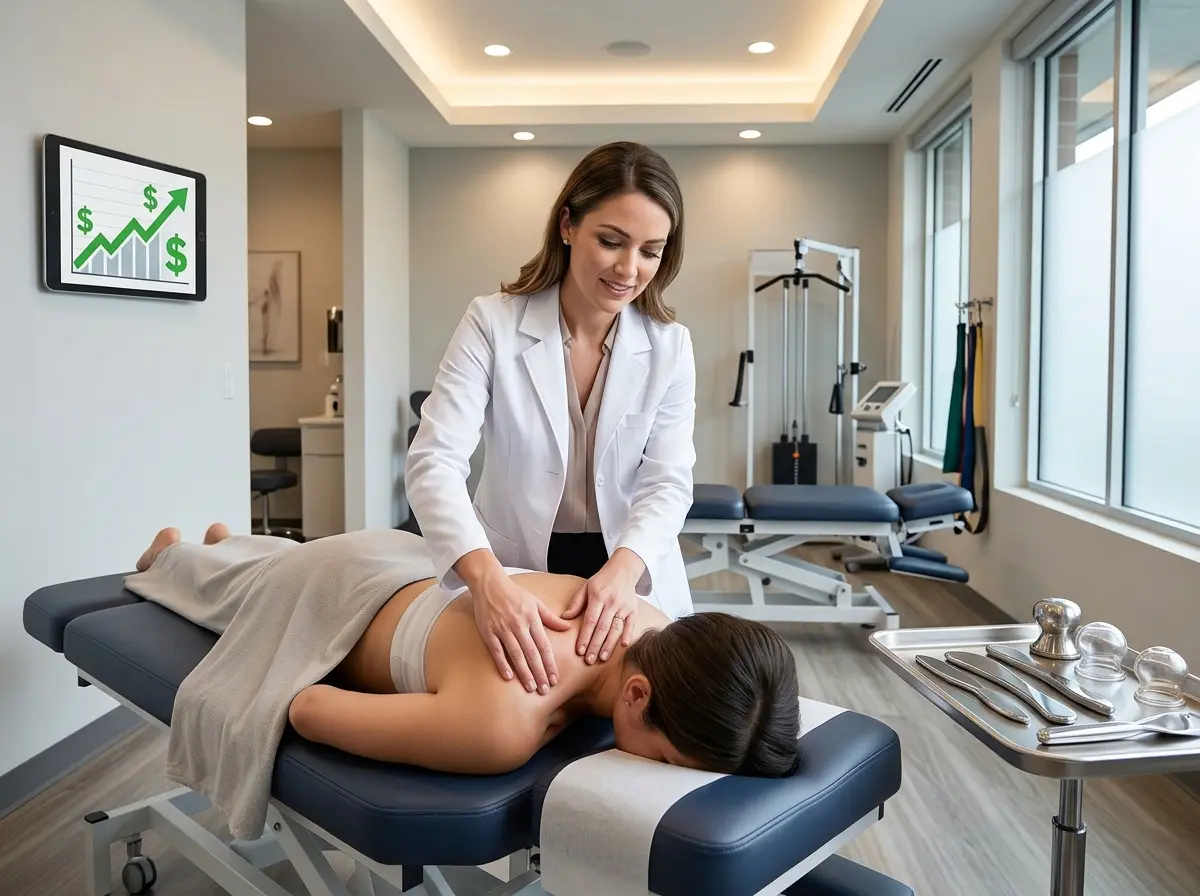
Your Best Marketing Tool Is Already Sitting in Your Waiting Room
Let's be honest — you didn't go to chiropractic school to become a marketing guru. You went because you wanted to help people feel better, move better, and live better. And yet, here you are, wondering why your patient schedule has more gaps in it than a misaligned vertebra. The good news? One of the most powerful growth engines available to your practice costs almost nothing to build — it just requires a little strategy and a lot of intentionality.
Referrals are the lifeblood of a chiropractic practice. Studies consistently show that referred patients are more loyal, more likely to complete their care plans, and more likely to refer others themselves. In fact, according to Nielsen, 92% of consumers trust recommendations from people they know over any other form of advertising. That's not a small number. That's almost everyone. So if you're pouring money into Facebook ads while neglecting your referral engine, you may want to realign your marketing strategy — pun absolutely intended.
This post will walk you through exactly how to build a referral engine that works consistently, systematically, and without you having to awkwardly ask every patient "sooo… do you know anyone with a bad back?"
The Foundation: Building a Referral-Worthy Practice
Before you can expect patients to send their friends, family, and coworkers your way, you need to make sure your practice is worth referring. This sounds obvious, but it's where a surprising number of practices fall short. You can have the best referral incentive program in the world, and it won't matter if patients leave your office feeling indifferent about the experience.
Deliver Results and Make Them Visible
Clinical outcomes are the foundation of every referral. Patients refer when they experience real, meaningful relief — and when they feel confident that you can deliver the same results for someone they care about. Consider implementing a simple outcomes tracking system where patients rate their pain levels and functional improvement at each visit. Not only does this help you monitor progress clinically, it also creates natural moments for patients to reflect on how far they've come. A patient who realizes they went from a pain level of 8 to a 2 in four weeks is a patient who is going to tell someone about it.
Create an Experience, Not Just an Appointment
The experience inside your office matters enormously. From the moment someone walks through the door to the moment they leave, every touchpoint is an opportunity to create a referral-worthy impression. Are your front desk staff warm and welcoming, or are they buried in paperwork and visibly stressed? Is your waiting room comfortable, informative, and pleasant? Do patients feel rushed through their appointments, or do they feel genuinely heard?
Small details compound over time. A warm greeting by name, a follow-up text after a first adjustment, a birthday message — these are the kinds of touches that transform a patient into a loyal advocate. People don't just refer their chiropractor; they refer an experience they trust enough to put their name on.
Make It Easy for Patients to Refer
Even enthusiastic patients won't refer if the process feels complicated or awkward. Give them tools. Create simple referral cards they can hand to friends. Set up a landing page where referred patients can book easily. Make sure your Google Business Profile and online booking system are up to date so that when someone gets a referral and immediately searches your name at 10pm, they can actually book an appointment right then and there — not tomorrow, not next week, right now. Friction kills referrals. Remove as much of it as possible.
Turbocharge Your Front Desk With a Little Robotic Help
Here's where things get interesting. Building a referral engine requires consistent, professional communication — and that's hard to maintain when your front desk is juggling phone calls, check-ins, insurance questions, and scheduling all at once. That's exactly where Stella, the AI robot employee and phone receptionist, can quietly become one of your most valuable team members.
Never Miss a New Patient Call Again
Imagine a referred patient — warm, motivated, ready to book — calls your office on a Saturday afternoon. If nobody answers, there's a very real chance they call the next chiropractor on their list. Stella answers every call, 24/7, with the same knowledge and professionalism as your best front desk staff. She can answer questions about your services, collect new patient intake information through conversational AI forms, and even forward calls to your team when needed — all while you're doing literally anything else. For a chiropractic practice trying to capture every referral it generates, that kind of reliability isn't a luxury, it's a competitive advantage.
Her in-office kiosk presence also means that patients waiting in your lobby are greeted, engaged, and informed — not staring at a fish tank in silence. That first impression matters, especially for referred patients who are forming their opinion of your practice in real time.
Systematizing Your Referral Program
A referral engine isn't a one-time campaign. It's a system — a predictable, repeatable process that generates new patients month after month without requiring you to reinvent the wheel every quarter. Here's how to build one that actually runs on its own.
Launch a Formal Patient Referral Program
There's a meaningful difference between hoping patients refer and actively incentivizing and celebrating it when they do. A formal referral program gives patients a reason to act on their good intentions. Consider offering a reward for every successful referral — a free massage add-on, a complimentary adjustment, a gift card to a local business, or a discount on their next visit. The reward doesn't have to be expensive; it has to feel appreciated and timely.
Promote your referral program at every touchpoint: in your waiting room, on your website, in email newsletters, and in post-visit follow-up messages. Don't assume patients already know you're accepting new patients or that referrals are welcome. Tell them explicitly and often.
Build a Professional Referral Network
Patient referrals are powerful, but professional referrals can be equally transformative — and they often come in larger volumes. Build relationships with primary care physicians, orthopedic surgeons, physical therapists, personal trainers, massage therapists, and other wellness professionals in your area. These practitioners see patients who would benefit from chiropractic care every single day.
The key to building these relationships is consistency and mutual value. Don't just drop off a stack of business cards and disappear. Show up, communicate, send case updates when you share patients, and look for ways to refer business back to them. A relationship that flows in both directions is a relationship that lasts. Consider hosting a quarterly lunch-and-learn for local practitioners to introduce them to your approach and keep your practice top of mind.
Follow Up Like You Mean It
The follow-up is where most referral programs quietly die. A patient refers a friend, the friend books an appointment, and then — nothing. No acknowledgment, no thank you, no update. That's a missed opportunity and, frankly, a little rude. Implement a simple process: when a new patient books and mentions a referral source, trigger a thank-you message to the referring patient. A handwritten card is extraordinary. A personalized text is good. An automated email is the bare minimum. Whatever you choose, do it consistently and do it quickly.
Quick Reminder About Stella
Stella is an AI robot employee and phone receptionist built for businesses just like yours — she greets patients in your office, answers calls around the clock, promotes your services, collects intake information, and manages patient contacts through a built-in CRM. At just $99/month with no upfront hardware costs, she's designed to give your practice a reliable, professional presence that never takes a sick day, never burns out, and never puts a referred patient on hold until they hang up.
Start Building Your Referral Engine Today
The practices that grow consistently aren't the ones with the biggest advertising budgets — they're the ones that have systematically turned happy patients into enthusiastic advocates. A referral engine isn't complicated, but it does require intentionality. It requires a great patient experience, a formal program with real incentives, a professional referral network that trusts you, and a follow-up process that makes referring you feel rewarding rather than thankless.
Here's your action plan to get started this week:
- Audit your patient experience — Walk through your office as if you're a new patient. What do you notice? What would make you refer a friend?
- Launch a referral incentive program — Pick a reward, create a simple one-page explainer, and start promoting it immediately.
- Identify five local professionals for your referral network and reach out this week with a genuine introduction.
- Set up a follow-up protocol — Decide how and when you'll thank referring patients, and make sure it actually happens every time.
- Plug the holes in your front desk — If calls are going unanswered or new patient inquiries are falling through the cracks, fix it before you spend another dollar on marketing.
Your patients already know people who need you. Your job is simply to make referring you feel easy, natural, and worthwhile. Build the engine, maintain it consistently, and watch your schedule fill itself — one warm referral at a time.