So You Want to Be on the News (And Actually Deserve to Be)
Local news coverage is one of those marketing goldmines that most small business owners dream about but very few actually pursue with any real strategy. A single feature on your local evening news or a mention in the morning paper can do more for your brand credibility than six months of boosted Facebook posts — and it costs you exactly nothing except a little effort and some genuine story-worthiness.
The good news? Local TV stations, newspapers, and digital outlets are constantly hungry for content. Reporters wake up every morning with airtime to fill and column inches to justify. The bad news? "We opened a new location and have great customer service" is not a story. It never was. It never will be.
This guide is for service business owners who are ready to stop waiting to be discovered and start putting themselves in front of journalists the right way. Whether you run a salon, a law firm, a gym, an auto shop, or anything in between, getting local press coverage is entirely within your reach — you just need to know how the game is played.
Understanding What Local Media Actually Wants
Before you fire off a press release that ends up in a reporter's trash folder, let's talk about what actually gets coverage. Journalists are not in the business of giving free advertising to local businesses. They are in the business of telling stories that their audience cares about. The moment you understand that distinction, everything else gets easier.
The Anatomy of a Newsworthy Story
Local news editors use a simple mental filter when evaluating pitches: Why would our viewers care about this today? That word "today" is doing a lot of heavy lifting. Timeliness matters enormously. A business that ties its pitch to a current trend, a local event, a seasonal need, or a broader community issue will always outperform one that simply announces its own existence.
Think about the angles that get traction: a gym owner offering free training sessions to recently laid-off workers, a spa partnering with a mental health awareness campaign, a local auto shop helping single parents with free safety inspections before a school break. These stories work because they connect a business to something the community already cares about. Your service is the vehicle — the community impact is the story.
Crafting a Pitch That Doesn't Get Ignored
A good media pitch is short, specific, and immediately clear about the story angle. Aim for three to five sentences in your initial email. Lead with the hook — the thing that makes this interesting to a stranger — not with your business name and founding year. Include a clear statement of who is involved, what is happening, why it matters right now, and how the journalist can follow up. If you have a visual element (and TV journalists especially need visual elements), mention it. "I can give you a live demonstration of our new technology in our shop" is music to a local TV producer's ears.
According to a survey by Muck Rack, over 48% of journalists say irrelevant pitches are their biggest frustration. Do your homework. Watch the station or read the outlet before you pitch. Know which reporter covers small business or community stories. Address them by name. This takes twenty minutes and dramatically increases your odds.
Building Relationships Before You Need Them
The most media-savvy business owners treat journalists like they treat their best customers — with consistent, genuine attention over time. Follow local reporters on social media and engage thoughtfully with their work. Share their stories. Send a congratulatory note when they win an award. Be a helpful source when they're working on a story that touches your industry, even if you're not the main subject. When the time comes to pitch your own story, you won't be a cold contact. You'll be a familiar, trusted name in their inbox.
Making Your Business Visually and Operationally Press-Ready
Getting a reporter interested is only half the battle. When they show up — or when potential customers flood in after coverage airs — your business needs to be ready to deliver. This is where a lot of service businesses quietly fumble the ball.
First Impressions That Hold Up on Camera
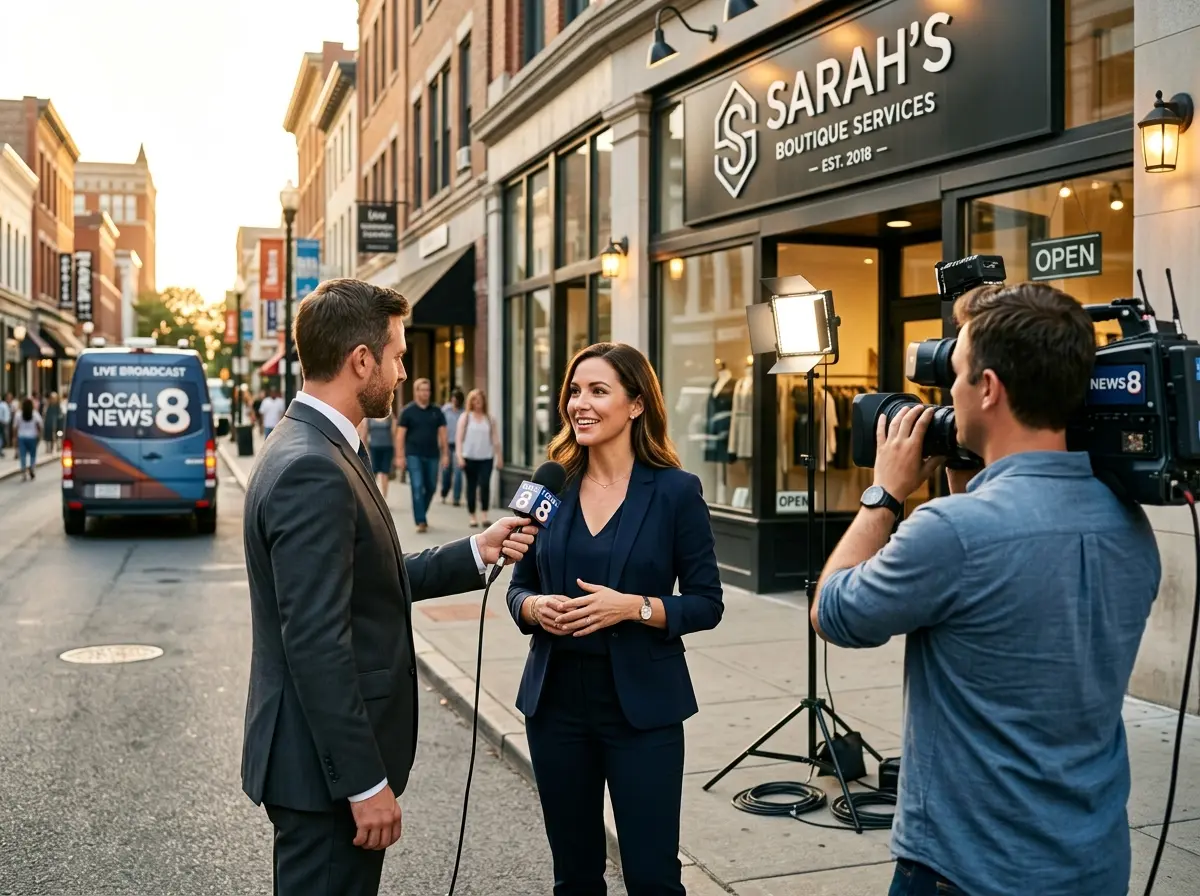
Local TV crews care deeply about what your space looks like. A cluttered, understaffed, or chaotic environment is going to undercut even the best story angle. Before you pitch anyone, walk through your business with fresh eyes. Is your signage clean and professional? Is your team ready to handle a surge in inquiries? Is there anything happening in your space that would make for compelling footage?
This is also where Stella, the AI robot employee and phone receptionist, becomes a genuine differentiator. A human-sized AI kiosk that greets every customer who walks in, answers questions, promotes your specials, and handles your phones 24/7 is exactly the kind of compelling visual element that makes a TV producer's eyes light up. She is not just operationally useful — she is genuinely interesting to look at and talk to, which makes her a natural focal point for any in-store segment. And when the coverage drives a wave of phone calls to your business, Stella answers every single one, professionally, without putting anyone on hold or missing a lead.
Executing Your Media Outreach Strategy
Strategy without execution is just wishful thinking with good formatting. Here is how to actually move from idea to coverage in a structured, repeatable way.
Build Your Media List and Pitch Calendar
Start by identifying every local outlet worth targeting: TV stations (all of them, not just the big one), local newspapers, digital-only news sites, community blogs with real readership, and local radio stations. For each one, find the right contact — typically a general assignment reporter, a small business or lifestyle beat reporter, or a morning show producer. Keep a simple spreadsheet with names, contact info, outlet, and any personal notes about their coverage style.
Then build a pitch calendar around moments of natural news value throughout the year. Tax season, back-to-school, the holidays, local festivals, awareness months relevant to your industry — all of these are pegs you can hang a story on. Planning three to four pitches per year, timed to these moments, is far more effective than sending a random pitch whenever you feel like it.
Following Up Without Being That Person
One follow-up email, sent five to seven business days after your initial pitch, is completely appropriate and often necessary. Journalists get hundreds of emails a week and things genuinely get missed. Keep your follow-up brief — a single sentence referencing your original pitch and offering to provide additional information or schedule a call. If you hear nothing after the follow-up, move on gracefully. Pestering a journalist is a fast track to being permanently ignored, and this is a small world.
Maximizing Coverage Once You Get It
When coverage does land, treat it like a marketing asset with a long shelf life. Share the clip or article across every social media channel you have. Embed it on your website's homepage and about page. Add a "As Seen On [Station Name]" badge to your email signature and marketing materials. Send a thank-you note to the journalist — handwritten if you want to really stand out. And look for opportunities to be quoted as an expert source in future stories. One piece of coverage, handled well, can generate months of credibility and several follow-up opportunities.
Quick Reminder About Stella
Stella is an AI robot employee and phone receptionist that works inside your business as a customer-facing kiosk and answers your phones around the clock — for just $99 a month with no upfront hardware costs. She greets customers, promotes your offerings, handles inquiries, collects leads, and never calls in sick. If you are working hard to drive traffic and attention to your business, she makes sure no opportunity gets dropped once it arrives.
Now Go Get Yourself on the News
Local media coverage is not a lottery. It is a skill, and like most skills, it rewards the people who approach it with preparation, consistency, and a genuine understanding of what the other party actually needs. Find the story angle that connects your business to your community. Build real relationships with local journalists before you need them. Get your operations and your physical space ready for the spotlight. And when the coverage comes — because it will, if you stay at it — make the absolute most of it.
Start this week by identifying three local outlets worth targeting and finding the right contact at each one. Draft a single pitch around an upcoming community event or seasonal angle relevant to your business. Send it. Follow up once. Then do it again next quarter. That is the whole system. It is not glamorous, but it works — and it works a lot better than hoping someone notices you on their own.
Your local community wants to support businesses like yours. The journalists covering that community want to tell stories that matter to their audience. You just need to be the one who connects those two things. Now go make some news.