The Follow-Up Call You Never Made Is Costing You More Than You Think
Let's paint a familiar picture. A customer brings their car in, your team does a fantastic job, the vehicle leaves in better shape than it arrived, and everyone goes home happy. Then... nothing. No follow-up. No check-in. No "Hey, how's the car running?" Just silence — until that customer either comes back on their own, or quietly wanders off to the shop down the street that remembered their name.
Here's the uncomfortable truth: most auto shops pour significant time and money into acquiring new customers while almost completely ignoring the goldmine sitting in their existing customer database. Studies consistently show that retaining an existing customer costs five times less than acquiring a new one, yet post-service follow-up remains one of the most underused tools in the independent shop owner's playbook. It's not that shop owners don't care — it's that they're busy, understaffed, and the follow-up always seems like something that can wait until tomorrow. Spoiler: tomorrow never comes.
The good news? A structured post-service follow-up strategy isn't complicated. It just requires intention, a little process, and the right tools. Let's dig in.
Why Post-Service Follow-Up Matters More Than Ever
The Loyalty Math Your Shop Is Ignoring
Customer loyalty in the auto repair industry is surprisingly fragile. Unlike a favorite restaurant or coffee shop, most people don't enjoy visiting an auto shop — it's a necessity, not a treat. That means the emotional connection between your shop and your customer needs to be actively maintained, or it simply evaporates. A customer who had a great experience but never heard from you again has no particular reason to return. A customer who received a thoughtful follow-up call or message after their service, however, suddenly feels like more than just a transaction. That feeling is worth real money.
According to research from Bain & Company, increasing customer retention rates by just 5% can increase profits by 25% to 95%. In an industry where average repair tickets can run hundreds of dollars, that's not a number to shrug at. A single loyal customer who visits three or four times a year and refers two friends is worth thousands of dollars over their lifetime — and a timely follow-up after their first visit could be the difference between a one-time customer and a decade-long relationship.
What Follow-Up Actually Does for Your Reputation
Beyond retention, post-service follow-up is one of the most effective (and underappreciated) ways to generate online reviews. Most satisfied customers simply don't think to leave a review — not because they don't want to, but because life moves fast and nobody's sitting around looking for things to do. A well-timed follow-up message or call, sent 24 to 48 hours after service, catches customers while the experience is still fresh and gives them a natural nudge to share their feedback publicly.
Shops that actively solicit reviews through follow-up consistently outperform competitors on Google, Yelp, and Facebook — platforms that directly influence whether a new customer picks up the phone and calls you or calls someone else. Think of every follow-up as a dual investment: you're deepening the relationship with your current customer and laying the groundwork for attracting the next one.
The Window Is Shorter Than You Think
Timing matters enormously. Follow up too late and the experience has faded; follow up too early and it feels intrusive. The sweet spot for most auto shops is within 24 to 72 hours of service completion. A quick check-in asking how the vehicle is performing, whether the customer has any questions, or simply expressing appreciation for their business lands very differently than a generic promotional email sent three weeks later. The goal isn't marketing — it's connection. Marketing can come later, once trust is established.
How Tools Like Stella Can Support Your Follow-Up Strategy
Keeping Track of Who Needs to Hear from You
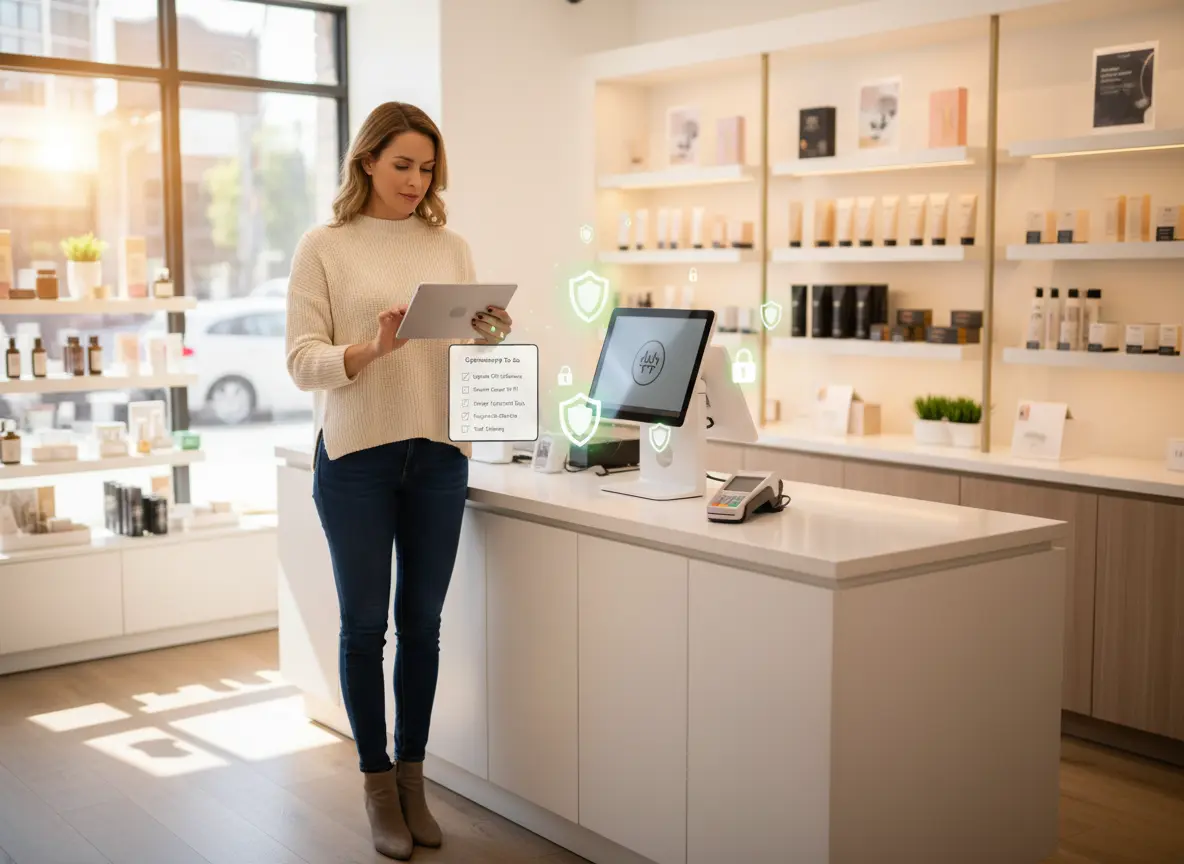
Here's where a lot of shops fall apart: not the intention, but the execution. Remembering to follow up with every customer, consistently, without dropping the ball, is genuinely hard when you're also managing technicians, ordering parts, handling walk-ins, and answering a phone that never stops ringing. This is exactly where a tool like Stella can take pressure off your team. Stella serves as both an in-store AI receptionist kiosk and a 24/7 phone answering solution — and she comes equipped with a built-in CRM that logs customer interactions, stores contact information, and generates AI-powered customer profiles automatically.
When customer data is captured cleanly from the start — whether through a conversational intake form during a phone call or at the in-store kiosk — your team always knows who came in, what service they received, and when it's time to reach back out. No sticky notes, no forgotten spreadsheets, no "I thought you followed up with them." Stella keeps the information organized so the follow-up actually happens.
Building a Follow-Up System That Doesn't Fall Apart
The Three-Touch Framework
Effective follow-up doesn't mean bombarding customers with messages — it means reaching out at the right moments with the right intent. A simple three-touch framework works well for most auto shops:
- The Service Check-In (24–72 hours post-service): A brief, personal message or call asking how the vehicle is performing and whether the customer has any questions. Keep it genuinely helpful, not salesy.
- The Review Request (3–5 days post-service): If the check-in went well, this is the moment to ask for an online review. A direct link to your Google Business profile removes all friction.
- The Maintenance Reminder (30–90 days post-service, depending on the service performed): Based on what work was done, proactively remind customers when their next oil change, tire rotation, or inspection is due. Position it as a helpful heads-up, not a sales call.
This framework is simple enough to execute consistently and personalized enough to feel meaningful. The key word there is consistently — a follow-up system that works 60% of the time provides about 40% of the benefit of one that runs reliably every time.
Personalization Without Making It Weird
Personalization doesn't require knowing your customer's deepest secrets — it just means referencing what actually happened during their visit. Mentioning the specific service performed ("Hope that brake job is making your commute feel a lot safer!") is infinitely more effective than a generic "Thanks for your business!" message. If a customer mentioned their teenager just got their license, noting that in your CRM and referencing it next time they call goes a long way toward making people feel genuinely remembered rather than processed.
Small details, tracked consistently, create the impression of a shop that genuinely cares — because it does. Customers who feel known are dramatically more loyal and more likely to refer friends and family without being asked.
Handling Negative Feedback Before It Goes Public
One underappreciated benefit of a proactive follow-up system is the opportunity to catch dissatisfied customers before they leave a one-star review. When you reach out first, customers who had a less-than-perfect experience have a direct channel to express their frustration to you — someone who can actually fix it — rather than heading straight to Google to vent. A quick apology, a goodwill gesture, or even just listening attentively can transform a near-disaster into a demonstration of exactly how your shop handles problems. That kind of recovery often creates stronger loyalty than a flawless experience would have in the first place.
Quick Reminder About Stella
Stella is an AI robot employee and phone receptionist designed for businesses like yours — she greets customers at your front counter as a friendly in-store kiosk, answers your phones 24/7 with full business knowledge, manages customer contacts through a built-in CRM, and handles intake and follow-up data collection so nothing slips through the cracks. She runs on a straightforward $99/month subscription with no upfront hardware costs and is easy to set up — meaning your shop gets a reliable, professional presence without adding headcount or dealing with turnover. Think of her as the employee who's always on time, never forgets a customer's name, and never calls in sick on a Monday.
Start Simple, Stay Consistent, and Watch Retention Climb
If you take nothing else from this post, take this: the cost of not following up with your customers is real, measurable, and entirely avoidable. You've already done the hard part — you delivered good work. Don't let that investment walk out the door without giving it every possible chance to turn into a long-term relationship.
Here's how to get started without overhauling your entire operation:
- Audit your current process. Are you following up with anyone? If so, how consistently? Honest answers only.
- Pick one follow-up touchpoint to implement first. The 24-72 hour check-in call or text is the highest-impact starting point for most shops.
- Make sure your customer data is clean and captured consistently. You can't follow up with someone you don't have contact information for.
- Use your CRM — or get one. Trying to run follow-up out of your head or a notebook is a recipe for the exact inconsistency that kills the strategy.
- Train your team on the "why." Follow-up only works when your staff understands its value and treats it as a priority, not an afterthought.
The shops that win long-term aren't necessarily the ones with the fanciest equipment or the lowest prices. They're the ones that make customers feel like they matter after the invoice is paid. That's not a technology problem or a budget problem — it's a habit problem. And habits, fortunately, are entirely within your control.
Your customers did their part. Now it's your turn.