The Hold Button Is Costing You Patients — And You Might Not Even Know It
Picture this: A potential new patient finally works up the nerve to call your dental office. Maybe they haven't been to a dentist in two years (or, let's be honest, five). They've overcome their anxiety, found your number, and pressed call. And then — hold music. Or worse, straight to voicemail. Or even worse, a harried front desk person who puts them on hold 45 seconds into the conversation because three other lines are ringing simultaneously.
Congratulations. That patient just called your competitor.
This isn't a knock on your front desk staff — they're likely doing the best they can while juggling check-ins, insurance verification, appointment scheduling, and the occasional patient who has seventeen follow-up questions about their crown. The problem isn't the people. The problem is the system. And in a world where patients have zero patience for friction, a clunky phone experience is one of the fastest ways to watch new patient acquisition quietly bleed out.
Let's talk about why this keeps happening, what it's actually costing you, and what you can do about it.
The Real Cost of a Bad First Phone Call
New Patients Are Already on the Fence
Dental anxiety is real and remarkably common — studies suggest that somewhere between 36% and 60% of people experience some level of dental fear. That means a significant chunk of the people calling your office for the first time are already in a vulnerable, hesitant mindset. They're not calling because they're thrilled about it. They're calling because they need to.
When that call is met with indifference, confusion, or a hold that stretches past two minutes, it doesn't just frustrate them — it confirms their hesitation. "This place doesn't seem organized. Maybe I'll just wait another few months." And just like that, a person who genuinely needed care walks away from your practice before they ever set foot in it.
The Numbers Are Not in Your Favor
The data on missed calls in healthcare is quietly alarming. Research from the medical and dental industry consistently shows that a large percentage of callers who reach voicemail simply don't call back. One study found that up to 67% of customers who can't reach a business on the first try will not call again. They move on. In a dental practice where a single new patient can represent thousands of dollars in lifetime value — between cleanings, X-rays, cosmetic work, and family referrals — that's not a rounding error. That's a real, recurring revenue leak.
And it's not just the missed calls. It's the calls that are answered poorly. A rushed, distracted receptionist who forgets to ask how a patient heard about you, doesn't mention your current new patient special, or fails to collect the right intake information is also costing you — just more quietly.
Your Front Desk Is Being Asked to Do Too Much
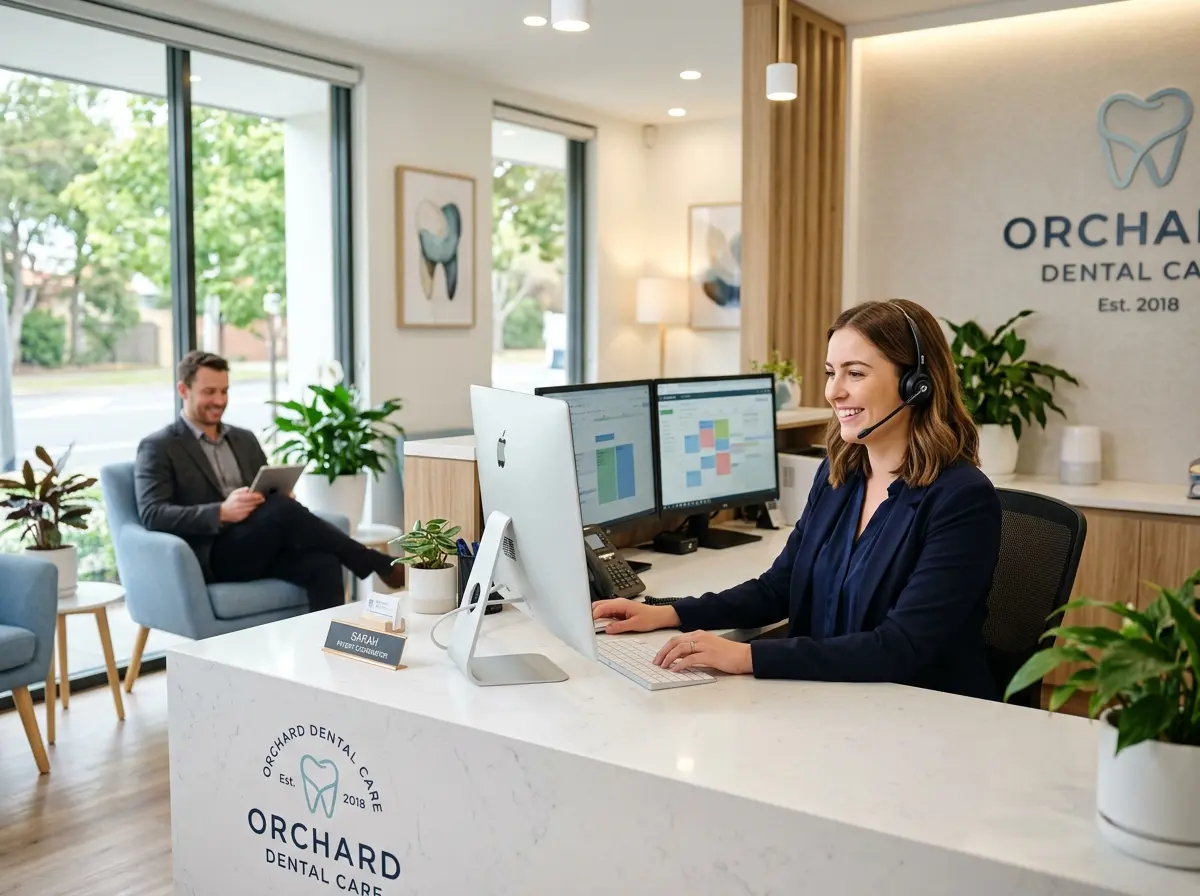
Let's be fair to your team for a moment. The average dental front desk employee is expected to greet walk-ins warmly, check patients in, verify insurance, handle billing questions, manage the schedule, answer phones, and somehow project calm professionalism throughout. That's not a job description — that's a circus act. And when the phone rings during a busy check-in, something has to give. Usually, it's the quality of the phone interaction.
The solution isn't to hire more people for every shift (though that's sometimes the right answer). The solution is to take some of that load off entirely — particularly for the repetitive, high-volume calls that don't actually require a human to handle.
A Smarter Front Line Starts With the Right Tools
Let Technology Handle What Doesn't Need a Human Touch
Think about the kinds of calls your front desk fields on a typical day. A good portion of them are probably questions like: "What are your hours?" "Do you accept my insurance?" "What does a new patient exam cost?" "Can I reschedule my appointment?" These are not complex clinical conversations. They're informational exchanges that can — and should — be handled automatically, freeing your human staff for interactions that genuinely require empathy, judgment, or relationship-building.
This is exactly where Stella, an AI robot employee and phone receptionist, earns her keep in a dental practice. Stella answers calls 24/7 with full knowledge of your practice's services, hours, pricing, policies, and current promotions. She can handle new patient inquiries, collect intake information through conversational forms, and even forward calls to a human staff member when the situation genuinely warrants it. She also takes voicemails with AI-generated summaries and sends push notifications to managers — so nothing falls through the cracks, even at 9 PM on a Tuesday. With a built-in CRM that includes custom fields, tags, and AI-generated patient profiles, she keeps your contact data organized and actionable from the very first interaction.
What a Great First Patient Experience Actually Looks Like
It Starts Before They Walk In the Door
The patient journey begins long before the cleaning chair. It begins the moment someone searches for a dentist near them, reads your reviews, lands on your website, or picks up the phone. Every single one of those touchpoints is an opportunity to either build confidence or erode it. A practice that answers calls promptly, provides clear information, and makes scheduling feel effortless is already winning — not because they have better dentists, but because they've made the experience of becoming a patient easy.
Consider what it would mean for a new patient to call your office at 8:45 PM, get a friendly, knowledgeable response to their questions about your new patient special, and have their intake information collected before they even hang up. No hold music. No voicemail. No callback the next morning that they might miss. Just a smooth, professional experience that makes them feel like they've already made a great choice.
The Intake Process Is Your First Impression — Treat It That Way
One of the most overlooked parts of new patient acquisition is what happens after the call is answered. Practices that have a structured intake process — collecting insurance information, preferred appointment times, reason for visit, and how the patient heard about you — are at a significant advantage. Not only does this data help you prepare for the appointment, it tells you what's working in your marketing and gives you the foundation for a long-term patient relationship.
Too often, intake is an afterthought. The receptionist is busy, the call feels rushed, and critical information doesn't get captured. Building a reliable, consistent intake process — whether through trained staff, automated tools, or a combination of both — is one of the highest-leverage improvements a dental practice can make.
Follow Up Like You Mean It
Capturing a new patient inquiry is only half the battle. What happens to that lead if they call after hours and no one answers? What happens if they express interest but don't schedule right away? Practices that have systems for following up — whether through automated reminders, staff callbacks, or AI-assisted outreach — convert significantly more inquiries into booked appointments than those that rely on patients to follow up themselves. Patients won't. They'll find someone who makes it easier.
Quick Reminder About Stella
Stella is an AI robot employee and phone receptionist built for businesses like yours — available as a friendly in-person kiosk presence and as a 24/7 phone answering solution. She runs on a simple $99/month subscription with no upfront hardware costs and is designed to be easy to set up and immediately useful. If your front desk is overwhelmed and your after-hours calls are going to voicemail, she's worth a serious look.
It's Time to Stop Losing Patients Before They Ever Become Patients
The good news is that this is a solvable problem. You don't need a complete practice overhaul, a massive hiring budget, or an act of dental-industry legislation. You need to take an honest look at what happens when a new patient calls your office — especially after hours, during peak check-in periods, or on days when someone calls in sick — and decide whether that experience reflects the quality of care you actually provide.
Here are a few actionable steps you can take right now:
- Call your own office. Seriously. Do it as a mystery shopper. Call during a busy time and see what happens. You might be surprised — or horrified.
- Audit your after-hours experience. What does a patient hear when they call at 7 PM? Is there a clear, helpful message? Is there any way to capture their information or answer their questions?
- Define your intake process. Write down what information should be collected on every new patient call and make sure your team (or your technology) consistently captures it.
- Track your missed calls. If your phone system doesn't already give you visibility into missed or abandoned calls, find one that does. You can't fix what you can't measure.
- Consider AI-assisted phone answering. For after-hours coverage, overflow management, and consistent intake collection, an AI receptionist isn't a luxury anymore — it's a competitive necessity.
Your patients deserve a practice that takes their experience seriously from the very first ring. And frankly, your revenue does too. Stop letting the hold button be the reason someone chooses a different dentist. The fix is closer — and more affordable — than you think.