One Flow Does Not Fit All: Why Your Scheduling Process Needs to Grow Up
Let's paint a picture. A brand-new patient calls your dental practice for the first time. They're nervous, they have insurance questions, they need a full new patient exam, and they've never filled out a single form for you. Meanwhile, a loyal patient of five years calls to book their routine cleaning — they know the drill (pun absolutely intended), their records are on file, and they just need a slot on Tuesday morning.
Now here's the question: are you routing both of these people through the exact same scheduling process?
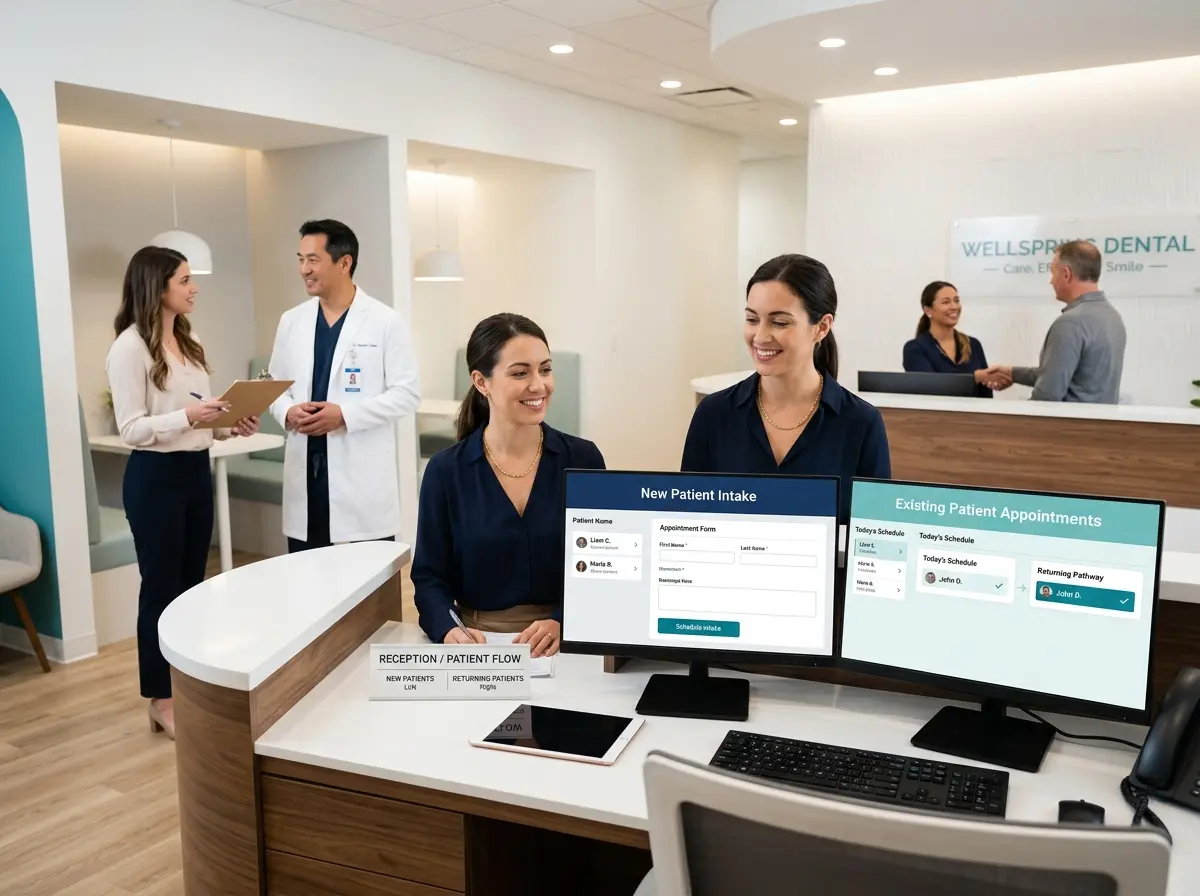
If the answer is yes, you're not alone — but you are leaving efficiency, revenue, and patient satisfaction on the table. Treating every incoming scheduling request the same way is like using one-size-fits-all bite guards: technically it might work, but nobody's really happy about it. Separate scheduling flows for new and existing patients isn't a luxury reserved for large DSOs. It's a fundamental operational upgrade that practices of every size can — and should — implement.
Why New and Existing Patients Are Fundamentally Different Scheduling Challenges
New Patients Bring More Variables — and More Opportunity
A new patient isn't just a stranger booking an appointment. They're a relationship that's just beginning, and the scheduling experience is quite literally their first impression of your practice. According to industry research, patients form lasting opinions about a healthcare provider within the first few minutes of contact — and that includes the phone call or online booking experience before they ever set foot in your office.
New patients typically require more time up front: a comprehensive exam, X-rays, a medical history review, insurance verification, and intake paperwork. If your scheduling process doesn't account for these requirements, you end up with underscheduled appointments, frustrated hygienists, and a new patient who feels like they fell through the cracks. Worse, they may walk out with an incomplete picture of their oral health — and a motivation to try the practice down the street.
The new patient flow should include intake form collection before the appointment, insurance pre-verification, and enough blocked time to actually complete a proper new patient visit. That's not bureaucracy — that's good dentistry and good business.
Existing Patients Deserve Speed and Simplicity
Your established patients have earned the right to a frictionless experience. They've trusted you with their teeth, their kids' teeth, and possibly their fear of needles. The last thing they need is to be asked for their date of birth five times or put on hold while a front desk team member tries to figure out if they're "in the system."
An existing patient scheduling flow should be streamlined: confirm identity, pull up their record, check their last visit and any outstanding treatment plan items, and get them booked in under two minutes. That's it. The more friction you add for returning patients, the higher your no-show and cancellation rates tend to climb — because people reschedule when booking feels like a chore.
Mixing the Two Creates Bottlenecks for Everyone
When your front desk team uses a single generic intake process for every caller, one of two things happens: either new patients don't get the attention they need, or existing patients get bogged down in unnecessary steps. Either outcome hurts. A mixed-up flow also makes it harder to train staff consistently, harder to measure conversion rates for new patients, and harder to identify where scheduling breakdowns are occurring. Separation isn't just patient-friendly — it's operationally essential for understanding and improving your practice's performance.
How Smart Tools Can Take the Guesswork Out of Patient Routing
Let Technology Do the Triage
Here's where a little upfront investment in the right tools pays dividends quickly. When a patient calls or walks into your practice, the very first question — "Are you a new or existing patient?" — should trigger an entirely different path. And that routing decision shouldn't depend on whether your front desk is having a good day.
Stella, the AI robot employee and phone receptionist, is built for exactly this kind of intelligent patient routing. Whether a patient calls in after hours or walks up to the in-office kiosk during a busy afternoon, Stella can ask the right qualifying questions right away, collect new patient intake information conversationally, and ensure existing patients are confirmed and queued without unnecessary friction. Her built-in CRM and intake form tools mean that new patient data is captured cleanly before anyone on your staff has to chase it down — and existing patient records can be pulled and flagged automatically. It's the kind of consistent, mistake-proof triage that a human receptionist can aspire to on a great day, but Stella delivers every single time.
Building Your Two-Track Scheduling System: A Practical Framework
Designing the New Patient Flow
Your new patient scheduling flow should function like a well-rehearsed first date — attentive, informative, and efficient without being overwhelming. Here's what a strong new patient flow looks like in practice:
- Step 1 – Identification: Confirm the caller or visitor is new to the practice.
- Step 2 – Intake Collection: Gather name, contact information, insurance details, and the reason for the visit before the appointment, either via phone, intake form, or kiosk.
- Step 3 – Insurance Pre-Verification: Flag the appointment for insurance verification at least 24–48 hours in advance.
- Step 4 – Appointment Blocking: Schedule a longer appointment block — typically 60–90 minutes for a new patient comprehensive exam — rather than a standard hygiene slot.
- Step 5 – Confirmation and Reminders: Send a welcome message with directions, what to bring, and what to expect. First impressions are made here too.
Practices that implement pre-appointment intake collection report significantly shorter wait times and fewer day-of delays. It's not magic — it's just logistics done right.
Designing the Existing Patient Flow
The existing patient flow should be built around one core principle: respect their time. These patients already know and (hopefully) love your practice. Your job is to make it as easy as possible to stay connected to it.
A best-practice existing patient flow confirms their identity quickly, surfaces any outstanding treatment plan items or overdue recalls the moment they're identified, and offers appointment options based on their history and preferences. Staff shouldn't have to ask existing patients to repeat information that's already in the system — that kind of repetition erodes trust and signals disorganization. If a patient was told at their last visit that they need a crown, the scheduling conversation is a natural moment to follow up on that. Done well, this isn't upselling — it's caring continuity of care.
Training Your Team (and Your Tools) to Recognize the Difference
Even the best-designed dual-flow system falls apart without consistent execution. Your front desk team needs clear scripts, decision trees, and the authority to spend the appropriate amount of time on each type of caller. Consider conducting brief monthly role-play sessions to keep the flows sharp — especially when new staff come aboard.
Equally important: whatever software or tools you use for scheduling should support conditional logic. If a patient is new, the system should prompt for intake. If they're existing, it should pull their record. This isn't a feature request — it's table stakes for a modern dental practice. Audit your current setup and ask honestly whether it's doing this work for you, or whether your team is compensating manually for a system that can't tell the difference.
Quick Reminder About Stella
Stella is an AI robot employee and phone receptionist designed to help businesses like your dental practice handle customer interactions around the clock — both in person at a physical kiosk and over the phone as a fully capable AI receptionist. At just $99/month with no upfront hardware costs, she's the kind of front desk upgrade that actually pays for itself. Whether you need smarter patient routing, consistent intake collection, or simply a receptionist who never calls in sick, Stella's worth a serious look.
Your Next Steps Toward a Smarter Scheduling Operation
Separate scheduling flows for new and existing patients isn't a complicated concept — but it does require intentional design and consistent execution. The practices that get this right tend to see measurable improvements across the board: shorter wait times, better patient satisfaction scores, higher new patient conversion rates, and more productive hygiene and treatment schedules.
Here's a simple action plan to get started:
- Audit your current process. Record or observe five new patient calls and five existing patient calls this week. Are they being handled differently? They should be.
- Document your two flows. Write out step-by-step what each experience should look like, from first contact to confirmed appointment.
- Evaluate your tools. Does your current scheduling or phone system support intelligent routing? If not, that's a gap worth closing.
- Train and test. Get your team aligned on the new flows, and revisit them quarterly.
- Automate where possible. The more you can offload consistent, rule-based tasks to technology, the more your human staff can focus on genuine patient care.
Your patients — new and existing — are telling you what they need through every interaction. A new patient needs to feel welcomed and prepared. An established patient needs to feel known and valued. Building scheduling flows that reflect those realities isn't just smart operations. It's good patient care, starting from the very first phone ring.