Your Spa Phone Is Ringing. Is Anyone Actually Selling?
Picture this: a potential new client calls your spa on a Tuesday afternoon. They're stressed, they've got a birthday coming up, and they're ready to spend money. Your front desk is elbow-deep in a scheduling crisis, so the phone rings four times before someone picks up, rattles off your hours, and sends the caller on their way. No booking. No upsell. No follow-up. Just a missed opportunity wrapped in a polite goodbye.
Here's the uncomfortable truth: most spas treat inbound phone calls like interruptions rather than invitations. And that's a very expensive habit. Studies show that businesses miss up to 62% of incoming calls, and of those missed calls, roughly 85% of callers won't call back. In an industry built entirely on the promise of making people feel seen, valued, and taken care of, fumbling a phone call is a contradiction you simply can't afford.
Every person who calls your spa is, at minimum, curious — and curiosity is just one good conversation away from a confirmed booking. The goal of this post is simple: help you rethink every inbound call as the sales conversation it actually is, and give you a practical framework to start converting those calls into real revenue.
The Missed Revenue Hiding in Plain Sight
Calls Are Warmer Than You Think
Unlike a cold lead who's never heard of you, someone calling your spa has already done some level of research. They found you — whether through Google, a referral, or your Instagram. They picked up the phone, which in 2024 takes actual effort. These are warm leads, and warm leads convert at dramatically higher rates than cold outreach. According to HubSpot, inbound leads cost 61% less to acquire than outbound leads, and they're far more likely to close.
The problem is that most spa teams aren't trained to recognize this. They're in "information desk" mode — answering questions, reciting prices, confirming hours — when they should be in "trusted advisor" mode. There's a significant difference between saying "A 60-minute Swedish massage is $95" and saying "Our most popular option for stress relief is the 60-minute Swedish, but a lot of our guests find that pairing it with our aromatherapy add-on really makes the experience. Would you like me to check availability for that?" One is a transaction. The other is a relationship.
The Hidden Cost of the Transactional Mindset
When your team treats calls as tasks to be completed rather than conversations to be had, the losses are real and they compound quickly. Consider a spa that takes 40 calls per week. If even 30% of those callers are ready to book but leave without a reservation because no one guided them toward one, that's 12 lost bookings a week. At an average service value of $100, that's $1,200 per week — roughly $62,000 per year — quietly walking out the back door while your receptionist moves on to the next task.
And that's before you factor in upsell opportunities, retail product recommendations, gift card suggestions, or package upgrades. The phone call isn't the finish line. It's the starting line.
Turning Every Call Into a Sales Conversation (Without Being Pushy)
Train Your Team on Consultative Phone Skills
There's a difference between selling and being helpful. The best sales conversations in a spa context feel like genuine guidance — someone listening to a caller's needs and thoughtfully suggesting the right service. This is called consultative selling, and it doesn't require a sales script or an awkward pitch. It requires three things: curiosity, knowledge, and confidence.
Start by training your team to ask one simple question before jumping into pricing: "What's bringing you in today?" or "Is this for a special occasion, or are you looking for something more of a regular self-care routine?" These questions unlock the caller's real motivation and give your staff the context they need to make a meaningful recommendation. Someone calling for a bachelorette party has completely different needs than someone managing chronic back pain — and your response should reflect that.
Build a Call Framework Your Team Can Actually Use
You don't need a rigid script. You need a flexible framework. Consider structuring every inbound call around four simple phases:
- Warm Welcome: Answer professionally, use your spa's name, and set a friendly tone immediately.
- Discovery: Ask one or two open-ended questions to understand what the caller is looking for.
- Recommendation: Suggest a specific service or package based on what you just learned — not just the cheapest option, and not just the most expensive. The right one.
- Commitment: Guide them toward a booking. Don't leave it open-ended with "just let us know." Offer specific availability and make it easy to say yes.
This framework works whether your team has 30 seconds or 5 minutes. It doesn't feel salesy because it's grounded in actually listening to the person on the other end of the line. And the best part? It significantly increases your average booking value because you're matching callers with services they genuinely want, not just whatever they happened to ask about first.
Technology That Has Your Back (and Your Phones)
Never Miss a Sales Opportunity Again
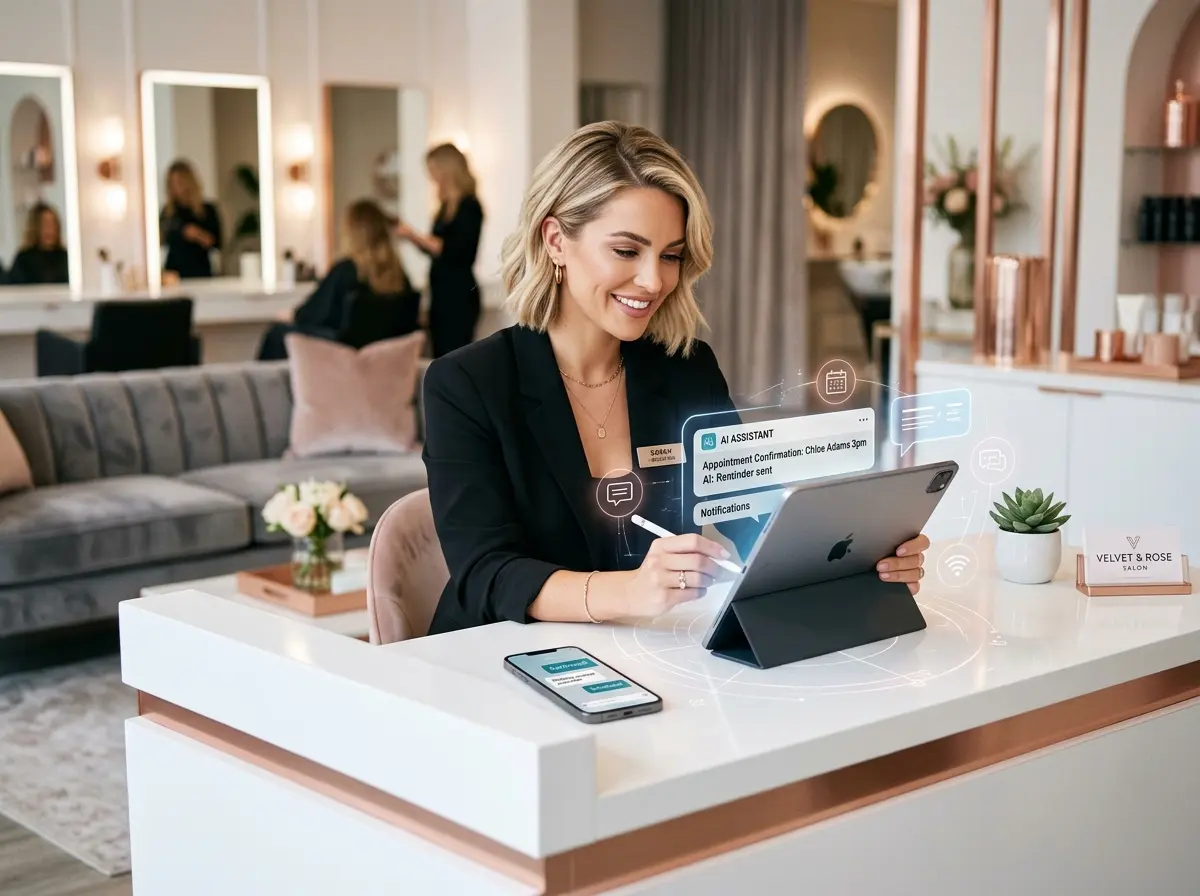
Even the best-trained front desk team has limits. They get busy. They get stressed. They go home at 6 PM while your Instagram ad is still running and curious prospects are still calling. This is exactly where smart technology earns its keep — and where Stella, an AI robot employee and phone receptionist, becomes genuinely relevant to your spa business.
Stella answers calls 24/7 with the same depth of knowledge your best receptionist has on a great day — every day, without burnout, without distraction, and without forgetting to mention the current promotion. She can discuss your services, highlight specials, recommend add-ons, and guide callers toward booking — all in a natural, conversational tone. For spas with a physical location, she also operates as an in-store kiosk, greeting walk-ins proactively and engaging them in the kind of warm, knowledgeable conversation that turns browsers into buyers. She even collects intake information through conversational forms and organizes everything in a built-in CRM — so your team has context before a client ever walks through the door.
Making the Most of Every Call — Before, During, and After
Promote Before They Even Ask
One of the most underused opportunities in spa phone conversations is the promotional mention. If you're running a seasonal special, a new service launch, or a limited-time package, your caller should hear about it — naturally and briefly — before the conversation wraps up. This doesn't have to be a hard sell. It can be as simple as: "Before I let you go, we're actually running a spring detox wrap package this month that a lot of our regulars have been loving — would you like me to tell you about it?"
That one sentence has the potential to increase your average transaction value with zero additional marketing spend. The caller is already engaged. They already trust you enough to be on the phone. A soft, relevant mention of a promotion in that moment is welcome context, not an interruption.
The Follow-Up Is Part of the Sale
Not every caller will book on the first call, and that's okay — as long as you've captured the information needed to follow up. Train your team to ask for a name and phone number or email from every caller who doesn't book, and note what they were interested in. A simple, friendly follow-up message a day or two later — "Hey, just wanted to check in and see if you had any other questions about our prenatal massage options" — converts a surprising number of undecided callers into confirmed clients.
The follow-up also signals professionalism. It tells the prospect that you run the kind of business that pays attention. And in the wellness industry, where trust is everything, that matters enormously.
Use Call Patterns to Improve Your Offerings
Your inbound calls are a goldmine of market research that most spas completely ignore. The questions callers ask most frequently tell you what your website is missing. The services they ask about reveal what your marketing should be leading with. The objections they raise point to pricing or packaging issues worth addressing. Start logging call themes — even informally — and review them monthly. You'll be surprised how quickly patterns emerge and how actionable those patterns are.
A Quick Reminder About Stella
Stella is an AI robot employee who works as both an in-store kiosk and a 24/7 phone receptionist — available to spas (and businesses across virtually every industry) for just $99/month with no upfront hardware costs. She's always on, always professional, always ready to promote your services and guide customers toward booking. Whether your front desk is slammed or your doors are closed for the night, Stella keeps the conversation — and the revenue — going.
Your Next Step Starts With the Next Call
The good news is that transforming your inbound call experience doesn't require a massive overhaul or a significant budget. It requires a shift in mindset — from answering calls to owning conversations — and a few practical habits to support it. Start by listening to a week's worth of calls (if you have recording capabilities) and honestly evaluating whether your team is guiding callers toward bookings or just responding to questions. That audit alone will tell you everything you need to know.
From there, implement the four-phase call framework, build in a promotional mention habit, and create a simple process for capturing and following up with callers who don't book right away. These aren't complicated changes, but they compound quickly — and the difference between a spa that treats calls as interruptions and one that treats them as sales conversations is often the difference between a spa that struggles and one that thrives.
Your phone is already ringing. The only question is whether you're ready to answer it like the business opportunity it is.