Introduction: The Untapped Goldmine Sitting in Your Inbox
Let's be honest — most hotels work incredibly hard to fill rooms, only to watch guests check in, sleep, and check out without ever knowing about the spa, the upgraded breakfast package, or the romantic turndown service with the fancy chocolates. All that potential revenue, quietly gathering dust.
Here's the thing: your guests want to have a great experience. They're just waiting for someone to tell them what's available. And the best time to do that? Before they even walk through the door.
Pre-arrival email campaigns have become one of the most quietly powerful tools in hospitality revenue management. When done right, they don't feel like marketing — they feel like hospitality. A well-timed, personalized email sent two to five days before check-in can dramatically increase ancillary revenue per guest while simultaneously improving the guest experience. It's the rare win-win that doesn't require sacrificing one for the other.
In this post, we'll walk through how one boutique hotel built a pre-arrival email system that consistently boosted ancillary revenue, what they got right, and how you can apply the same principles to your own property — no massive marketing budget required.
The Strategy: Building a Pre-Arrival Email Campaign That Actually Works
The Setup: Timing, Segmentation, and Personalization
The Hargrove House, a 42-room boutique hotel in a mid-sized coastal city, was generating solid occupancy numbers but struggling with flat ancillary revenue. Their spa bookings were underperforming. Their curated local experience packages were barely moving. Sound familiar?
Their solution wasn't a new product or a price change. It was a smarter conversation with guests who were already coming.
They started by segmenting their guest list based on booking data: couples vs. families, first-time visitors vs. returning guests, leisure travelers vs. business travelers. This segmentation allowed them to send relevant offers rather than a generic blast. A couple celebrating an anniversary doesn't need to hear about the kids' activity package — but they absolutely want to hear about the candlelit dinner for two.
Timing was equally important. Emails sent too early got ignored. Emails sent too late didn't give guests time to add on services. The sweet spot? Five to seven days before arrival for the first touchpoint, followed by a second, shorter email two days out with a soft reminder and any time-sensitive availability.
The Content: What to Offer and How to Frame It
The Hargrove House resisted the urge to pitch everything at once. Instead, they structured their pre-arrival emails around a simple principle: make the guest's trip better, not more expensive. The framing shifted from "here's what you can buy" to "here's what past guests in your situation absolutely loved."
Their most effective email elements included a warm, personalized greeting that referenced the booking details, a featured highlight (one primary offer, not five), a brief "guests like you also enjoyed" section with two or three secondary suggestions, and a clear, low-friction call to action — usually a single button linking to a simple add-on booking page.
They also added a "local insider tips" section at the bottom, which had nothing to sell. It simply provided genuine value — restaurant recommendations, parking tips, best times to visit nearby attractions. This built trust and made the email feel like a message from a concierge, not a sales funnel.
The Results: Numbers Worth Paying Attention To
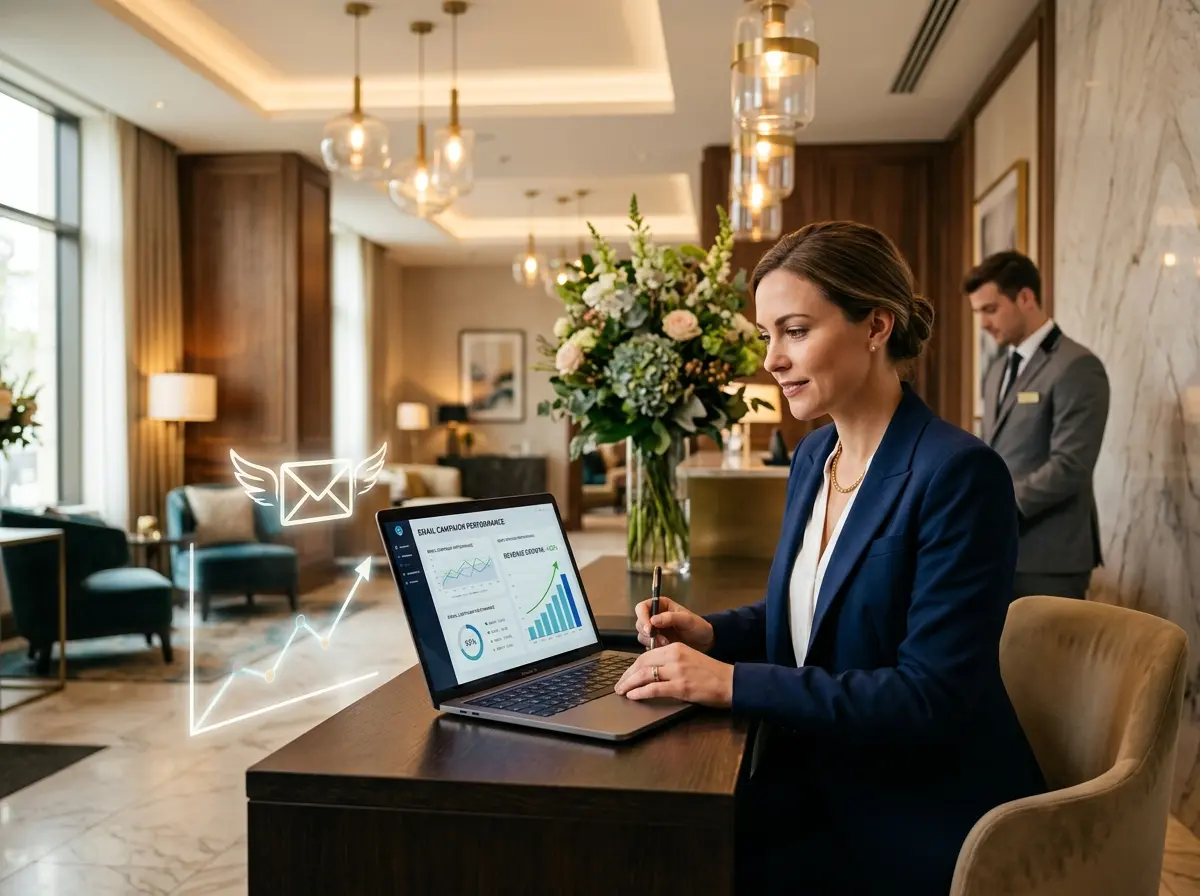
Within six months of launching their pre-arrival campaign, the Hargrove House saw ancillary revenue per guest increase by 34%. Spa bookings rose 28%. Their curated local experience packages — previously a near-afterthought — became a consistent revenue line. Open rates on pre-arrival emails averaged 58%, compared to the hospitality industry benchmark of around 36%. Click-through rates on their primary offer hovered around 22%.
Perhaps more telling: guest satisfaction scores improved alongside revenue. When guests arrived already knowing about the amenities, feeling informed and welcomed, their overall experience started on a higher note. The emails weren't just selling — they were setting a tone.
Streamlining Guest Communication With the Right Tools
How Technology (and a Little AI) Can Help You Execute This at Scale
Executing a pre-arrival campaign well requires more than a good email template. It requires consistent data collection, clean guest profiles, and a reliable way to handle the follow-up conversations those emails inevitably generate. Guests reply. Guests call. Guests have questions about whether the spa requires a reservation or whether the dinner package includes wine.
This is where a lot of boutique hotels stumble — not because they lack the strategy, but because their front desk team is already stretched thin, and "answer emails and phone calls about spa packages" doesn't always make the priority list at 3 PM on a busy Saturday.
Stella, the AI robot employee and phone receptionist, can help fill that gap. As a phone receptionist, she answers calls 24/7 with full knowledge of your services, packages, hours, and policies — so when a guest calls after receiving your pre-arrival email and wants to know if the anniversary dinner package is still available, they get a real, helpful answer right away, not a voicemail. Her built-in CRM and conversational intake forms also make it easier to keep guest profiles current, log preferences, and flag high-value upsell opportunities before guests arrive. For hotels with a physical lobby presence, her in-person kiosk adds another touchpoint to continue the conversation on arrival.
Optimizing and Scaling Your Pre-Arrival Campaign Over Time
Testing What Works Without Overthinking It
One of the best things about email is that it's endlessly testable. The Hargrove House ran simple A/B tests on subject lines, offer placement, and email length. They didn't need a data science team — just curiosity and a willingness to look at open and click-through rates every few weeks.
A few findings worth stealing: subject lines with the guest's first name and a specific benefit ("Sarah, your spa upgrade is waiting") consistently outperformed generic subject lines. Shorter emails with one clear offer outperformed longer emails with multiple offers. And emails sent on Tuesday or Wednesday mornings outperformed those sent on weekends — even for leisure travelers.
Don't let perfect be the enemy of launched. Start with one segment, one offer, and one email. Measure it. Adjust. Then expand.
Creating an Annual Rhythm of Seasonal and Event-Based Campaigns
Once the core pre-arrival sequence is running, the next step is layering in seasonal relevance. Valentine's Day packages, summer activity bundles, holiday wine-and-cheese welcomes — these additions give you a natural reason to update your emails regularly while keeping the offers fresh and time-sensitive.
The Hargrove House built a simple content calendar mapping seasonal offers to their pre-arrival email templates. Each quarter, they updated two or three offer blocks while leaving the structural framework intact. This kept production time low while ensuring guests never received the same email twice.
Turning Pre-Arrival Emails Into a Full Guest Journey Strategy
The most sophisticated version of this strategy doesn't stop at pre-arrival. It treats the guest relationship as a continuous loop: pre-arrival communication builds anticipation, in-stay touchpoints deliver on the promise, and post-stay follow-up emails capture feedback, encourage reviews, and plant the seed for a return visit.
Boutique hotels that implement this full-cycle approach report significantly higher repeat booking rates. Guests who feel genuinely looked after — and who are reminded of that feeling after they leave — are far more likely to come back. And a returning guest is dramatically cheaper to acquire than a new one. The pre-arrival email is just the first conversation in what should be an ongoing relationship.
Quick Reminder About Stella
Stella is an AI robot employee and phone receptionist built for businesses of all kinds — including boutique hotels looking to deliver a more consistent, professional guest experience without burning out their front desk team. She answers calls 24/7, promotes your services, manages guest information through her built-in CRM, and even greets visitors in person through her in-lobby kiosk. At $99/month with no upfront hardware costs, she's one of the more practical investments a small hospitality business can make.
Conclusion: Your Pre-Arrival Email Campaign Starts With One Email
The Hargrove House didn't transform their ancillary revenue with a massive overhaul or a six-figure marketing investment. They started a better conversation with guests who were already saying yes. That's the real lesson here.
If you're a boutique hotel owner or manager reading this, here's your actionable next step: pick your most undersold service — spa, dining package, local experience, room upgrade — and write one email you'd genuinely want to receive if you were a guest. Make it warm, make it specific, make it useful. Send it five to seven days before arrival to your next ten bookings and see what happens.
Then look at the numbers. Adjust the subject line. Try a different offer. Build from there. The compound effect of small, consistent improvements in guest communication is enormous over the course of a year.
Your guests are already coming. The question is simply whether you're going to help them have the best possible experience — and give yourself a fair shot at the revenue that comes with it. The inbox is open. It's time to say something worth reading.