When One Guy, a Pipe Wrench, and a Wi-Fi Connection Outsmarted Bigger Competitors
Let's be honest — most solo tradespeople aren't exactly known for their digital marketing strategies. The typical playbook looks something like this: slap a logo on a van, hand out a few business cards at the hardware store, and hope that someone's aunt mentions your name when a pipe bursts on Christmas Eve. And yet, here we are, talking about a solo plumber who quietly built a thriving business almost entirely through Google Reviews. No agency retainer. No billboard. No six-figure ad spend.
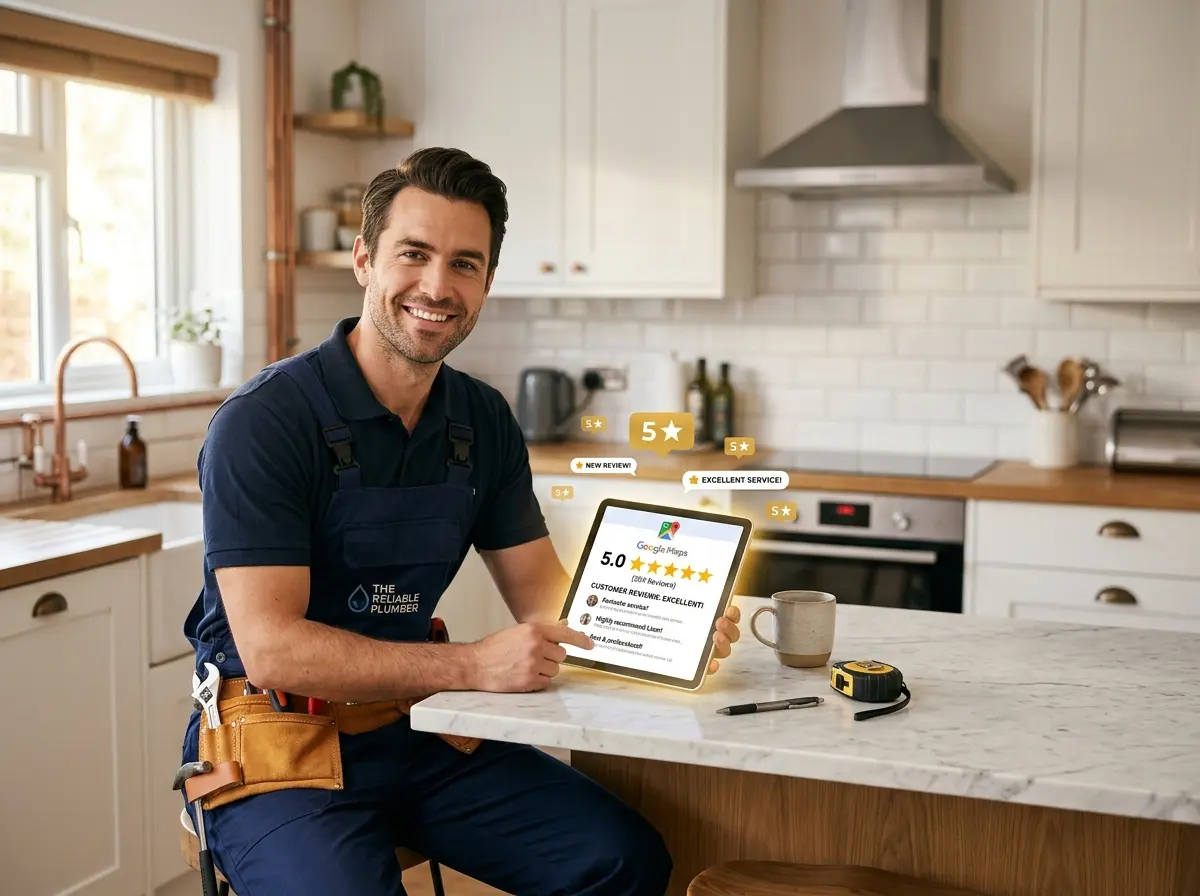
His name is Marcus, and he runs a one-man plumbing operation out of a mid-sized city in the Midwest. A few years ago, he was scraping by on word-of-mouth and the occasional Craigslist inquiry. Today, his calendar is booked weeks in advance, he charges premium rates, and he turns down jobs he doesn't want. The difference? He made Google Reviews the backbone of his entire lead generation strategy — and then built smart systems around it so he could actually keep up with the demand he created.
Here's how he did it, what you can steal from his playbook, and how to handle the growth that follows when it actually works.
The Google Reviews Playbook Marcus Actually Used
Why Google Reviews Are a Lead Generation Engine, Not Just a Vanity Metric
Before we get into tactics, it's worth understanding why this works at all. Google Reviews aren't just digital gold stars that make you feel good. They directly influence your visibility in local search results. Google's local ranking algorithm weighs three primary factors: relevance, distance, and prominence. Reviews — specifically the volume and recency of positive reviews — are a major component of prominence.
What this means practically: a solo plumber with 120 recent, high-quality Google Reviews will often outrank a larger competitor with 40 older ones, even if that competitor has a bigger website and a fancier logo. For local service businesses especially, this levels the playing field dramatically. Marcus understood this early, and it changed everything about how he treated post-job follow-up.
The Ask: Simple, Systematic, and Shameless
Marcus's approach to collecting reviews wasn't sophisticated — it was just consistent. After every completed job, without exception, he would send a short follow-up text within two hours. The message was friendly, personal, and included a direct link to his Google review page. No hunting through menus, no signing into anything — one tap and they were there.
He also asked in person, verbally, right before leaving the job site. Not in a desperate "please leave me a review" way, but as a casual, confident close: "If everything looked good today, I'd really appreciate a quick Google review — it helps a lot." That combination of an in-person ask followed by a text reminder produced a conversion rate he estimated at around 35–40%. Industry benchmarks for review request campaigns typically hover around 10–15%. The difference was the personal connection and the immediate follow-through.
What He Actually Said in the Reviews (Without Saying It)
Here's the sneaky-smart part. Marcus coached his process to naturally elicit keyword-rich reviews without coaching customers on what to write — which, to be clear, violates Google's policies and you should not do. Instead, he simply made sure his communication before and during the job was crystal clear about what he did. "Emergency water heater replacement," "same-day drain cleaning," "basement pipe repair" — these phrases came up naturally in conversation, and customers echoed them in their reviews.
The result? His review page became a keyword-rich local SEO asset. When someone searched "emergency water heater replacement [city name]," Marcus's listing showed reviews that contained exactly those words. Google noticed. So did customers.
Keeping Up With the Calls That Actually Come In
The Problem With Generating Leads When You're the Only Employee
Here's the part of the success story that doesn't make it into the inspirational Instagram posts: when your marketing actually works, your phone doesn't stop ringing. Marcus found this out the hard way. He was mid-job, hands literally in a wall, while three potential customers called, got voicemail, and booked someone else. Each missed call represented real lost revenue — and as a solo operator, every unanswered phone is a small business crisis in slow motion.
This is where tools matter. Stella, an AI robot employee and phone receptionist, is exactly the kind of solution built for this problem. Stella answers every call 24/7, greets callers naturally, answers questions about services and pricing, collects customer intake information through conversational forms, and can forward calls to Marcus when he's available — or take a voicemail with an AI-generated summary sent straight to his phone. For a solo plumber generating real inbound demand, that's not a luxury. That's a lifeline. And her built-in CRM means every new caller becomes a tracked contact, ready for follow-up, without Marcus having to type a single thing while he's elbow-deep in someone's plumbing.
Turning Reviews Into a Repeatable Growth System
The Review Velocity Trap (And How to Avoid It)
One of the most common mistakes local businesses make with Google Reviews is treating it like a campaign rather than a habit. They run a push, collect a batch of reviews, feel great about themselves, and then stop. The problem is that Google's algorithm favors recency. A flood of reviews in January followed by silence until August actually signals inconsistency, and your ranking reflects it.
Marcus built review collection into his workflow the same way he built invoicing into it — it just happened automatically after every job, no decision required. He used a simple CRM and text automation tool to trigger the follow-up message. The result was a steady drip of new reviews that kept his listing looking active, current, and trustworthy year-round. Consistency, not virality, is the real competitive advantage here.
Responding to Reviews Like a Human (Because You Are One)
Marcus responded to every single review — positive or negative. Not with boilerplate copy-paste responses, but with short, genuine replies that mentioned specifics when possible. Responding to Google Reviews signals to Google that your listing is actively managed, which can support ranking. More importantly, it signals to potential customers reading those reviews that you're the kind of business owner who actually cares.
For negative reviews — and yes, he had a couple — Marcus responded calmly, acknowledged the concern, and offered to make it right offline. This approach often impressed prospective customers more than a wall of five-star reviews ever could. A business that handles criticism gracefully is a business people trust.
Leveraging Your Review Base Beyond Google
Once Marcus had a strong foundation of reviews, he didn't just leave them sitting on Google. He screenshotted standout reviews and posted them on his Facebook page. He added a "What Our Customers Say" section to his simple website with embedded Google review widgets. When bidding on larger jobs, he would mention his rating and review count directly — not bragging, just factual social proof delivered at the right moment in the sales conversation.
Reviews became a marketing asset that compounded over time. Each new review made the next customer easier to close. Each satisfied customer was more likely to leave a review because they could already see that others had. It became a self-reinforcing cycle — the kind that marketing agencies charge significant money to try to manufacture artificially.
Quick Reminder About Stella
Stella is an AI robot employee and phone receptionist that works 24/7 for just $99/month — no upfront hardware costs, no sick days, no turnover. She answers calls, engages walk-in customers at her in-store kiosk, collects lead information, manages a built-in CRM, and keeps your business running professionally even when you can't pick up the phone. For solo operators and small teams generating real inbound demand, she's the support system that makes growth sustainable.
What You Should Actually Do Next
Marcus's story isn't magic. It's a repeatable system built on a few honest fundamentals: do great work, ask for reviews consistently, respond to every one of them, and build the operational infrastructure to handle what comes next. If you run any kind of local service business — plumbing, HVAC, landscaping, cleaning, auto repair, legal services, whatever — this framework applies to you.
Here's your practical starting point:
- Audit your current Google Business Profile. Make sure it's fully completed, with accurate hours, service categories, photos, and a compelling business description.
- Create your review request message today. Keep it short, warm, and include your direct Google review link. Test it before you send it to anyone.
- Build the habit, not the campaign. Decide that every completed job, appointment, or transaction gets a follow-up. Then automate it so you don't have to remember.
- Respond to every review within 48 hours. Positive, negative, somewhere in between — respond like a professional human being.
- Fix your phone problem before you need to. If you're generating demand and missing calls, you're handing leads to your competitors. Solve that now, not after the damage is done.
The barrier to entry for this strategy is almost embarrassingly low. All it takes is consistency, follow-through, and the willingness to ask for something you've already earned. Marcus figured that out with a pipe wrench and a smartphone. You've got the same tools. Use them.