Your Customers Keep Coming Back — But Are You Rewarding Them for It?
Let's be honest: most auto shop owners are so focused on oil changes, brake jobs, and keeping the lift bays moving that "customer loyalty strategy" sounds like something from a marketing seminar you definitely didn't have time to attend. And yet, here's a number worth pausing for — repeat customers spend up to 67% more than new ones, and acquiring a new customer costs five times more than retaining an existing one. So while you're grinding away trying to attract fresh faces, your most profitable customers might be quietly drifting to the shop down the street because nobody made them feel special.
Customer milestone rewards are one of the simplest, most cost-effective ways to fix that. We're not talking about a generic punch card that lives crumpled in someone's glove box for three years. We're talking about a thoughtful, structured system that recognizes your customers at meaningful moments in their journey with your shop — and gives them a real reason to stay loyal. Done right, it feels less like a discount program and more like a relationship. And in the auto service business, relationships are everything.
Understanding Customer Milestones (And Why They Matter in Auto Service)
What Counts as a Milestone?
A milestone is any meaningful point in a customer's history with your business worth acknowledging. In an auto shop context, milestones can take many forms. The most obvious is visit frequency — a customer's 5th, 10th, or 25th visit. But don't stop there. Think about total spending thresholds (a customer who's spent $500 or $1,000 with you deserves some recognition), anniversary dates (their one-year or five-year anniversary as your customer), or even service-specific milestones like completing a full preventative maintenance cycle or getting their vehicle through a major repair.
The reason milestones work so well is psychological — people remember how you made them feel, not just what you did for them. When a customer pulls in for their 10th oil change and your team says, "Hey, this one's on us — thanks for being a loyal customer," that moment sticks. It gets mentioned to a spouse. It gets posted on social media. It turns a transaction into a story worth telling.
Building Your Milestone Map
Before you can reward milestones, you need to know when they happen — which means you need to actually be tracking customer history. Start by sketching out a simple milestone map for your shop. What are the key thresholds you want to celebrate? A practical starting framework might look like this:
- Milestone 1 — The Welcome: After a customer's first visit, send a follow-up thank-you with a small discount on their next service.
- Milestone 2 — The Regular: After their 5th visit or $250 in spending, offer a complimentary add-on service like a tire rotation or windshield treatment.
- Milestone 3 — The Loyalist: After their 10th visit or $500 in spending, reward them with a meaningful discount — 20% off their next service, for example.
- Milestone 4 — The VIP: After their 25th visit or $1,000 in total spending, consider a personalized gift, a free oil change, or enrollment in an exclusive loyalty tier with ongoing perks.
The specific numbers are less important than having a clear, consistent system. Customers should know the milestones exist — and they should feel the rewards are genuinely worth working toward.
Communicating Your Milestones Without Being Annoying About It
A loyalty program that nobody knows about is just an expense. You need to communicate your milestones clearly — at intake, on receipts, in follow-up messages, and on signage in your waiting area. The key is to make it feel natural and exciting rather than salesy. Train your front desk staff to mention it during check-in: "By the way, you're two visits away from your Loyalist reward — a free tire rotation on us." That single sentence creates anticipation and gives customers a reason to come back to your shop specifically rather than wherever is convenient.
How Stella Can Help You Track and Promote Your Milestone Program
From Kiosk to Phone Call — Consistency Across Every Touchpoint
Here's where things get interesting for auto shop owners who want to run a milestone program without adding more work to an already packed day. Stella, the AI robot employee and phone receptionist, is built to handle exactly this kind of customer-facing communication — consistently, professionally, and without ever forgetting to mention it.
In your waiting area, Stella's in-store kiosk can proactively greet customers, inform them about your loyalty milestones, and capture their contact information through conversational intake forms. On the phone, she answers calls 24/7 and can mention current promotions, loyalty perks, and milestone rewards to every caller — no training required, no off days. Her built-in CRM stores customer contact data, notes, and tags, so you can keep track of where each customer stands in your milestone journey and follow up at the right moments. It's the kind of organized, consistent customer engagement that used to require a dedicated marketing person. Now it just requires Stella.
Designing Rewards That Actually Motivate Customers to Return
Make the Rewards Feel Personal, Not Generic
The fastest way to kill a loyalty program is with rewards that feel like an afterthought. A 5% discount coupon buried in a mailer isn't a reward — it's noise. Effective milestone rewards in an auto shop environment feel relevant to the customer's actual vehicle and service history. If someone always comes in for oil changes on a high-mileage truck, a complimentary multi-point inspection at their 10th visit is genuinely useful to them. If a customer just finished a major repair job, a discount on their next scheduled maintenance feels timely and considerate.
The goal is to make the customer feel like you know them — because you should. That's what separates a local auto shop from a chain franchise, and it's a competitive advantage worth protecting. The more your rewards reflect a customer's actual relationship with your shop, the more powerful they become.
Tiered Loyalty Versus Simple Punch Cards
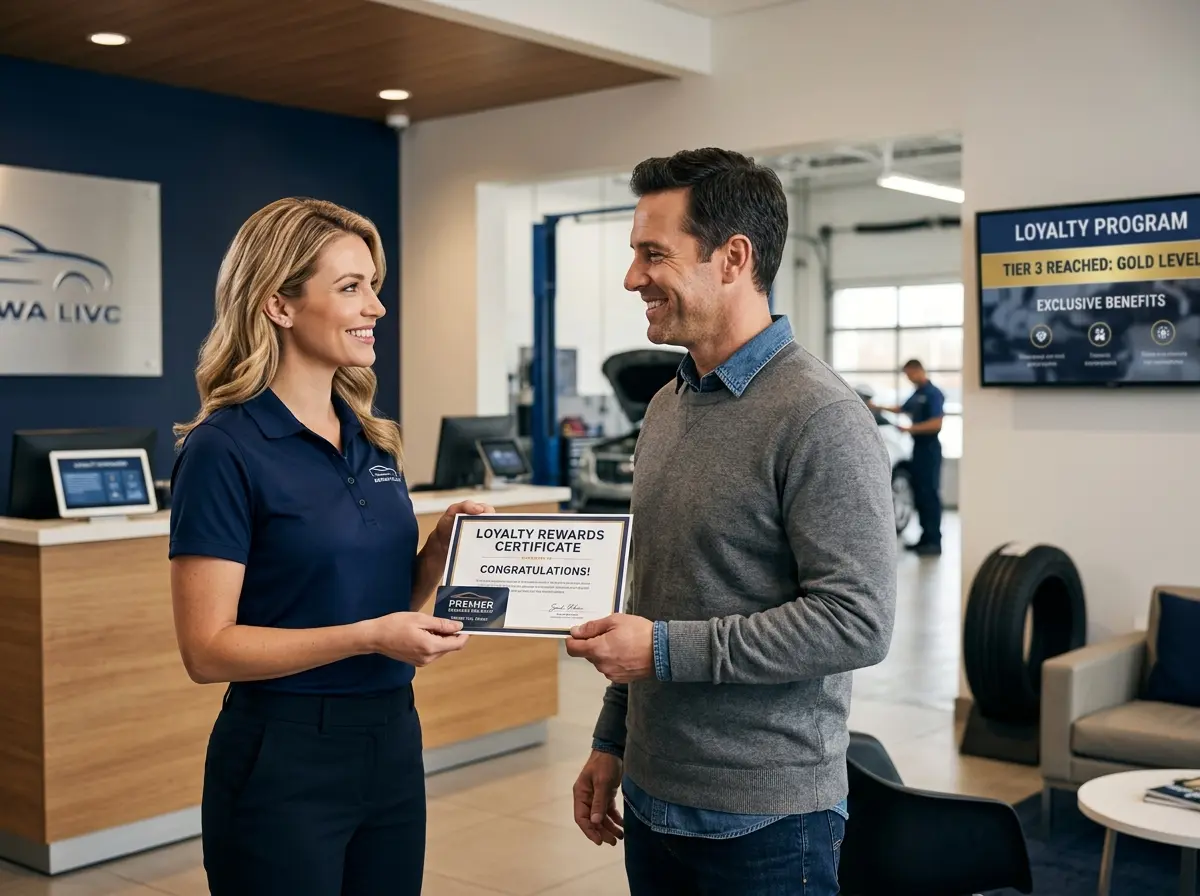
Punch cards are fine as a starting point, but tiered loyalty programs tend to drive stronger long-term behavior. A tiered model — say, Bronze, Silver, and Gold levels — creates a sense of progression and status that a punch card simply can't replicate. Customers at higher tiers feel a sense of belonging that makes switching to a competitor feel like a genuine loss.
That said, complexity is the enemy of adoption. If your program requires a PhD to understand, customers will ignore it. Keep your tiers simple, your rewards clear, and your qualification criteria easy to explain in one sentence. "Spend $500 with us and you're Silver — that means 15% off every visit and priority scheduling." Simple. Memorable. Motivating.
Don't Forget the Emotional Rewards
Not every milestone reward needs to have a dollar value. Sometimes the most powerful reward is simply being recognized. A handwritten thank-you note at the one-year anniversary of a customer's first visit costs almost nothing and creates an impression that a discount code never could. A birthday message (if you've collected that information) with a small perk attached feels personal and thoughtful. These soft rewards reinforce the emotional connection that keeps customers loyal even when a competitor offers a lower price.
A Quick Reminder About Stella
Stella is an AI robot employee and phone receptionist built for businesses like yours — standing in your shop to engage customers in person, and answering your phones around the clock so no opportunity slips through the cracks. At just $99/month with no upfront hardware costs, she's one of the most cost-effective team members you'll ever hire. She doesn't call in sick, she doesn't forget to mention your loyalty program, and she's always ready to make a great first impression — whether someone walks through your door or calls at midnight.
Start Small, Stay Consistent, and Watch Loyalty Compound
You don't need to launch a sophisticated multi-tier rewards empire next Monday. Start with one clear milestone — say, a meaningful reward at the 5th visit — and build from there. The most important thing is to get something in place, communicate it clearly to your customers, and deliver on the reward every single time without fail. Consistency is what transforms a promotional tactic into a genuine loyalty culture.
Here are your actionable next steps:
- Audit your current customer data. Do you know who your repeat customers are? How often they visit? How much they've spent? If not, that's step one.
- Define two or three milestones that make sense for your shop's average customer lifecycle.
- Design rewards that are genuinely valuable and relevant — not an afterthought.
- Train your team to mention the program at every appropriate touchpoint: check-in, checkout, and follow-up.
- Track it. Whether through your shop management software, a CRM, or a tool like Stella's built-in customer management features, make sure you can actually see where each customer stands.
Your loyal customers are already doing you a favor by coming back. A well-designed milestone rewards program is simply your way of saying — professionally, consistently, and profitably — that you noticed. And in a world where customers have more choices than ever, being noticed matters more than you might think.