Introduction: Because "Would You Like Fries With That?" Works in Every Industry
Let's be honest — your patients walk in for an eye exam and walk out with a prescription. That's it. No anti-reflective coating. No blue light protection. No photochromic lenses that darken in sunlight. Just a piece of paper and a polite wave goodbye. Meanwhile, you're sitting on a goldmine of upgrades that could genuinely improve their daily lives and meaningfully improve your revenue per appointment.
Upselling lens upgrades isn't a dirty word. It's not manipulation, and it's not sleazy retail theater. When done right, it's actually good patient care — because most patients have absolutely no idea what's available to them. They don't know that their constant headaches might be tied to digital eye strain. They don't know that their lenses can transition automatically between indoor and outdoor light. They just know their vision is blurry and they need glasses.
Your job — and the job of everyone on your team — is to bridge that gap. This guide will walk you through a practical, appointment-by-appointment framework for introducing lens upgrades in a way that feels natural, helpful, and not at all like you're running an infomercial at 2 a.m.
The Patient Journey: Where Upselling Actually Happens
It Starts Before They Even Sit in the Chair
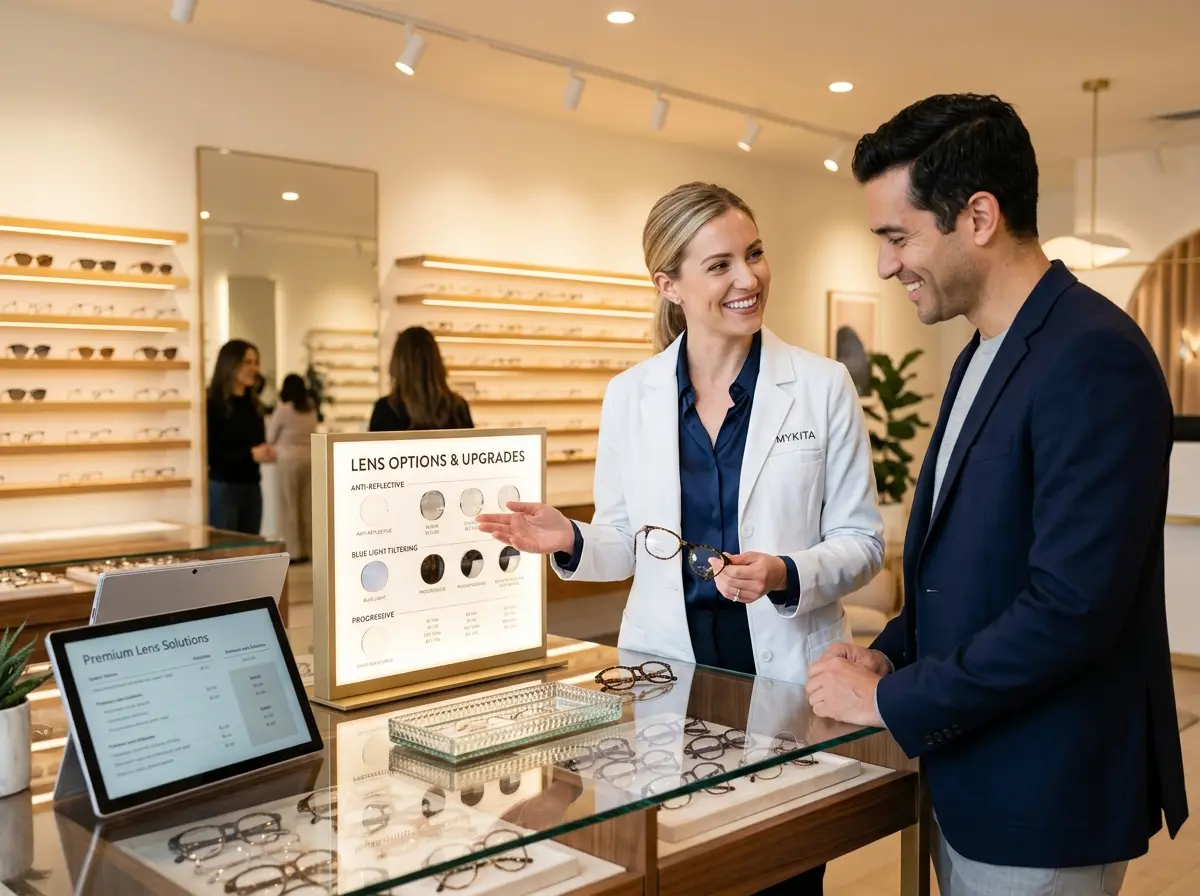
The biggest missed opportunity in most optical shops is the waiting room. Patients sit there for ten, fifteen, sometimes twenty minutes staring at their phones or studying the art on your walls. That's prime real estate for education. Consider placing tasteful, well-designed signage or a small digital display that highlights your available lens technologies — not with a hard sell, but with lifestyle framing. "Do your eyes feel tired after a long day of screen time? Ask us about blue light filtering lenses." That's not pushy. That's informative.
You can also prime patients during appointment scheduling. When someone books online or calls to make an appointment, a simple line in their confirmation message — "Planning to update your lenses? We offer a full range of specialty coatings and premium lens options — feel free to ask us about them at your visit" — plants a seed without pressure.
During the Exam: The Doctor's Role in the Conversation
Doctors often feel uncomfortable with anything that smells like sales. Understandable. But there's a meaningful difference between pitching and recommending. When a patient mentions that they spend eight hours a day in front of a computer, a doctor who says, "Based on what you've told me, I'd actually recommend asking about our blue light filtering options when you head up front — it may help with the fatigue you're describing," is not selling anything. They're doing their job.
Brief, clinically framed comments during the exam — about photochromic options for patients who drive a lot, about high-index lenses for patients with strong prescriptions, about progressive options for presbyopic patients who are tired of switching glasses — normalize the conversation before the patient ever reaches your optical staff. That handoff matters enormously.
At the Dispensary: Turning Recommendations Into Decisions
This is where most optical shops either win or lose the upsell. The dispensary conversation is your main event. The problem is that many opticians either overwhelm patients with every possible option (decision paralysis) or undersell entirely because they don't want to seem pushy. The sweet spot is a consultative approach — ask questions, listen, then recommend specifically.
Instead of saying, "We have anti-reflective, blue light, photochromic, polarized, and high-index options," try: "You mentioned you drive at night fairly often — a lot of our patients with that same issue find that anti-reflective coating makes a big difference with glare. Want me to show you what that looks like?" Specific. Patient-centered. Low pressure. Much more effective.
How Technology Can Support Your Upselling Efforts
Let Stella Handle the Groundwork So Your Team Can Focus on the Conversation
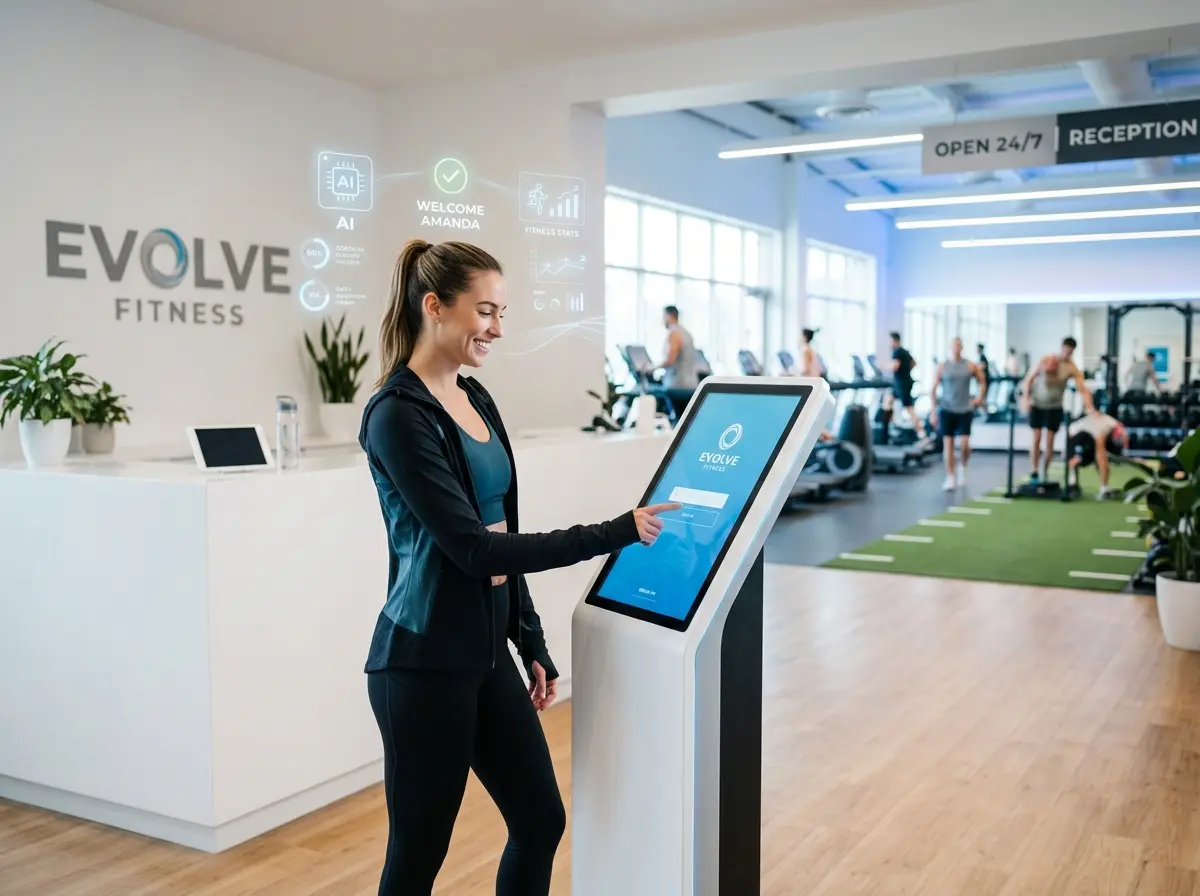
Here's where things get interesting for optical shop owners who are already stretched thin. Stella — an AI robot employee and phone receptionist — can handle a surprising amount of the pre-appointment and in-office education work that your human staff simply doesn't have time for. Positioned inside your shop as a friendly, human-sized kiosk, Stella greets patients as they arrive, answers questions about available lens options, promotes current specials, and can even start meaningful conversations about lens upgrades before your team is available. She's essentially doing warm-up work for your opticians — so by the time a staff member sits down with the patient, the patient already knows what photochromic means and why they might want it.
Stella also answers phone calls 24/7, which means patients who call after hours to ask about lens options, pricing, or what's included in their exam package get real, helpful answers instead of voicemail. She can collect patient information through conversational intake forms over the phone or at the kiosk — and her built-in CRM logs everything, so your team walks into each appointment already knowing what questions came up and what the patient expressed interest in. That's not just convenient. That's a legitimate competitive advantage.
Pricing Transparency and Overcoming Objections
The Sticker Shock Problem (And How to Solve It)
One of the most common reasons patients decline lens upgrades is pure sticker shock — not because they truly can't afford it, but because the price feels sudden and unjustified. When someone walks in expecting to pay $150 for lenses and is presented with a $380 option without much context, the default answer is no. The solution is building perceived value before you ever say a number.
Frame upgrades in terms of cost per day or cost per use. A $100 premium coating on a pair of glasses worn 365 days a year is less than 28 cents a day. When you frame it that way, the objection "that's too expensive" starts to feel a little harder to defend. You're not being manipulative — you're giving the patient a more complete picture of the value they're receiving.
Training Your Team to Handle "I'll Just Stick With Basic Lenses"
This is the objection you'll hear most. And here's the honest truth: sometimes basic lenses are genuinely the right call. But often, patients say this because they don't yet understand what they're opting out of. Train your staff to respond with curiosity rather than argument. "Totally, that's always an option — can I ask, is it more about the budget, or are you not sure if the upgrade would actually make a difference for you?" That one question opens a real conversation without pressure.
Role-play these scenarios in staff training. Run monthly refreshers. Track which upgrades are being offered consistently and which are being skipped. You'll quickly see patterns — and you'll probably find that certain staff members are dramatically outperforming others simply because they've found comfortable, natural language for these conversations.
Quick Reminder About Stella
Stella is an AI robot employee and phone receptionist available for just $99/month — no hardware costs, no complicated setup. She works inside your optical shop as a physical kiosk presence and answers your phones around the clock, making sure no patient inquiry goes unaddressed and no upsell opportunity goes untouched before your staff even says hello.
Conclusion: Small Conversations, Big Revenue
Upselling lens upgrades isn't about pressuring patients into spending more money. It's about making sure they leave your optical shop with the best possible solution for their actual lifestyle — and making sure your business earns what it's worth in the process. The framework is simple: educate early, recommend specifically, frame value clearly, and train your team to have comfortable, confident conversations.
Here are your actionable next steps:
- Audit your current dispensary conversation. Mystery-shop your own team or review recent patient interactions. Are upgrades being offered consistently? Are they being framed as recommendations or as add-ons?
- Update your pre-appointment touchpoints. Review your booking confirmation emails, waiting room materials, and any signage for opportunities to introduce upgrade options early.
- Run a team training session focused on objection handling. Pick three common objections and role-play responses until everyone has language that feels natural to them.
- Identify your highest-margin upgrades and make sure they're being mentioned at every qualifying appointment — not just when the patient asks.
- Consider adding technology that supports your team. Tools like an in-store AI kiosk or 24/7 phone answering can handle patient education and inquiry management so your staff can focus on the conversations that close.
Your lens upgrades are genuinely good products that genuinely help people. The only thing standing between your patients and better vision — and between your business and better margins — is the conversation. Start having it consistently, and the rest takes care of itself.