Introduction: Because "Good Vibes Only" Is Not a Performance Metric
Let's be honest — managing a restaurant is basically a high-stakes circus where you're simultaneously the ringmaster, the safety net, and occasionally the clown. Between juggling inventory, placating Yelp reviewers, and wondering where Table 7's food has been for the past 22 minutes, it's easy to let server performance evaluation slide into the dreaded "we'll deal with it later" pile. And yet, nothing shapes your guest experience more directly than the person standing tableside.
Here's the uncomfortable truth: 70% of customers say they'll return to a restaurant because of excellent service — not the food. Your servers are your brand, your upsell engine, and your reputation management team, all wrapped up in an apron. So winging their performance evaluations with vague feedback like "be more friendly" isn't just unhelpful — it's a business liability.
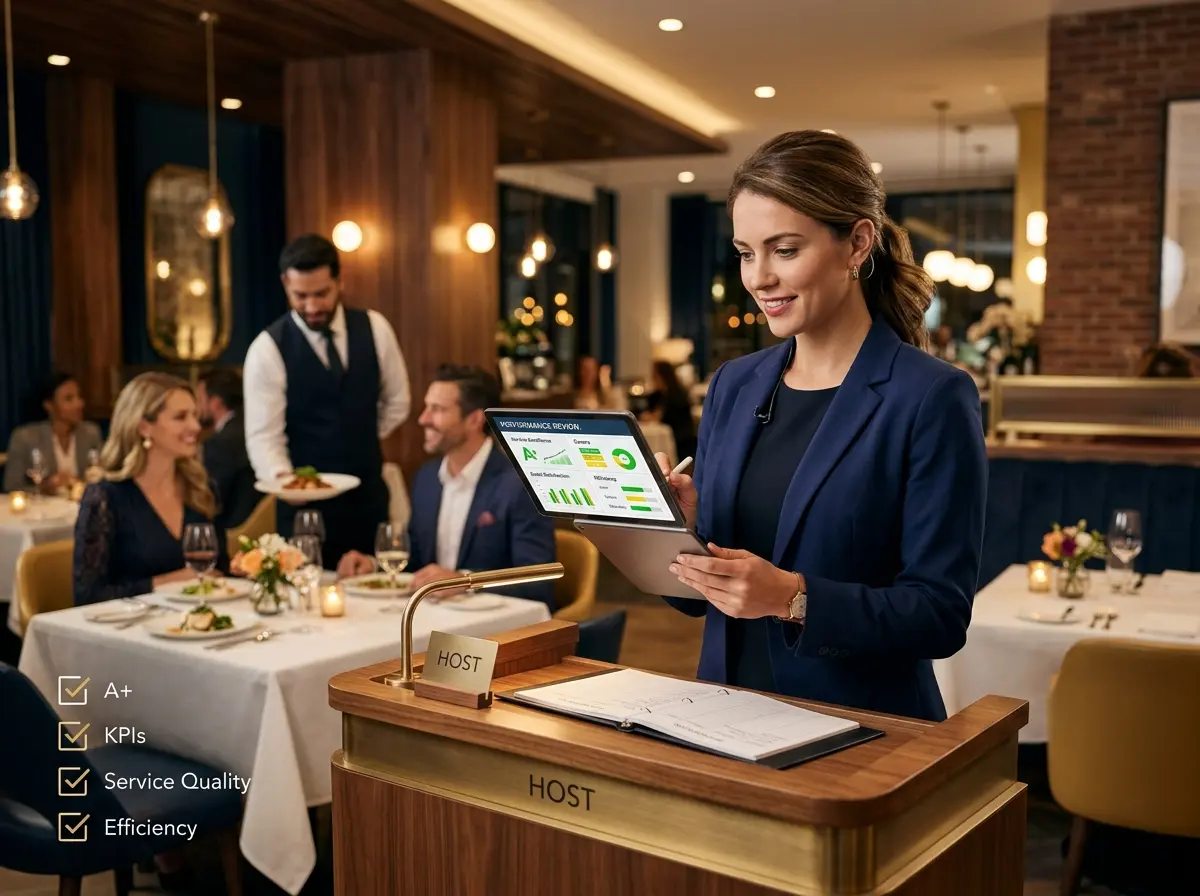
A well-built Server Excellence Scorecard gives your team clear expectations, gives your managers an objective framework, and gives your guests a consistently excellent experience. In this guide, we'll walk you through how to build one that actually works — without turning your restaurant into a soul-crushing corporate machine in the process.
Building the Foundation of Your Scorecard
Identifying the Right Performance Categories
Before you can score anything, you need to define what "excellent" actually looks like in your specific restaurant. A fine-dining establishment has different service expectations than a fast-casual taco joint — and your scorecard should reflect that reality. Start by breaking server performance into four core categories: hospitality and guest connection, product knowledge, operational execution, and sales performance.
Hospitality covers the human stuff — greeting warmth, table awareness, reading guest mood, and recovering gracefully when things go sideways (because they will). Product knowledge measures whether your servers can actually speak to the menu with confidence, answer allergen questions, and recommend pairings without scanning the laminated card like a first-timer. Operational execution covers the mechanics — timing, order accuracy, table cleanliness, and proper checkout. Sales performance tracks upselling and add-on effectiveness. Each category deserves its own weighted section on the scorecard.
Choosing a Scoring System That Doesn't Require a Philosophy Degree
Keep your scoring system simple and consistent. A 1–5 scale works well for most restaurants — 1 being "we need to have a serious conversation" and 5 being "this person should be training others." Avoid vague descriptors like "satisfactory" or "needs improvement" without anchoring them to specific behaviors. Instead, define exactly what a 3 looks like versus a 4 for each metric.
For example, under "Guest Greeting," a score of 3 might mean the server acknowledged the table within two minutes with a standard greeting. A score of 5 means they made eye contact within 60 seconds, introduced themselves, mentioned a current special, and made the guests feel genuinely welcomed. Specificity is everything. The more concrete your benchmarks, the less room there is for subjective arguments during review sessions — and trust us, servers will argue.
Weighting Categories Based on Your Restaurant's Priorities
Not all performance categories are created equal, and your scorecard weights should reflect your brand's values. If you run a high-volume brunch spot where speed and accuracy are everything, operational execution might carry 40% of the total score. If you operate an intimate wine bar where the guest relationship is paramount, hospitality and product knowledge should dominate the weighting.
A practical starting point for a mid-scale restaurant: 30% hospitality, 25% product knowledge, 25% operational execution, and 20% sales performance. Document your reasoning so managers apply weights consistently across all evaluations — inconsistency in scoring is one of the fastest ways to undermine trust in the whole system.
Streamlining Your Operations While You're at It
Let Technology Handle What Technology Does Best
Building a great scorecard is one piece of the puzzle. But one of the quietest drains on your server team's performance is the constant interruption of tasks that shouldn't fall on them in the first place — answering the phone mid-service, explaining the menu to someone who just walked in, or reciting the day's specials for the fifteenth time. This is exactly where Stella, the AI robot employee and phone receptionist, earns her keep.
Stella stands inside your restaurant and proactively greets guests, promotes current specials, and answers questions about your menu, hours, and policies — so your servers can stay focused on the table experience they're actually being evaluated on. She also answers phone calls 24/7, handles inquiries, and forwards calls to staff when needed. Fewer interruptions for your team means better scores on the metrics that matter most to your guests. It's not magic — it's just smart delegation.
Making the Scorecard Work in Real Life
Conducting Evaluations Without Killing Morale
A scorecard is only as good as the conversation it generates. If reviews feel like an ambush or a punishment, you've already lost. Build a culture where evaluation is expected, regular, and genuinely developmental. Monthly check-ins beat quarterly surprises every time. And whenever possible, pair scored feedback with a specific observation: "I noticed on Tuesday when Table 12 asked about gluten-free options, you were able to walk them through three menu alternatives confidently — that's exactly what a 5 looks like for product knowledge."
Equally important: acknowledge wins publicly and address gaps privately. Nothing tanks team morale faster than a manager who only surfaces the scorecard when there's a problem. Use top scorers as peer coaches. Let high performers demonstrate the tableside behaviors you want others to replicate. This creates a learning culture without requiring a formal training budget every quarter.
Incorporating Guest Feedback Into Your Scoring Process
Your scorecard shouldn't exist in a manager-only vacuum. Guest feedback is one of the most valuable — and underutilized — performance data sources available to you. Online reviews, comment cards, and post-visit surveys all contain signal worth paying attention to. When a guest specifically names a server in a positive review, that's a 5-worthy data point. When the same server's name appears in two complaints about slow service in one month, that's a trend worth addressing with data in hand.
Consider creating a lightweight system for logging guest feedback by server name. Even a simple shared spreadsheet or your POS system's notes function can work. Over time, you'll have a much richer picture of actual performance than observation alone can provide. This also protects you legally and operationally if you ever need documented cause for a personnel decision — which no one plans for until they desperately need it.
Setting Goals and Creating a Development Path
The best scorecards don't just measure the past — they map a path forward. After each evaluation, work with your server to identify one or two specific improvement targets for the next review cycle. Keep goals realistic and tied directly to scorecard categories. "Improve upselling" is useless. "Recommend a dessert or after-dinner drink to at least three tables per shift this week" is actionable.
Consider linking scorecard performance to tangible rewards — section assignments, scheduling preferences, shift lead opportunities, or even a formal pay review. When servers understand that their scorecard directly influences their professional trajectory, engagement goes up dramatically. You'll also find that high performers start holding each other accountable, which takes a significant burden off your management team and turns your floor culture into a self-reinforcing excellence engine.
Quick Reminder About Stella
Stella is an AI robot employee and phone receptionist built for businesses like yours — she greets guests in-store, promotes specials, answers questions, and handles phone calls around the clock so your team can stay focused on what they do best. At just $99/month with no upfront hardware costs, she's one of the easiest ways to reduce operational noise and free your servers to deliver the kind of tableside experience that earns top scorecard marks.
Conclusion: Stop Winging It and Start Winning It
Building a Server Excellence Scorecard isn't about turning your restaurant into a robot-run compliance machine — it's about giving your team the clarity, feedback, and development path they need to genuinely thrive. When servers know exactly what's expected of them, when they receive consistent and specific feedback, and when they can see a real connection between their performance and their growth, everything gets better: guest experience, tip averages, staff retention, and your sanity.
Here's how to get started this week. First, define your four core performance categories and write specific behavioral anchors for each score level. Second, decide on your weighting system based on your restaurant's priorities. Third, schedule your first round of evaluations and commit to a regular cadence. Fourth, build a simple system for logging guest feedback by server name. And fifth, tie scorecard performance to something your team actually cares about.
Great service doesn't happen by accident — it happens by design. And now you have the blueprint. Go build something worth coming back to.