When "Just a Bath" Starts Costing You Thousands
Let's be honest — if every customer who walks through your pet grooming shop's door is leaving with just a bath and a blowout, you're not running a grooming business. You're running a very fragrant car wash for dogs. And while there's nothing wrong with a clean dog, there's a lot wrong with leaving money on the table every single visit.
The good news? One pet grooming shop figured out how to increase revenue per visit by 20% — not by raising prices, not by cramming more appointments into the day, and definitely not by hiring a pushy salesperson who makes customers feel like they wandered into a timeshare presentation. They did it with a smart, systematic upsell sequence that felt helpful rather than salesy. And the best part? You can replicate it starting today.
Upselling in a service-based business isn't about squeezing customers. It's about making sure they know what they actually need — and then giving them an easy way to say yes. When done right, customers leave happier, pets leave healthier, and your revenue numbers leave your spreadsheet looking a lot more cheerful.
The Upsell Sequence That Actually Worked
Step 1 — The Pre-Visit Warm-Up
The upsell sequence begins before the customer even walks in the door. This particular shop started sending appointment confirmation messages that did double duty: confirming the booking and mentioning seasonal add-ons relevant to that time of year. A summer appointment confirmation might note, "Don't forget — we're currently offering flea and tick treatments as an add-on for just $15. Want to add it to your visit?" A winter one might highlight a moisturizing paw treatment for cold-weather pups.
This approach works because it plants the seed without pressure. The customer has time to think about it before arrival, which means they're not making a split-second decision at the register while their dog is actively losing its mind in the lobby. Research consistently shows that customers are more receptive to add-ons when they've had time to consider them — and framing the suggestion as a seasonal recommendation makes it feel timely and relevant rather than opportunistic.
Step 2 — The In-Person Recommendation at Check-In
Here's where most grooming shops drop the ball. The front desk at check-in is often a chaotic blur of barking, clipboards, and staff members trying to remember if Mrs. Henderson's Cockapoo prefers the lavender or the oatmeal shampoo. Nobody has time for a thoughtful upsell conversation — and it shows.
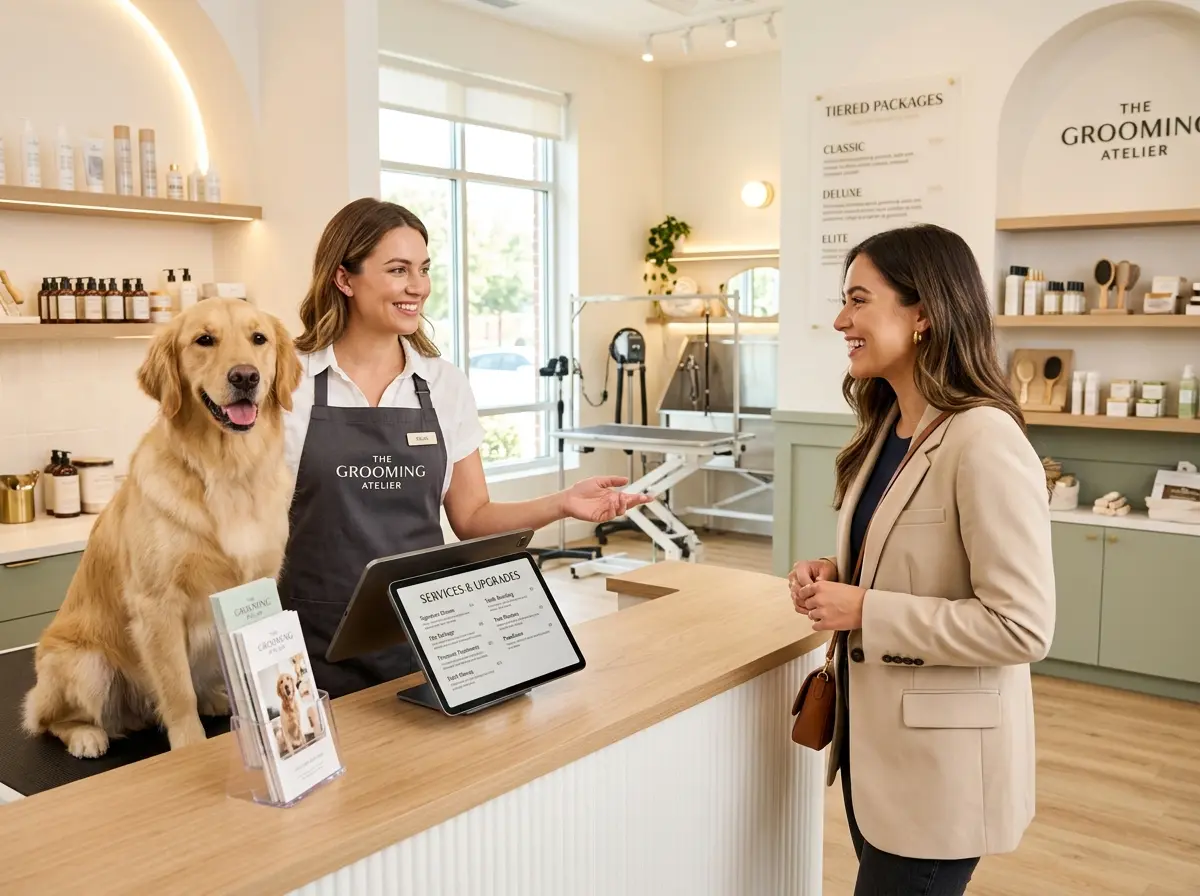
The shop in our case study solved this by structuring check-in around a simple three-question intake process. Staff (or their in-store technology — more on that shortly) would ask: Is there anything about your pet's coat or skin we should know about today? Are there any areas where your pet tends to get matted? And would you like us to trim nails while we have them? These aren't aggressive sales questions. They're service questions — but they naturally surface opportunities for add-ons like conditioning treatments, detangling services, and nail grinding. Customers said yes to at least one add-on nearly 60% of the time when prompted this way, compared to around 20% when staff simply asked "anything else today?"
Step 3 — The Post-Service Recap and Future Hook
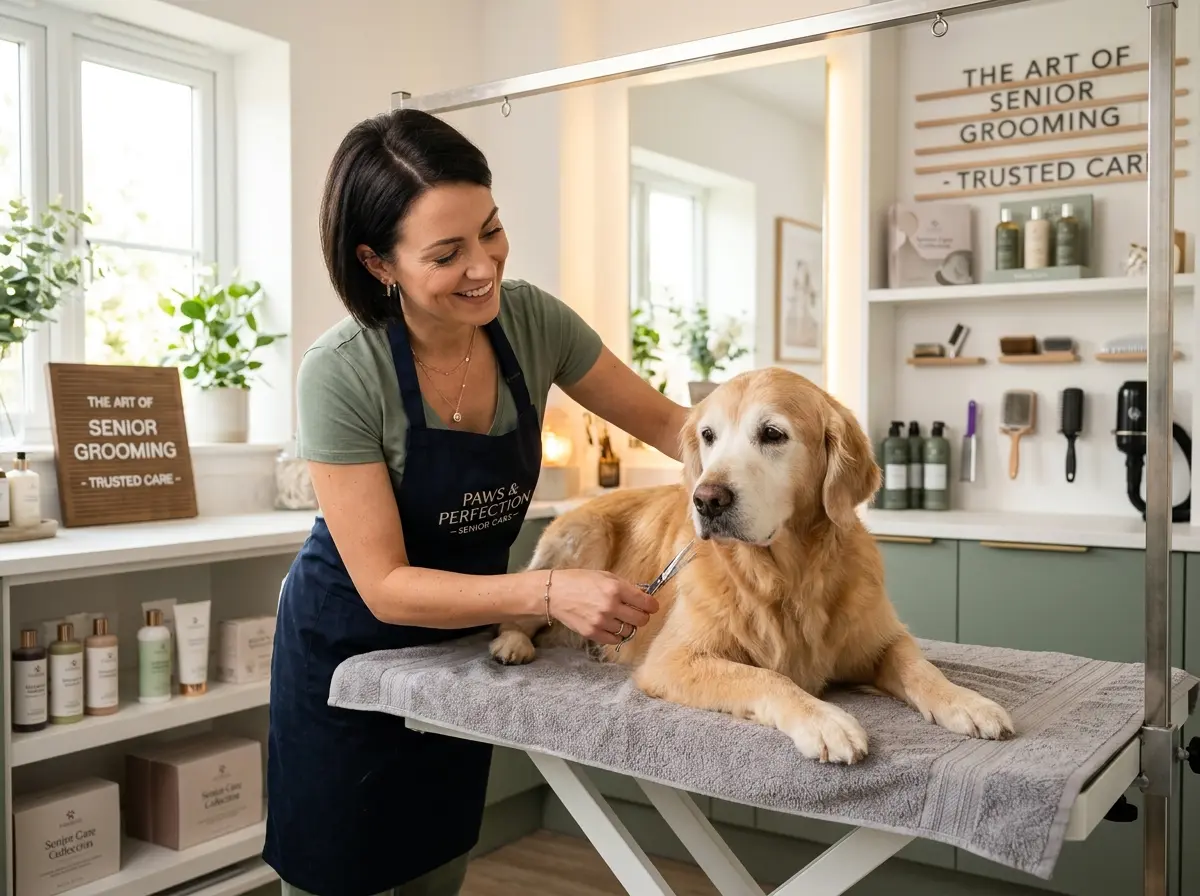
The final piece of the sequence happens at checkout — and it's less about selling today and more about setting up the next visit. Staff were trained to give a brief, genuine "report card" on the pet's coat, skin, ears, and nails. Something like: "Biscuit's coat looked great today, but his ears were a little waxy — something to keep an eye on. We offer an ear cleaning treatment that we can add to his next appointment if you'd like." This does three things simultaneously: it demonstrates expertise, it builds trust, and it creates a natural reason to book the next appointment with a specific add-on already in mind.
Customers don't feel sold to — they feel informed. And informed customers come back. This single practice was credited with improving repeat booking rates by roughly 15% over six months at the shop we studied.
How Technology Can Do the Heavy Lifting
Letting Your Tools Handle the Consistency Problem
Here's the uncomfortable truth about upsell sequences: they only work if they're actually executed consistently. And humans, bless their hearts, are wildly inconsistent. A staff member who's exhausted at 4pm on a Friday is not delivering the same upsell conversation as they were at 10am on a Tuesday. This is not a character flaw — it's just being human. But it does cost you money.
This is where Stella, the AI robot employee and phone receptionist, becomes genuinely useful for pet grooming shops (and really, any service business). Stella stands inside your store as a human-sized kiosk and greets every customer who walks in — proactively, naturally, and without ever having a bad day. She can walk customers through your current seasonal promotions, mention add-on services based on what's trending or what you've configured, and collect intake information conversationally so your grooming staff can focus on the actual grooming. She also answers your phones 24/7, so when a customer calls to book an appointment, Stella can mention your current specials during that call — turning a routine booking into an upsell opportunity before the visit even begins. Her built-in CRM even tracks customer preferences and interaction history, so your upsell recommendations get smarter over time.
Building Your Own Upsell Menu (Without Overwhelming Anyone)
Choosing the Right Add-Ons to Promote
Not all add-ons are created equal, and the worst thing you can do is try to offer everything at once. The shops that succeed with upselling pick a focused menu of add-ons — typically three to five — and rotate them seasonally. Good candidates share a few characteristics: they're easy to explain in one sentence, they're obviously beneficial to the pet, and they don't dramatically increase the time required for the appointment.
Strong performers in the grooming world include nail grinding (as opposed to clipping), teeth brushing, ear cleaning, de-shedding treatments, flea and tick prevention applications, and premium shampoo upgrades. Each of these can be explained in ten seconds and priced attractively as an add-on without feeling like a major financial commitment to the customer.
Training Your Team (and Your Systems) to Sell Without Selling
The framing of your upsell language matters enormously. The difference between "Do you want to add a conditioning treatment?" and "Her coat looked a little dry today — a conditioning treatment would really help with that" is the difference between a generic pitch and a personalized recommendation. Train your staff to tie every add-on suggestion to something specific and observable about the pet in front of them. When the recommendation is grounded in a real, visible reason, customers almost never feel pressured. They feel like their groomer is paying attention — which, of course, they are.
Consider creating a simple reference card for staff that lists your current add-ons alongside the types of observations that naturally prompt each one. A pet with a thick double coat? Mention the de-shedding treatment. A senior dog? Mention the gentle nail grinding option. This gives your team a framework without scripting them into robotic monotony.
Tracking What's Working (Because Guessing Is Not a Strategy)
You cannot improve what you don't measure. Start tracking which add-ons are being offered, which ones customers are accepting, and which staff members have the highest conversion rates. This isn't about micromanaging — it's about identifying what language and approaches are actually working so you can train the whole team to replicate them. Even a simple spreadsheet is better than nothing, though a CRM with built-in tagging and notes (like the one built into Stella) makes this significantly less painful and significantly more actionable.
Look at your data monthly. If a particular add-on has a high offer rate but a low acceptance rate, the problem might be the price, the framing, or the timing of the offer. If another add-on is rarely being offered at all, your team might need a refresher on when and how to bring it up. Small adjustments, informed by real data, compound into meaningful revenue gains over time.
Quick Reminder About Stella
Stella is an AI robot employee and phone receptionist that greets customers in your store, answers calls around the clock, promotes your services and specials, and helps manage customer information — all for just $99 a month with no upfront hardware costs. She's the staff member who never calls in sick, never forgets to mention your seasonal add-ons, and never has an off day. For a pet grooming shop running an upsell sequence, that kind of consistency is genuinely priceless.
Start Small, Stay Consistent, and Watch the Numbers Move
A 20% increase in revenue per visit sounds impressive — and it is — but it didn't happen overnight, and it didn't require a complete overhaul of how this grooming shop operated. It happened because they got intentional about three specific moments in the customer journey: before the visit, at check-in, and at checkout. They chose the right add-ons, trained their team to recommend them naturally, and used technology to fill in the gaps where human consistency tends to slip.
Here's what you can do this week to get started:
- Identify your top three add-on services and make sure they're priced attractively as additions to a standard groom.
- Write one or two natural, observation-based scripts for each add-on and share them with your team.
- Add a brief mention of a seasonal add-on to your appointment confirmation messages.
- Start tracking add-on offer and acceptance rates — even informally — so you have a baseline to improve against.
- Consider whether your check-in process is structured to surface upsell opportunities, or whether it's just organized chaos.
The customers are already coming through your door. The appointments are already on the books. The only question is whether you're making the most of every single one of them — or whether you're leaving 20% (or more) on the table with every wagging tail that walks out.
Your move.