One Franchise, One Brand — But Not One-Size-Fits-All Customers
Congratulations — you've invested in a franchise. You've got the brand recognition, the proven playbook, and the corporate support structure. What could possibly go wrong? Well, as many franchise owners discover somewhere between their grand opening and their third quarter review, the national brand strategy and your local customer reality can look surprisingly different from each other.
Corporate gives you the logo, the menu, the service protocols, and maybe even a marketing calendar. What they generally don't give you is a deep understanding of your specific customers — who they are, what they care about, how often they come back, and why they sometimes don't. That's where a location-specific CRM strategy stops being a "nice to have" and starts being the difference between a thriving location and one that's quietly wondering why foot traffic keeps plateauing.
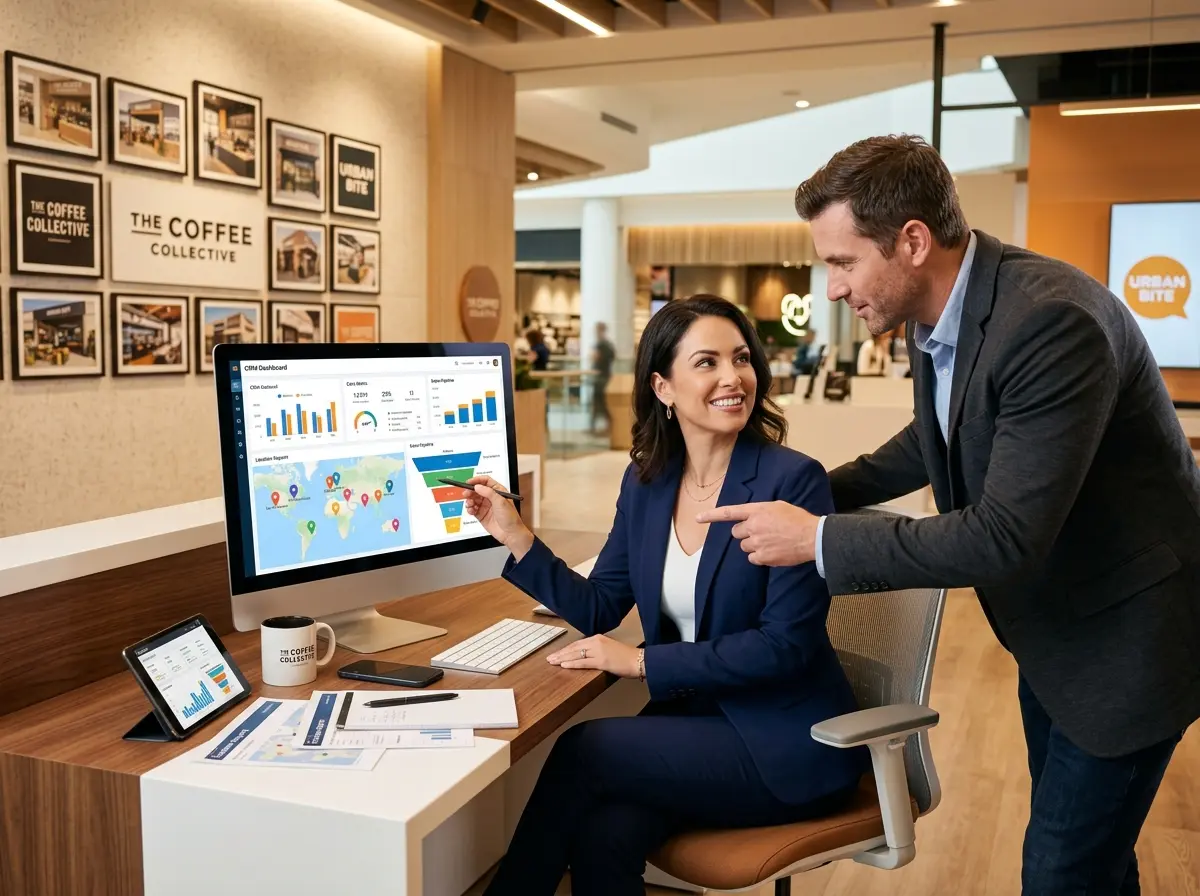
A CRM — Customer Relationship Management system — isn't just for enterprise sales teams or tech startups with unlimited runway. For franchise owners, it's the operational backbone of understanding your local market. And if you're not building one intentionally, you're flying blind with someone else's map.
Why Local CRM Data Is Different (And Why It Matters)
Your Customers Aren't the Same as the National Average
Let's say you own a franchise location of a popular gym chain. Corporate knows that nationally, their average member is between 28 and 45 years old, comes in three times a week, and responds well to "New Year, New You" promotions in January. Great. But your location is two blocks from a university campus, and 40% of your members are students who disappear every May and flood back in September. The national CRM data and marketing calendar weren't built for your September surge or your summer slump — and if you're not tracking that locally, you're spending marketing budget like someone who hasn't looked at the calendar since 2019.
Local CRM data lets you segment your actual customer base, identify your real peak seasons, and make decisions based on what's happening in your four walls — not what's happening in the aggregate across 800 locations in 30 states.
Franchise Compliance Doesn't Prevent Local Intelligence
A common misconception among franchise owners is that because corporate controls the brand and the systems, there isn't much room to build their own customer intelligence layer. In reality, most franchise agreements don't prohibit you from collecting and managing your own customer contact data, running local promotions, or building relationships with your regulars — they just require that you operate within brand guidelines.
Your CRM isn't competing with corporate. It's complementing it. Think of it this way: corporate handles the playbook; your CRM helps you read the field. You can track which customers respond to certain promotions, which staff interactions lead to repeat visits, which service add-ons have the highest uptake at your location specifically, and when your best customers are most likely to churn. That's not brand interference — that's just smart business ownership.
The Referral and Retention Gap No One Talks About
Research consistently shows that acquiring a new customer costs five to seven times more than retaining an existing one. Yet many franchise locations invest heavily in grand opening promotions, foot traffic campaigns, and local advertising while putting almost zero infrastructure into retention. Your CRM is your retention infrastructure. It's how you know that a loyal customer hasn't been in for six weeks — and that maybe someone should reach out before they quietly become a loyal customer of your competitor instead.
Referral tracking is equally underutilized. If you're not capturing how customers found you, you have no idea which of your local marketing efforts are actually working. Word of mouth is often the most powerful driver for franchise locations, especially in tight-knit communities, but without a CRM tracking referral sources, you're essentially guessing — and guessing is a terrible business strategy, even if it occasionally works.
How the Right Tools Can Do the Heavy Lifting for You
Let Technology Collect the Data So Your Staff Doesn't Have to
The biggest obstacle franchise owners face when trying to implement a local CRM strategy isn't the strategy itself — it's the data collection. Your front-of-house team is busy. Asking them to manually log customer information, note preferences, and update contact records between serving actual customers is a recipe for incomplete data and annoyed employees. The solution is automation — specifically, tools that collect and organize customer information naturally, without adding friction to your operations.
Stella, the AI robot employee and phone receptionist, is built precisely for this kind of seamless data capture. At your physical location, she greets customers proactively, engages them in natural conversation about your products, services, and current promotions, and collects customer information through conversational intake forms — right at the kiosk, without a staff member needing to stop what they're doing. On the phone, she answers calls 24/7, gathers caller information, and feeds it all into her built-in CRM with custom fields, tags, notes, and AI-generated customer profiles. By the time a manager reviews the day's interactions, Stella has already done the organizational work that would otherwise fall through the cracks entirely.
Building a CRM Strategy That Actually Works for Your Location
Start With What You Actually Need to Know
Before you configure a single field or set up a single tag, get clear on what questions your CRM needs to answer for you. The temptation is to collect everything — and then end up with a bloated database that nobody looks at. Instead, start with three to five key questions your location genuinely needs answered. Common examples for franchise owners include: Who are my top 20% of customers by visit frequency or spend? Which promotions drove the most conversions last quarter? Where are my new customers coming from? What percentage of first-time visitors return within 30 days?
Once you know which questions matter most, you can design your data collection and tagging structure around actually answering them. This keeps your CRM lean, useful, and something your team will actually engage with — rather than a digital filing cabinet nobody opens.
Create Local Segments That Corporate Can't See
One of the most powerful things a franchise CRM can do is segment customers in ways that are meaningful at the local level. You might tag regulars who always come in on weekend mornings, or flag customers who've purchased specific service packages, or identify members of a local loyalty group that corporate doesn't even know exists. These local segments allow you to send targeted messages, create relevant promotions, and build genuine relationships — which is exactly what turns a transactional customer into a loyal advocate.
For example, a franchise spa location might discover through their CRM that a significant segment of their customers books appointments in the week before a major local event — a university graduation, a regional wedding season, a local festival. With that insight, they can build a timely promotion specifically for that window and send it to exactly the right segment, rather than blasting the entire list with something generic. That's the difference between marketing and relevant marketing.
Build Review and Follow-Up Workflows Into Your Process
A CRM without workflows is just a contact list. The real value comes when your customer data triggers action — and that action happens consistently, without requiring someone to remember to do it manually. At the franchise level, this means setting up follow-up sequences for new customers, re-engagement campaigns for lapsed ones, and review request workflows for customers who've recently had a positive experience.
Online reviews are disproportionately important for franchise locations because consumers often choose based on local ratings even when the brand is nationally recognized. A franchise location with 4.8 stars on Google will outperform an identical location with 3.9 stars in the same brand family — every time. Your CRM can systematically prompt satisfied customers to leave a review at the right moment, making review generation a process rather than a prayer.
Quick Reminder About Stella
Stella is an AI robot employee and phone receptionist that works inside your store as a human-sized kiosk and answers your phones 24/7 — handling customer questions, promoting your current offers, collecting contact information, and managing it all through a built-in CRM. She starts at just $99/month with no upfront hardware costs, requires no training, and never calls in sick. For franchise owners looking to build a local customer intelligence layer without adding to their staffing headaches, she's worth a serious look.
Stop Relying on Corporate Data to Run Your Local Business
Here's the honest truth: your franchisor is not going to build your local CRM strategy for you. They have hundreds — possibly thousands — of locations to think about, and their data is necessarily broad. The franchise owners who consistently outperform their peers in the same brand family are the ones who invest in understanding their local customers at a level corporate simply can't reach.
Start by identifying the three to five questions that would most meaningfully change how you operate if you had reliable answers. Then put the tools in place to collect that data automatically, organize it usefully, and act on it consistently. You don't need a massive technology stack or a dedicated marketing team — you need a clear strategy and the right tools to support it.
If you haven't yet explored what an AI-powered front-of-house tool like Stella could do for your data collection and customer management, that's a good place to start. Between her in-store presence, 24/7 phone coverage, and built-in CRM capabilities, she can give you a customer intelligence foundation that most franchise locations don't have — and most should.
Your brand might be national. Your customers are local. Build your strategy accordingly.